Put original numbers in the copy
Models lift concrete numbers and quotes, and skip the fluff.
What to do: Load your cornerstone pages with original statistics, cited sources, and named expert quotes. Better yet, be the origin of the number by running a survey or publishing data from your own product. Never keyword-stuff to compensate.
Why it works: Models lift concrete numbers and quotes and skip the fluff around them.
Example: The peer-reviewed GEO paper from Princeton and Georgia Tech tested about 10,000 queries and found adding statistics, quotations, and cited sources were the top ways to raise visibility, up to roughly 40%, while keyword stuffing actually lowered it. A separate study of 350,000 articles found the AI-cited ones averaged 4.2 statistics and 1.6 expert quotes, versus 1.2 and 0.2 for the pages that got ignored.
Walk it through
I ran a real buyer question through Perplexity in July 2026, the kind someone types before setting a mobile ad budget or signing off on a redesign. No login needed. Here is exactly what came back, and exactly where it came from.
1. Ask the question a buyer would actually type.
open "https://www.perplexity.ai/search?q=what+percent+of+ecommerce+traffic+comes+from+mobile"
Perplexity reads the live web and writes a direct answer with inline citations, not a list of blue links.
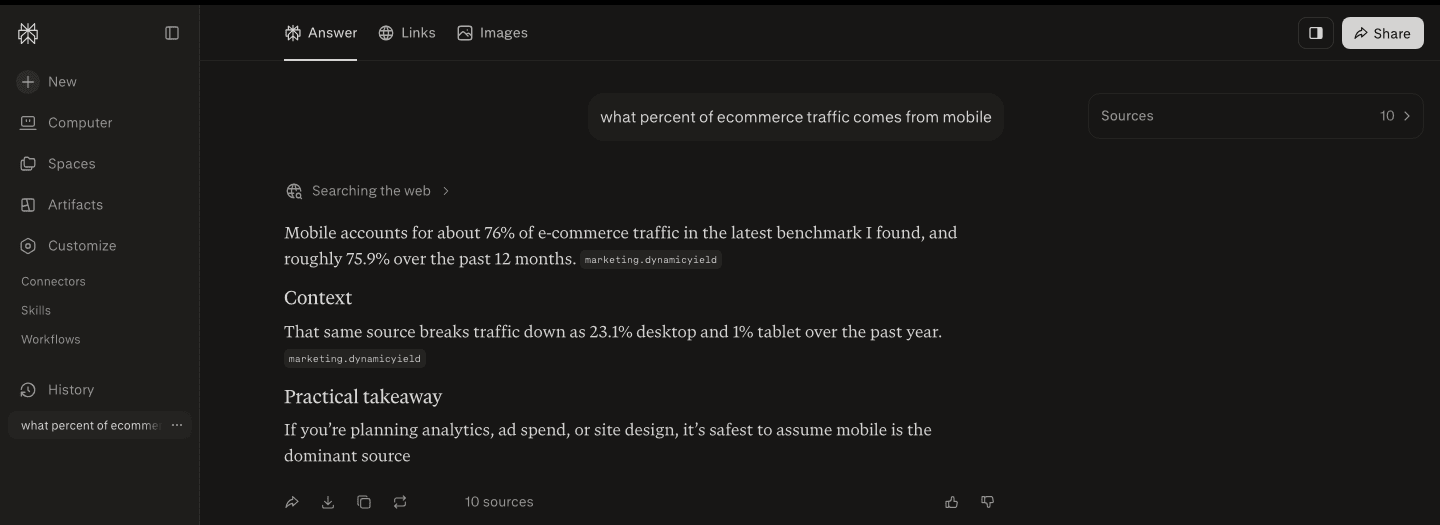
It answered in three blocks: a headline number, a "Context" line splitting out desktop and tablet, and a "Practical takeaway" telling the reader what to do about it. Every hard number carries the same citation pill, marketing.dynamicyield. Out of the 10 sources the panel says it read, the model hung both of its numbers on one of them.
2. Open the page behind that citation. Check the number is actually written in the copy, not just plotted in a chart.
open "https://marketing.dynamicyield.com/benchmarks/device-usage/"
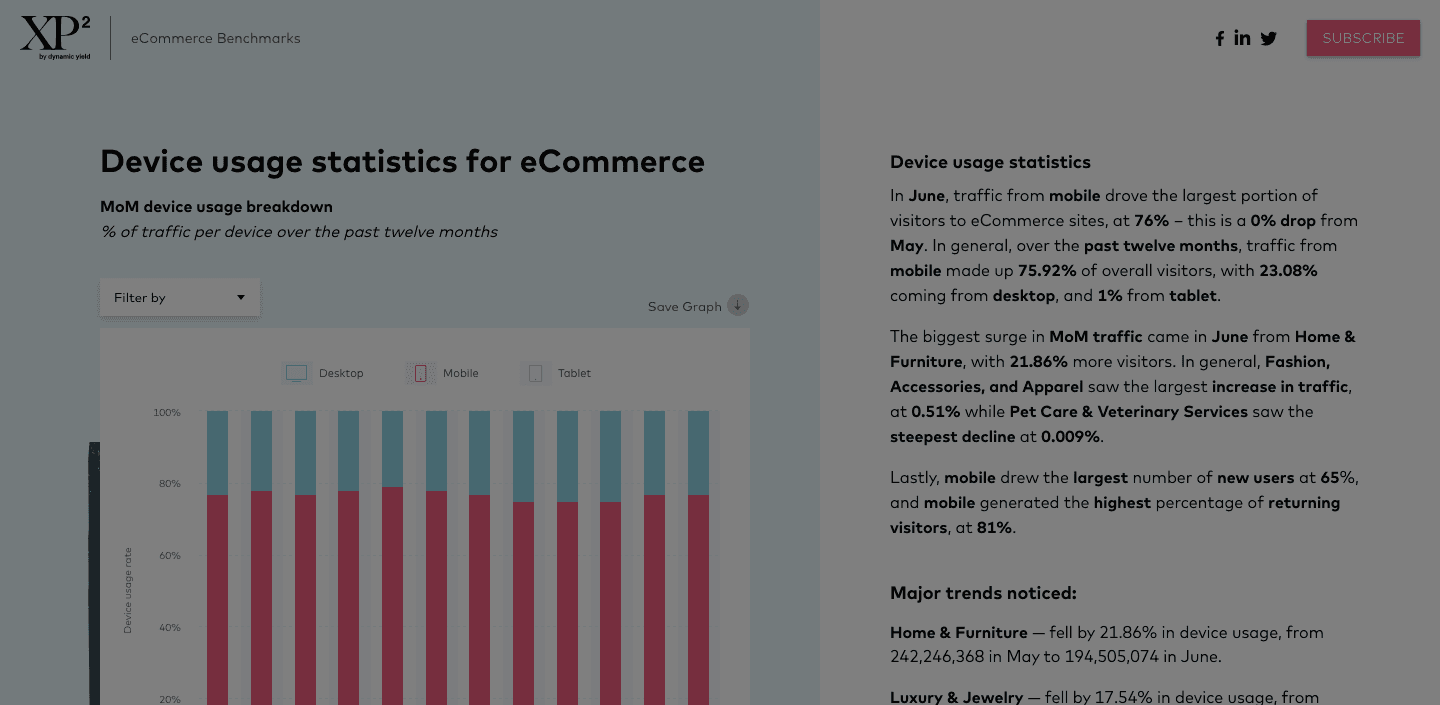
Read the paragraph next to the chart: "over the past twelve months, traffic from mobile made up 75.92% of overall visitors, with 23.08% coming from desktop, and 1% from tablet." Perplexity's answer said 75.9%, 23.1%, and 1%. That is not a paraphrase. That is a rounding pass over a sentence the model found already written in plain English, sitting right next to the graph instead of locked inside it.
3. Check whether this is a one-off post or a standing bet.
open "https://marketing.dynamicyield.com/benchmarks/"
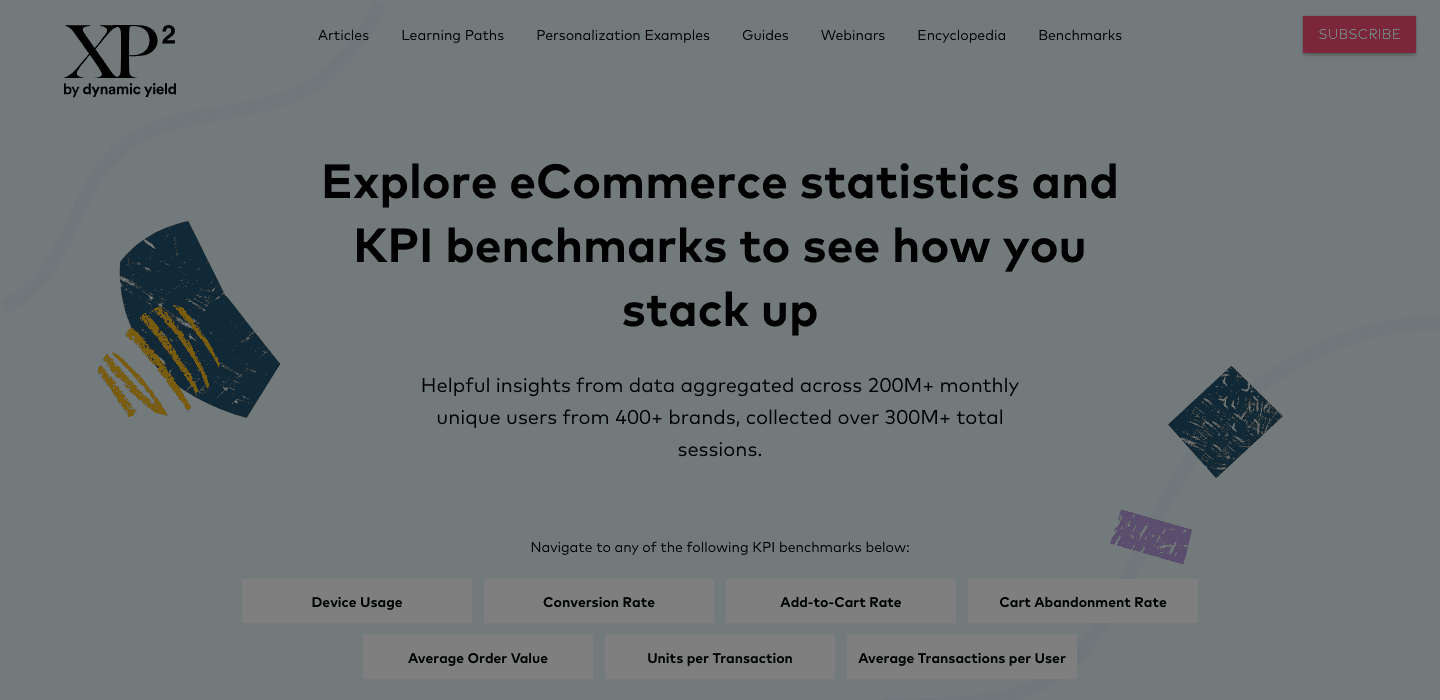
The device-usage page is one spoke of seven. DynamicYield turned its own product telemetry, "200M+ monthly unique users from 400+ brands, collected over 300M+ total sessions," into a standing benchmarks hub, one page per KPI, refreshed monthly. That is the "be the origin of the number" line from the top of this chapter, running in production.
The read
- The citation pill tells you who won. Both load-bearing numbers in the answer point at the same domain, out of 10 sources the model had open. Originality beat volume.
- The lifted text is the plainest sentence on the page. The model did not synthesize the 75.92% figure from the bar chart. It copied a sentence sitting in a text block next to the chart, built for exactly this kind of skimming.
- Freshness is doing real work. The source page reports monthly, and "over the past twelve months" is the same phrase a model reaches for whenever someone asks a percent-of-something question. A dated, recurring number is more citable than a one-time post.
Steal it
Pick one metric you already track internally that a prospect or competitor would want to benchmark against. Checkout conversion, time to first value, churn by plan tier, whatever your product logs by default. Publish it as a page with the number in the first sentence, in words, not just as an axis label on a chart. Update it on a real cadence and say so in the copy, "over the past twelve months" or "as of June 2026," because that phrase is exactly what a model reaches for when it needs a number to anchor an answer.
Then defend it. Run the same query for your own category once a quarter and watch which citation pill shows up. If it is never you, your numbers are not concrete enough or are not indexed at all. If it is a competitor, go read their page the way you just read DynamicYield's, and beat it with a bigger sample or a shorter update cycle.
Gotchas
- The rendered answer is not a stable record. I ran this exact query more than once in the same afternoon and got a fully formed answer, a mid-sentence answer, and once a blank shell that never rendered before the capture cut off. Screenshot it fresh before you cite one in your own deck, do not assume last week's capture still matches.
- Rounding hides the paper trail. 75.92% became 75.9%, 23.08% became 23.1%. If you go looking for your own exact figure inside an AI answer, expect it rounded down to one decimal, not quoted verbatim.
- Honest caution: getting cited is not getting clicked. DynamicYield's sentence did the work of answering the question inside Perplexity, which means the reader may never open marketing.dynamicyield.com at all. Original data buys you the citation. It does not automatically buy you the visit.