Make The Forum The Manual
A pile of real solved problems outranks a polished help center.
Every SaaS company builds a help center. Clean categories, official screenshots, a tone that reads like it passed through legal. Then a real user hits an edge case the help center never covered, posts the actual problem in the public community forum instead, and another user replies with the real fix. Google indexes that thread inside a week. A year later it outranks the official docs page for the exact query that started the mess. The forum was never a cost center. It was quietly becoming the manual.
What to do: Stand up a public, logged-out-readable community forum and route real support questions into it instead of a closed ticket queue. Let users answer each other, keep every solved thread indexable, and publish your own official examples as individually credited pages instead of one long doc.
Why it works: A named user solving one specific problem in public reads as evidence to a search engine and an AI answer engine alike, and a help center article reads as copy written to be found, not to be true.
Example: n8n's own template library, sourced from its community forum and built from what users submit, passed 9,400 workflows by mid-2026 and sits at 10,648 as of this writing. Search a narrow problem like "scrape a website and save it to Notion" and n8n's own template pages fill the results, not a Zapier or Make landing page.
Walk it through
I checked n8n's library in July 2026. Here is exactly what came back.
1. Open the template library and read the headline number.
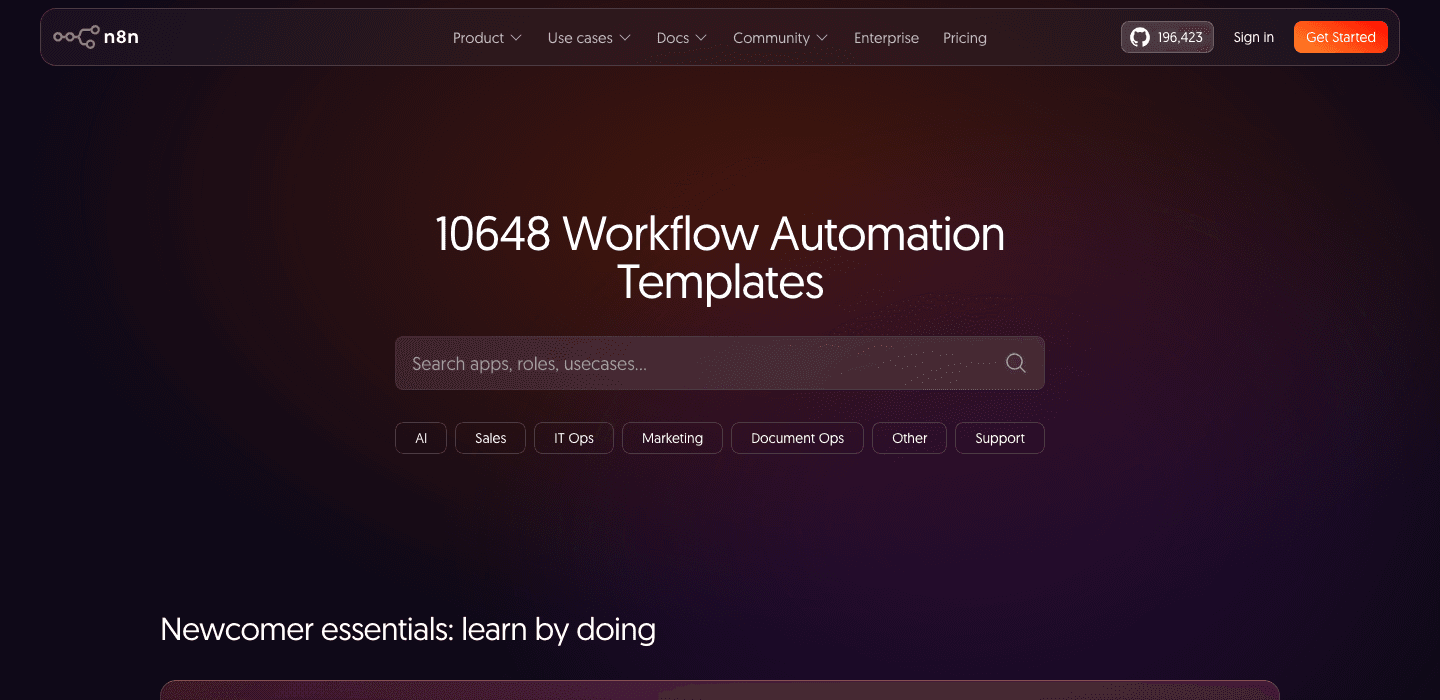
10,648 templates, sorted into AI, Sales, IT Ops, Marketing, Document Ops, and more. That count only moves because a person keeps publishing a solved problem. It passed 9,400 by mid-2026. It is already past 10,600 now.
2. Open one template and check who actually built it.
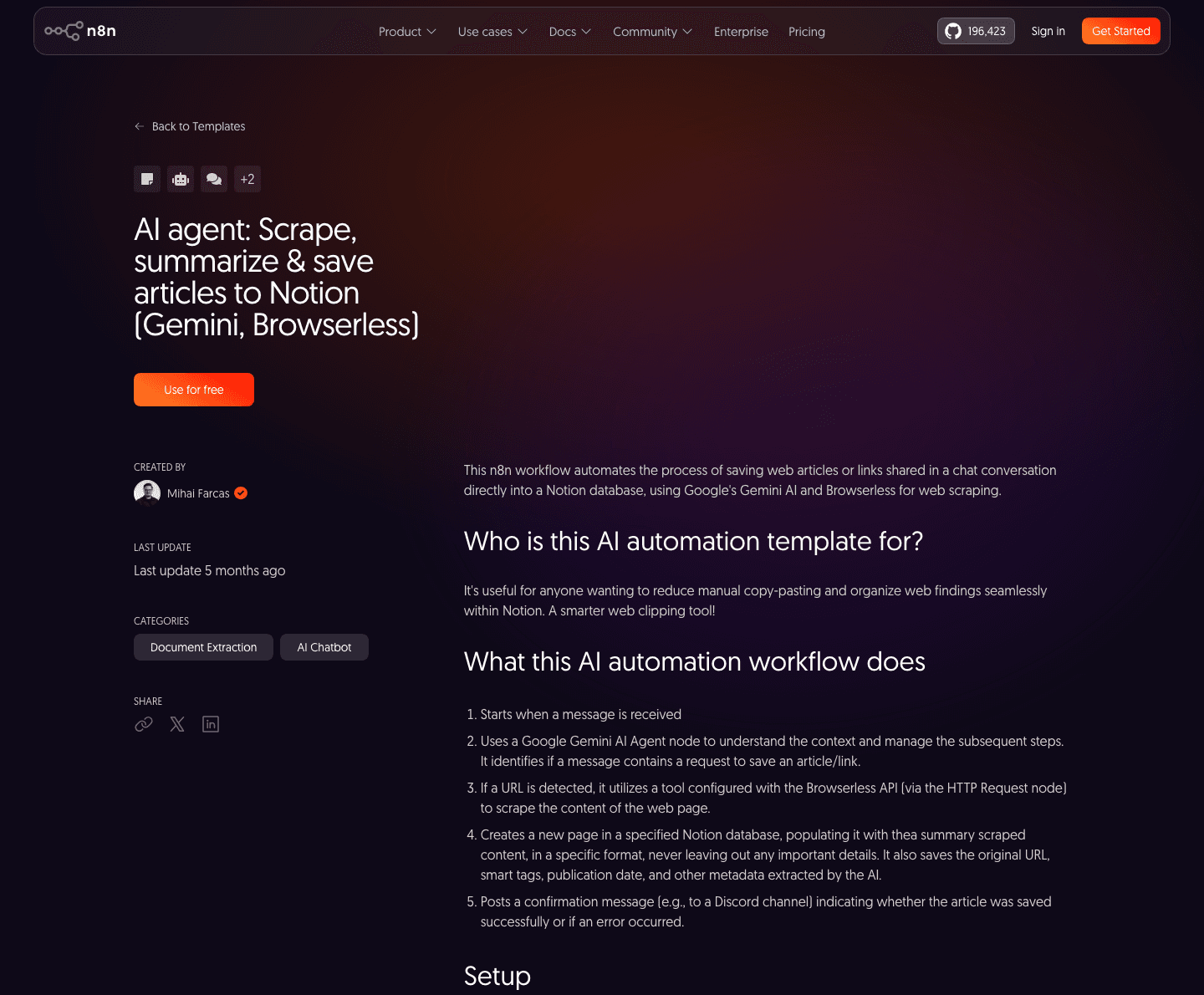
"AI agent: Scrape, summarize & save articles to Notion (Gemini, Browserless)," created by Mihai Farcas, last updated five months ago. Below it sits a five-step plain-English account of what the workflow does and who needs it, written by the person who built it, not by a copywriter filling a template. That byline and that date are doing real work. They tell a reader, and a ranking algorithm, that a specific human solved a specific problem and is still around to stand behind it.
3. Search the problem, not the brand.
Search something as narrow as "scrape a website and save it to Notion" and the results are n8n.io template pages start to finish, no Zapier or Make comparison page in sight. Nobody bought that ranking. Ten thousand practitioners posting their own solved problems did.
The read
- The count is the pipeline, not a vanity number. Going from 9,400 by mid-2026 to 10,648 within weeks means the forum-to-library machine runs continuously, without a marketing calendar behind it.
- The byline is the ranking signal. A named creator and a last-updated date read as proof of a current, real answer. Anonymous help-center copy carries neither.
- Specificity is what a blog cannot match. A company blog produces a handful of posts a month. A community answering its own questions produces one page per problem, and there is no floor on how narrow that problem can be.
Steal it
You do not need ten thousand contributors to start this. Open a public, logged-out-readable forum or community area, and the next time a real user solves a real problem, get it out from behind your ticket system and onto a page Google can read. If your team already publishes official examples or templates, split them into individually credited pages instead of one long cookbook document. Fifty narrow pages beat one broad page for the same reason fifty narrow search queries beat one broad one.
Defend it the way you would defend any public asset. Put someone in charge of re-checking old accepted answers against your current product, because a stale fix ranking above your real docs actively misleads new users. And accept that competitors will read your forum exactly the way you just read n8n's, learning which parts of your product cause the most pain from the questions people ask most.
Gotchas
- Old answers outrank new docs. A thread solved against a UI from two releases back can still rank first and send someone down a dead path. Somebody has to own re-checking accepted answers, not only approving new ones.
- A forum is also a map of what is broken. Every unresolved "how do I even..." thread is visible to the same competitors running the plays earlier in this book. That is the price of the traffic.
- You cannot ghostwrite this. The advantage depends entirely on the byline being a real person with a real history. The moment a "community" answer turns out to be written in-house, both users and search engines start discounting the whole forum, not just that one post.