Maybe Later, Not Now
A consent-first 'email it to me' link converts more honestly than an interception popup, and dodges the dark-pattern heat.
An exit-intent popup is a bet that if you scare a visitor hard enough on the way out, a chunk of them will hand over an email address just to make the modal go away. Some do. But you can't tell which of those addresses came from a real yes and which came from someone clicking anything to get your interstitial off their screen, and that second group unsubscribes, or worse, marks you as spam, the first week you email them. The honest version skips the trap entirely. Put a plain, static link near the content itself, something like "not ready, email this to me," and let the visitor decide whether to click it. Nobody gets ambushed on the way out. Whoever opts in actually wants what you're sending. And the ground under the interception version keeps shifting: the FTC's Click-to-Cancel rule got vacated by the Eighth Circuit in July 2025, then the agency opened a fresh Negative Option rulemaking in March 2026, asking the public again how far a company can push someone toward a choice they never actively made. The exact category of trick a popup runs is the category back under the federal microscope, right as the honest swap gets cheap to ship.
What to do: Kill the popup that fires on mouse-out and blocks the page. Replace it with a small, dismissible link sitting in the page itself, pricing page, cart, signup form, wherever you're tempted to interrupt, that reads something like "not ready to decide? Email this to yourself." One click opens a single email field, sends the same page or offer straight to their inbox, and closes. No countdown, no fake discount, no scroll lock.
Why it works: A click is an active choice, so the list you build from it is smaller but opens, replies, and converts at a real rate, instead of the fake list an interception traps out of people who just wanted the popup gone.
Example: Basecamp's pricing page in July 2026 runs with zero exit-intent modal and zero countdown timer. Just the plans, a "Run 1 project free forever" line, and a plain "Sign up free" button. That's not an accident. 37signals has spent years publicly explaining, on its own REWORK podcast, why traditional, interruptive marketing doesn't work for them, and Jason Fried made national headlines in 2019 calling Google's own paid-search placement tactics a "shakedown." A company that picks public fights over lesser forms of pressure has never needed to trap anyone on its own pricing page.
Walk it through
Here's how to build the honest version, using the page where the temptation to interrupt is strongest: your pricing page.
1. Look at the page you're most tempted to interrupt.
Pricing pages are where exit-intent popups show up most, because that's exactly where a visitor leaves without buying. Here's what a real, pricing-page-scale product looks like when it ships with none of that.
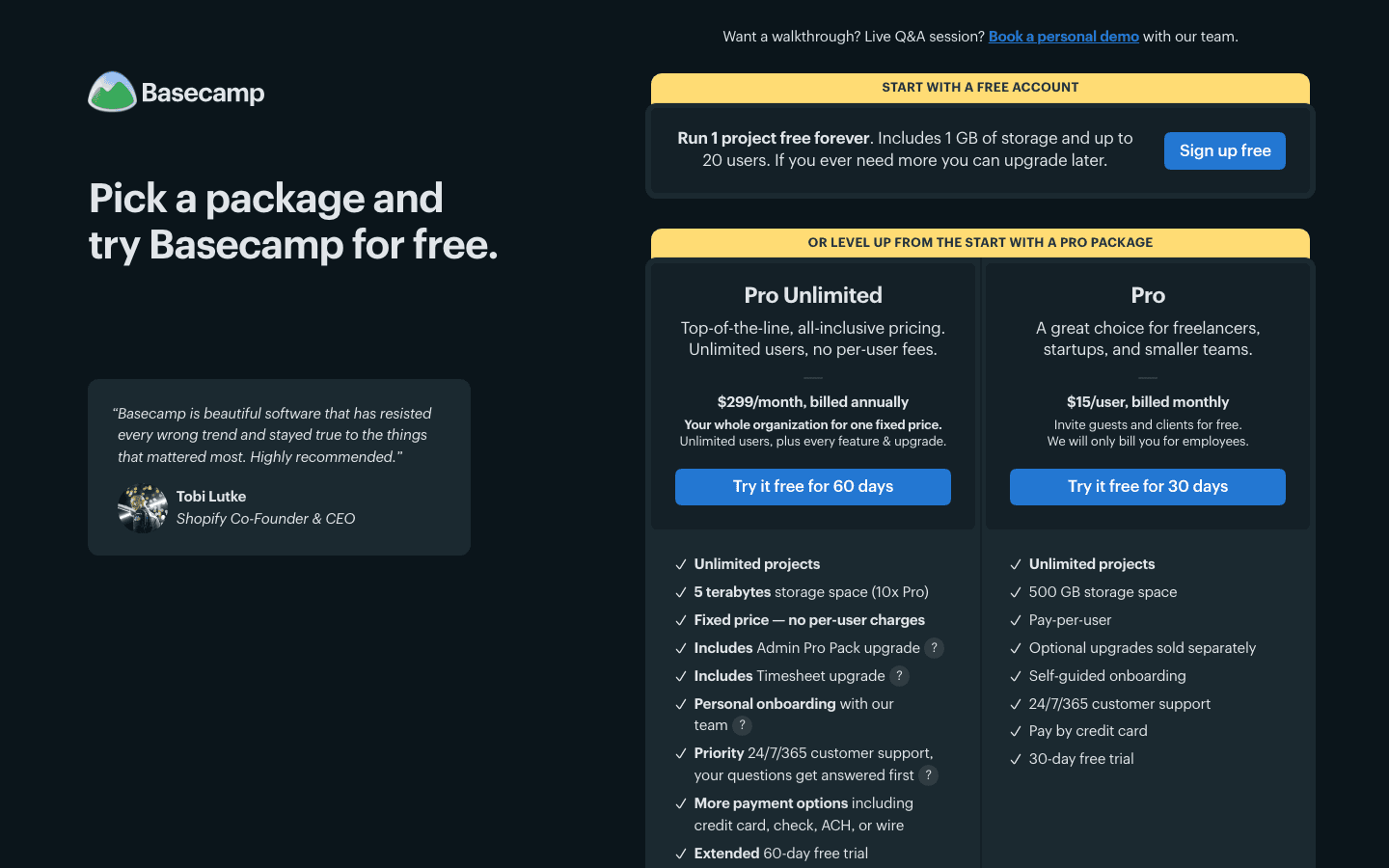
No modal fires when the cursor drifts toward the tab bar. No timer counts down a fake discount. The only thing on the page pushing you toward action is the free-forever tier itself, and that's a real product, not a trick.
2. Write the one line that replaces the modal.
Put it near the pricing table or the cart, not in a popup layer. "Not ready to decide? Email me this pricing so I can compare it later." Say exactly what you'll send, and send exactly that, nothing padded with a fake countdown once it lands in their inbox.
3. Wire it to fire on click only.
Delete the mouseleave or exit-intent listener outright, don't just hide the modal behind a flag. The link opens one email field, posts to whatever you already send mail through, Resend, Customer.io, your ESP of choice, and sends the same page, or a clean copy of it, once. No modal, no scroll lock, no dimmed overlay behind it.
4. Route the reply the same way you'd route any opted-in lead.
Tag the contact by the exact action they took, "requested pricing via email link," not "exit-intent capture," so your later sequence can reference what they actually asked for instead of guessing.
The read
- The click is the consent. An interception popup assumes consent and asks forgiveness with an unsubscribe link. A clicked-through link asks first, so everything you send after it lands in an inbox that's expecting you.
- A smaller list beats a bigger trap. The interception version inflates your subscriber count with people who never wanted in. The honest version trades volume for a list that actually opens what you send.
- The regulatory mood is the tell, not the letter of the rule. The FTC's specific Click-to-Cancel rule covers cancellation flows, not exit popups, so this tactic isn't illegal today. But a second rulemaking on manipulative consent inside two years is the agency telling you which direction the letter of the rule is headed next.
Steal it
Pick the one or two pages on your own site carrying an interception popup right now, pricing, cart abandonment, a content gate, and swap the trigger. Same offer, same copy underneath, but move it behind a plain link the visitor has to click instead of a mouseleave event that fires whether they wanted it or not. Route the email through whatever you already send transactional mail with, and tag the contact by the action so your sequence downstream isn't lying to itself about how someone got on the list.
Defend the swap with the numbers you'll actually see. The raw capture count will probably drop, because you've removed the option to interrupt someone who wasn't going to opt in anyway. Judge it on open rate, reply rate, and whether the sequence converts downstream, not on how many rows landed in the table. And don't wait for a specific law to force this. The rule that would have covered manipulative consent flows directly got vacated in 2025, then the agency opened a new rulemaking on the same territory in March 2026. Ship the honest version while it's a cheap product decision, not an expensive compliance one.
Gotchas
- The capture count will look worse, on purpose. Don't panic and revert after week one because the raw number of emails collected dropped. That's the popup's fake volume leaving, not real interest.
- A link that opens a full-screen modal anyway isn't the fix. If clicking "email it to me" throws up the same scroll-locked overlay you just removed, you've rebuilt the interception one layer deeper. Keep it to one field, no dimmed background, no second click to escape.
- Honest caution, don't oversell the legal risk to your team. The FTC rule that got vacated targeted subscription cancellation, not exit-intent popups directly, so you can't tell a founder this specific tactic is already against the law. The honest pitch is that the mood in Washington is hardening against manipulative consent patterns generally, and getting ahead of a trend is cheaper than fixing it after the next rule actually lands.