The 1-3-5 Repurposing Method
One pillar piece becomes sixteen pieces of distribution, not sixteen new ideas.
Most founders treat content like a slot machine. Pull the lever every morning and hope a fresh idea falls out. That is why the feed goes quiet after three weeks, because no one has sixteen new ideas a week. You do not need sixteen ideas. You need one good one and a system that cuts it into every shape your audience already scrolls past.
What to do: Write one real pillar piece a week, a newsletter, a deep post, or a long thread that actually resolves one problem for one reader. Pull three core ideas out of it that could each stand alone. Turn each of those three into five micro-posts, split across LinkedIn and X, using a fixed menu of formats instead of inventing a new angle every time.
Why it works: You do the hard thinking once, at full depth, then spend the rest of the week formatting an idea you already trust instead of inventing a new one from nothing for every channel.
Example: Solo creator Justin Welsh runs exactly this against his own Saturday newsletter, over 200,000 subscribers, and named it the 1-3-5 method in a July 2024 essay that is still live on his site. One pillar, three extracted core ideas, five micro-pieces built from each, 16 pieces of content out of a single newsletter issue.
Walk it through
I pulled up Welsh's own essay in July 2026 to get the mechanics from the person who runs the system, not from a blog paraphrasing him. Here is exactly what is there.
1. Read the framework at the source, not a summary of it.
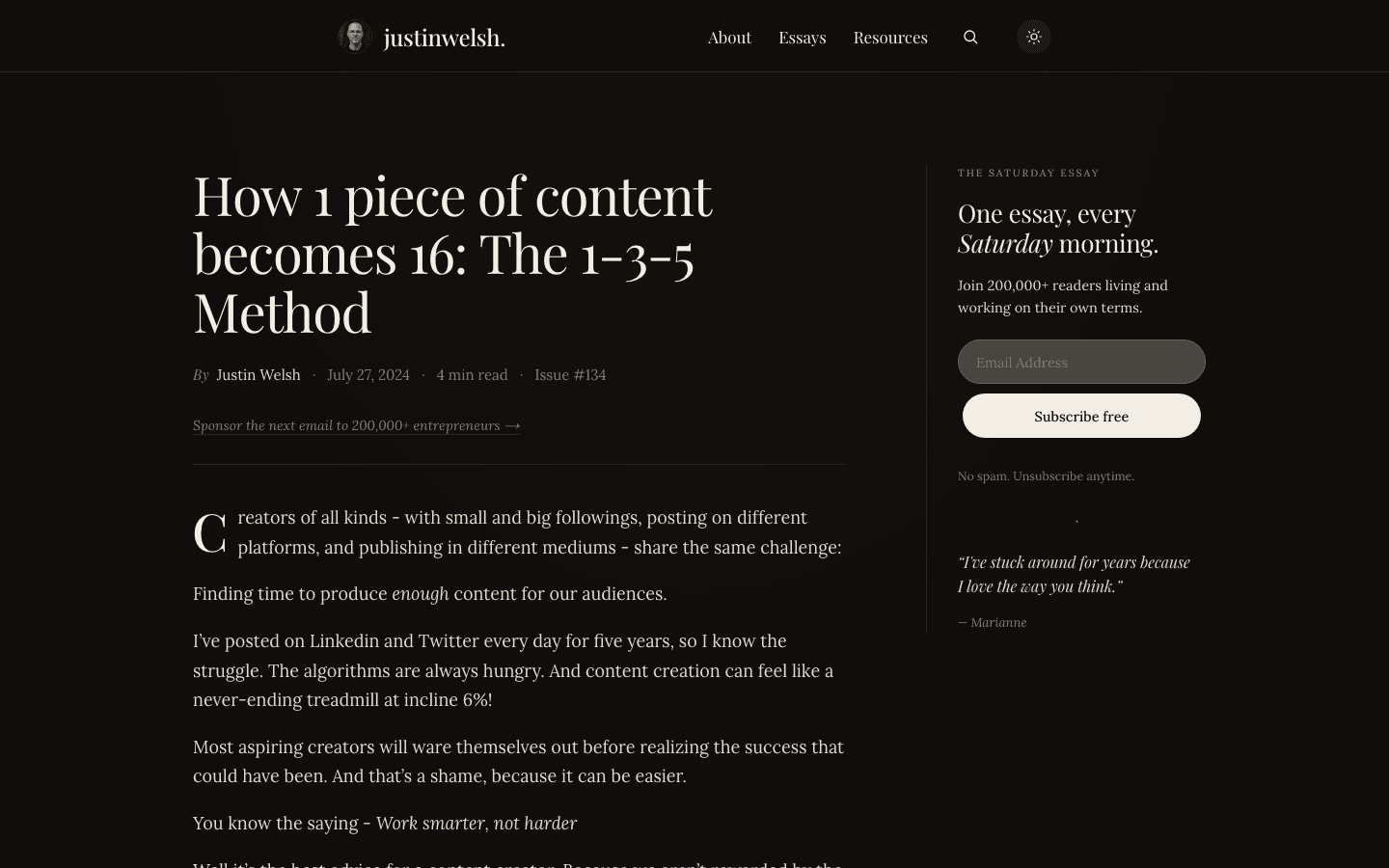
Issue #134 of his Saturday essay, dated July 27, 2024, still standing two years later. That matters more than it sounds. Anyone can write a listicle claiming to know how a creator works. This is Welsh describing his own system, on his own domain, dated and numbered.
2. Get the exact math, not the internet's rounded-off version of it.
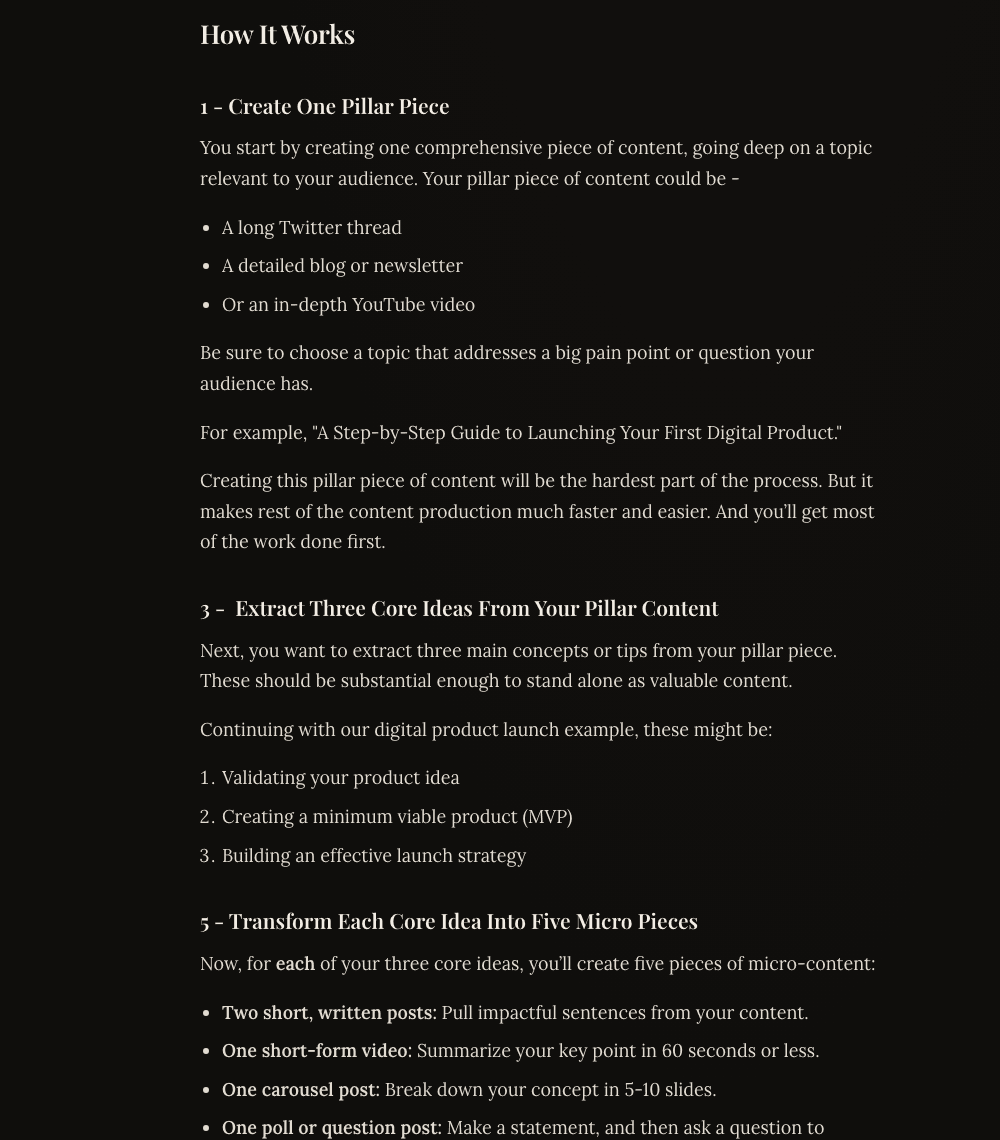
The "1" is one pillar, a newsletter, a long thread, or a deep video. The "3" is three core ideas pulled out of that pillar, substantial enough to stand alone. The "5" is five micro-pieces built from each of those three: two short written posts pulling a strong sentence straight out of the source, one 60-second video restating the point, one carousel breaking it into five or six slides, and one poll or question post that turns the idea into a prompt. Three ideas times five formats is fifteen spokes, plus the pillar itself, is sixteen. Nobody brainstorms sixteen times. They cut one thing sixteen ways.
3. Run the identical math on your own pillar.
Say this week's pillar is a post titled "How we cut onboarding from 12 minutes to 4." Pull three core ideas straight out of it: the diagnosis (why onboarding was slow), the fix (what you cut), and the result (the number and what it unlocked). Take just the fix and build its five: two posts quoting the exact sentence where you explain the cut, a 60-second screen recording of the new flow, a five-slide carousel of before-and-after steps, and a poll asking your audience what their own onboarding time is. Repeat for the other two ideas and you have your sixteen, all traceable back to one piece you already wrote.
The read
- The sixteen is arithmetic, not inspiration. One pillar plus three ideas times five formats is sixteen. Memorize the formula and you stop needing a new idea for every platform, every day.
- The pillar carries all the weight. Every one of the sixteen downstream pieces is only as sharp as the pillar it was cut from. The one hour of real thinking happens once, at the top, not sixteen times.
- Format is the only variable that changes. The menu of five, quote post, quote post, video, carousel, poll, can shift to fit your product. The three ideas underneath stay fixed once the pillar is written.
Steal it
Pick a pillar you already have sitting around: a support ticket you keep answering, an onboarding retro, a pricing decision you can defend. Extract three ideas from it the same way Welsh does, and build the five-piece menu for each on LinkedIn and X in one batched sitting instead of improvising daily. The system is the product here, not the topic, so once you have run it twice it gets faster, not harder.
Defend the seams. If your LinkedIn and X audiences overlap, which is increasingly the default, do not post the identical sentence to both. Reword the idea in each platform's native voice, a slide deck on LinkedIn, a blunt line on X, or your own audience will notice you posted the same thing twice this week, and that is the exact tell that gives away the system underneath.
Gotchas
- A thin pillar just mass-produces thin content, faster. This method multiplies distribution, it does not generate ideas. If the pillar is filler, you now have sixteen pieces of filler instead of one.
- Not all sixteen will land, and that is fine. The point of the five-format menu is coverage across how different people consume content, not every piece being a hit. Judge the batch, not each post.
- Check any productivity number before you repeat it, including this one. Several blogs credit Welsh with building a week of content in a fixed number of hours. That specific figure does not appear anywhere on his own site, only on secondary blogs quoting each other. The 1-3-5 math is confirmed straight from his essay. The hours claim is not, so it stayed out of this chapter. Do the same check before you cite someone else's numbers in your own content.