Single-Player Tool, Multiplayer Payoff
Ship a utility that's useful with zero other users, then layer network features in once density earns them.
Every network needs other people to be worth using. On day one, a startup has none. Instagram solved that by refusing to be a network at first. It shipped as a photo-filter app, camera roll in, better photo out, complete and useful whether you were the first install or the ten millionth, and only added the feed, the follows, and the likes once enough people were on it for a network to mean anything. In 2026 that same sequencing earns its keep twice. A tool a skeptical buyer can run alone, no login, no waitlist, no other users required, is also the fastest way to shut down the "you're just a wrapper" question before anyone gets to ask it.
What to do: Cut your v1 down to the smallest real thing one person can get value from with no signup and no other user of your product required. Ship only that. Watch usage for people coming back on their own before you build the invite, share, or collaborate feature that turns the tool into a network.
Why it works: You get a real product people can judge on day one, and the network layer only has to work once there's a density of people worth connecting to.
Example: Instagram's 2010 launch was a photo-filter camera app, edit a shot and save it to your camera roll, fully useful with zero other users on the service, what Andrew Chen's The Cold Start Problem describes as effectively "a free Hipstamatic with better design." The actual network, profiles, feed, follows, likes, got layered in only once enough people had the app for following someone to be worth doing.
Walk it through
I opened excalidraw.com with no account in July 2026, the same test any founder running this play should run on their own product.
1. Land on the tool with nothing signed in and nothing set up.
open "https://excalidraw.com"
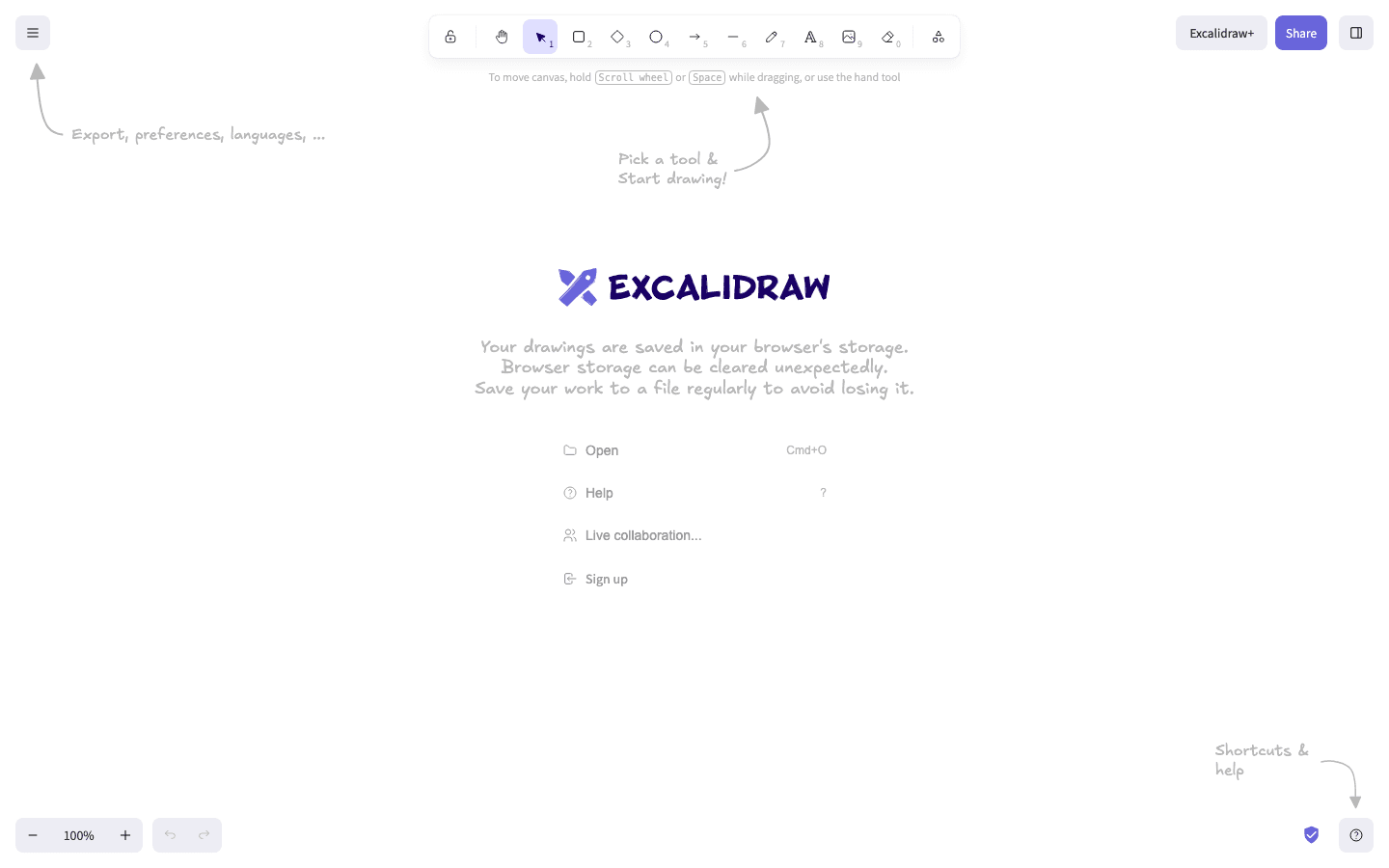
No account, no waitlist, no paywall. Pick a shape tool and start drawing, and the whole product already works. That's the single-player half of the trade, complete on its own, not a stripped demo of some bigger locked feature.
2. Notice where the multiplayer option sits, and where it doesn't.
"Live collaboration..." is the third item in that welcome list, under Open and Help, above Sign up. It isn't the first thing you see and it isn't required to draw a single shape. Click it and Excalidraw spins up a shareable room with the encryption key embedded in the URL fragment, the part after the #, which a browser never sends to a server. Excalidraw's own servers relay the drawing data and never see it unencrypted. That's a real, engineered network feature, not a signup wall wearing a friendlier name.
3. Compare that sequencing to your own product's first screen.
If your first screen asks for a team name, a workspace, or an invite before it shows any value, you've built the network layer first and the tool second, backward from both Excalidraw and 2010 Instagram. Ask what a single person, alone, gets to see or make before anyone else is involved, and cut everything standing in front of that.
The read
- The single-player version has to be the real product, not a teaser. Excalidraw's blank canvas and Instagram's filter tool were both fully functional software on their own, not a limited trial of the multiplayer version waiting behind a paywall.
- Multiplayer sits behind a click, not a wall. "Live collaboration" is one menu item among several, opt-in, not the entry price. Users reach for it once they have a reason, not because the product made them.
- In 2026 this sequencing doubles as a credibility test. A product a skeptical buyer can run solo, with no login, answers the "are you just a wrapper" question before they finish asking it, the same doubt Forbes named outright in its June 2026 piece Every Company Is Now An AI Wrapper So GTM Is The New Moat.
Steal it
Run it for your own product. Find the smallest unit of what you're building that one person, alone, with no account if you can manage it, gets real value from in the first sixty seconds. Ship that as the entire v1. Hold every "invite your team," "connect with," or "share to" feature out of the build until usage data shows people coming back solo, because that's the signal a network layer sitting on top would compound value instead of adding friction before anyone has seen the product work.
Defend the sequencing when someone tells you to bolt on collaboration from day one because "that's where the value is." Sometimes it genuinely is, real marketplaces and communication tools need density before they're worth anything to anyone. But if your product can stand alone even briefly, that pause before the network kicks in is doing marketing work it never used to do. It's proof, not a pitch, that the thing works before you ask anyone to trust the parts they can't see.
Gotchas
- A crippled single-player mode doesn't count. If the "free tool" is really a five-use trial gating the real product, people feel the bait inside one session, and the trust you were trying to buy turns into the opposite.
- The multiplayer layer is real engineering, not a signup form. Excalidraw's collaboration link keeps the encryption key in the URL fragment so its own servers can't read what gets drawn. That's a designed feature. Budget for it, don't bolt on an "invite" button and call it done.
- Honest caution: not every product has a single-player wedge. Marketplaces, chat tools, anything whose entire value is other people already being there, can't fake this pattern, and forcing one wastes a build cycle on a version nobody wants to use alone.