The Wedge Before The Crowd
Co-build with the audience you already have before you open the doors to everyone.
Most startups treat launch day like a curtain going up. Nobody outside the building has seen the product, the doors open, and you find out in front of a cold crowd whether any of it works. Stack Overflow didn't do that. Jeff Atwood and Joel Spolsky built the site in public, in front of the one audience they already had, the overlapping readers of their two programming blogs, and let that audience name it, argue over it, and use it broken before anyone else got in. The wedge came first. The crowd showed up second, and it showed up already invested.
What to do: Pick the narrowest slice of your market you can already reach directly, your blog, your newsletter, your own following, and hand them a real decision before the product is finished: the name, the first feature, the onboarding flow. Run the argument in public, not a private Slack. Let the people doing the arguing become your first users when it ships.
Why it works: People defend what they helped build, and they recruit for it too, so your first cohort arrives with a reason to stay and a story to tell.
Example: Stack Overflow's name was chosen by a public vote of Jeff Atwood's Coding Horror readers in April 2008, months before launch, and the beta that followed opened first to the few hundred developers who had voted and listened, not to the general public.
Walk it through
1. Hand your audience a real decision, not a survey.
On April 6, 2008, Atwood didn't ask readers whether they liked the idea. He put an actual ballot in front of them, sixteen candidate names, and told them to vote.
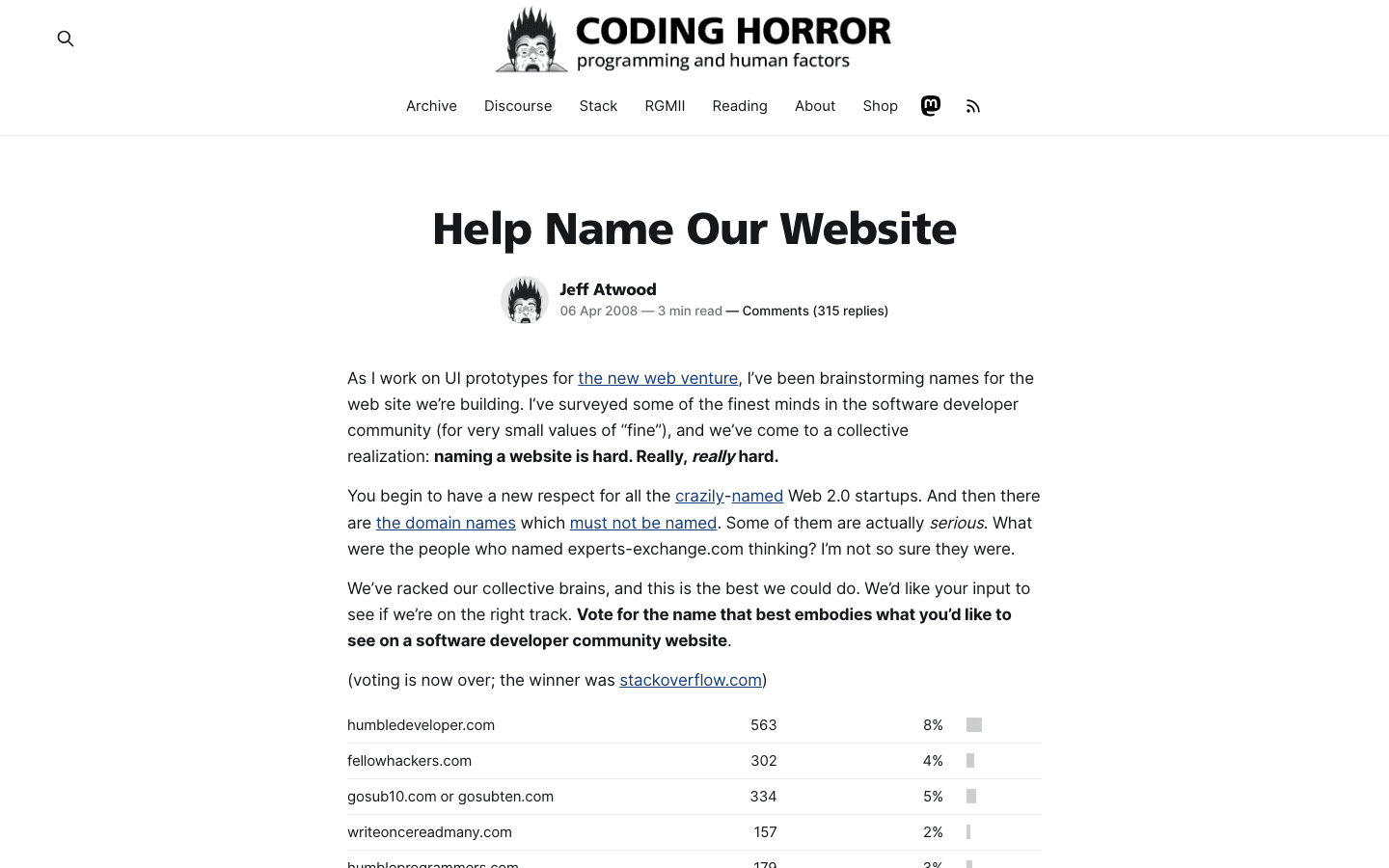
6,895 people voted. stackoverflow.com won with 1,721 votes, 25 percent, ahead of privatevoid.com, dereferenced.com, and eleven other options on the ballot. The site did not exist yet. The name did, because the people who would use it chose it.
2. Blend two small audiences instead of chasing one big one.
Spolsky put the math in writing when the beta opened. His blog, Joel on Software, ranked #15 on Bloglines, the RSS reader that tracked blog popularity at the time. Atwood's Coding Horror ranked #89. Neither list was huge on its own. Combined, Spolsky wrote, he expected "enough great developers into the site to reach critical mass on day one." Two overlapping niche audiences, not one broad launch.
3. Publish the build log while you build.
Spolsky and Atwood turned their weekly planning calls into a recorded podcast and released it while the site was still being coded. Every argument about features happened on tape, in front of the same readers who had just voted on the name. By launch day, the wedge audience hadn't only heard about the product. They had listened to the founders fight over it, week after week.
4. Open the door a crack before you open it all the way.
The private beta opened in early August 2008 to a small group of a few hundred developers, the same people who had voted and subscribed to the podcast. Five weeks later, on September 15, 2008, Stack Overflow opened to the public. It didn't launch to strangers. It launched to a crowd that had already spent months helping build it.
The read
- The decision is the hook. Voting on a name feels trivial, but it turns a spectator into a stakeholder before the product exists.
- Two small lists beat one big one. Spolsky did the audience arithmetic out loud, #15 plus #89, and used it to decide the launch would work at all.
- The build log is the pitch. A weekly podcast of two founders arguing about the product did more pre-launch marketing than any campaign could, because it was true.
Steal it
Run this on your own product before you write a single line of launch copy. Find your narrowest reachable channel, even if it is a few hundred email subscribers, and ask them for one real decision: the name, the first integration, which of two onboarding flows ships. Do the arguing in a public thread or a live call, not a locked-down Slack only you can see, and let the first access to the product go to the people who showed up for the decision, not to everyone who fills out a form later.
Defend the size, not apologize for it. This only works if the group is small enough that each person's vote feels like it mattered and public enough that people outside the group can watch the argument and want in. A poll blasted to a purchased list of 50,000 strangers is not this. A real decision put to 500 people who already read what you write is.
Gotchas
- A vote you override is worse than no vote. If you ask readers to name the thing and then quietly ship a different name, you burn exactly the trust you spent to build. Stack Overflow shipped the name that won.
- Your list has to already trust you. This worked because Atwood and Spolsky had years of blog credibility banked before they asked for anything. Cold traffic invited to vote on a half-built product will not behave like a warm one.
- Small still has to be real, not padded. A beta of a few hundred works because they were the few hundred who took part in the decisions. Filling the same beta with random signups to hit a number defeats the entire point.