Trade Bot Volume for Personalization
The automation stack that saved you time is now the reason you're banned.
Every outbound team on LinkedIn ended up running the same stack. A cloud-based sender, a list of a few thousand names, a sequence that fires connection requests and follow-ups on autopilot while you sleep. It worked well enough that a whole category of vendors got funded selling it back to you as scale. Then LinkedIn's detection got good enough to see the pattern from the outside, cloud IPs, synchronized timing, identical sequences running across dozens of accounts at once, and started erasing the vendors and flagging the accounts that ran through them. The tool that bought you fifteen hours a week is now the fastest way to lose the account you built those fifteen hours to grow.
What to do: Cut your sender count down to the accounts you can personally vouch for, and stop routing them through cloud-based automation. Write fewer messages, reference something specific to the person you're writing to, and send from a real session on a real device. Where you still want reach at scale, buy it directly through LinkedIn's own Message Ads, what it used to sell as Sponsored InMail, instead of a bare connection-request script aimed at a cold list.
Why it works: LinkedIn's enforcement now flags the pattern of the send, not the size of the list, so a small number of human-looking, personal touches survives where a large number of identical ones gets caught.
Example: HeyReach, a LinkedIn automation tool that advertises itself as trusted by more than 6,500 companies, had its company page and the personal LinkedIn profiles of its CEO and CMO permanently removed in the last week of March 2026. The product itself kept running for paying customers. LinkedIn didn't touch the software, it erased the vendor's public face on its own platform, which tells you exactly where the current line sits: run automated sessions through shared cloud infrastructure and LinkedIn will cut you off from the network you use to sell the tool, even while it leaves existing customers' automations alone, for now.
Walk it through
I checked this myself in July 2026. Here is exactly what came back.
1. Look up the vendor on LinkedIn itself.
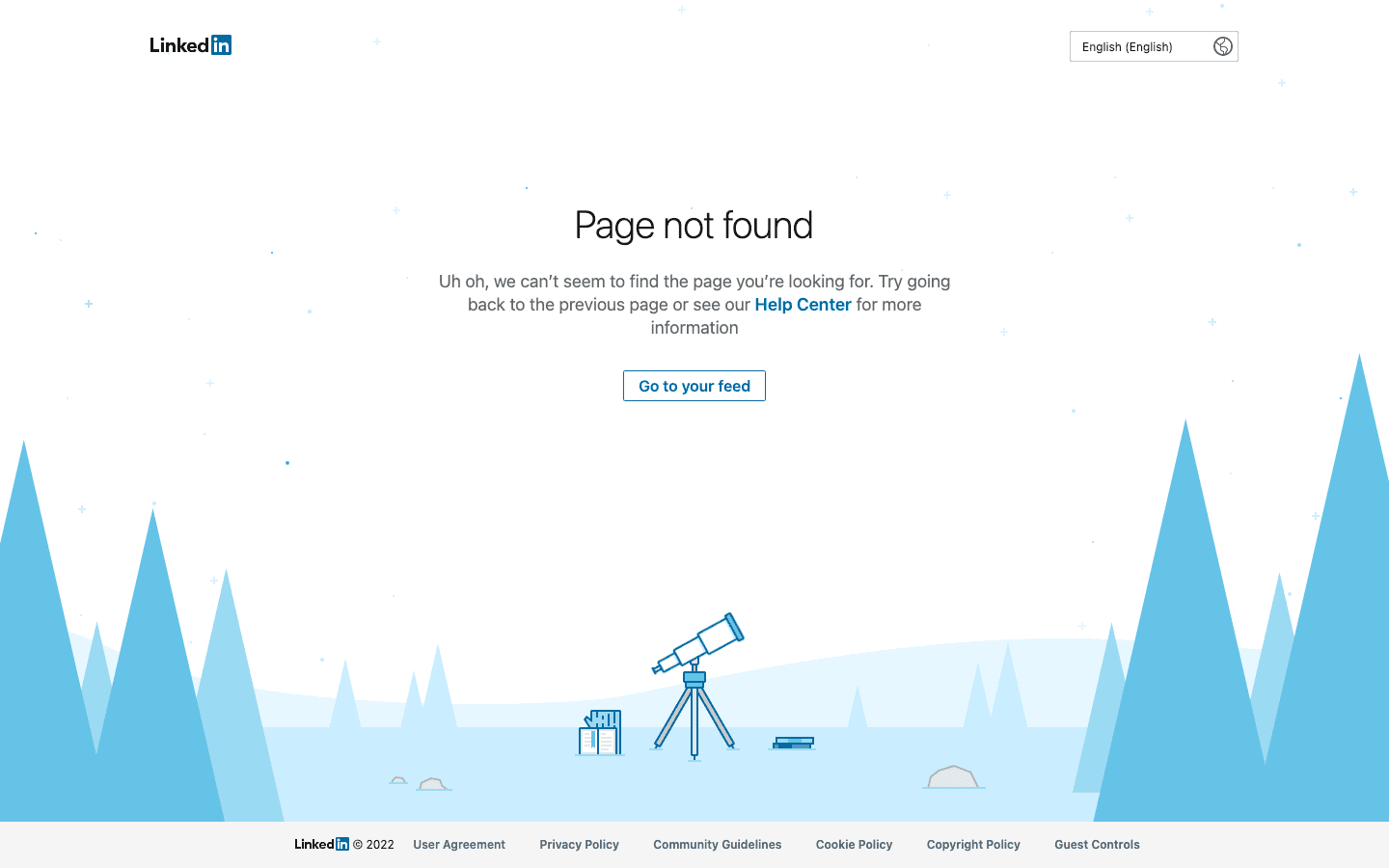
linkedin.com/company/heyreachio does not resolve. No suspension notice, no explanation, just LinkedIn's generic 404. That is what a permanent removal looks like from the outside. The company that sells you LinkedIn automation no longer has a LinkedIn presence of its own.
2. Check whether the tool is still selling the exact thing that got it in trouble.
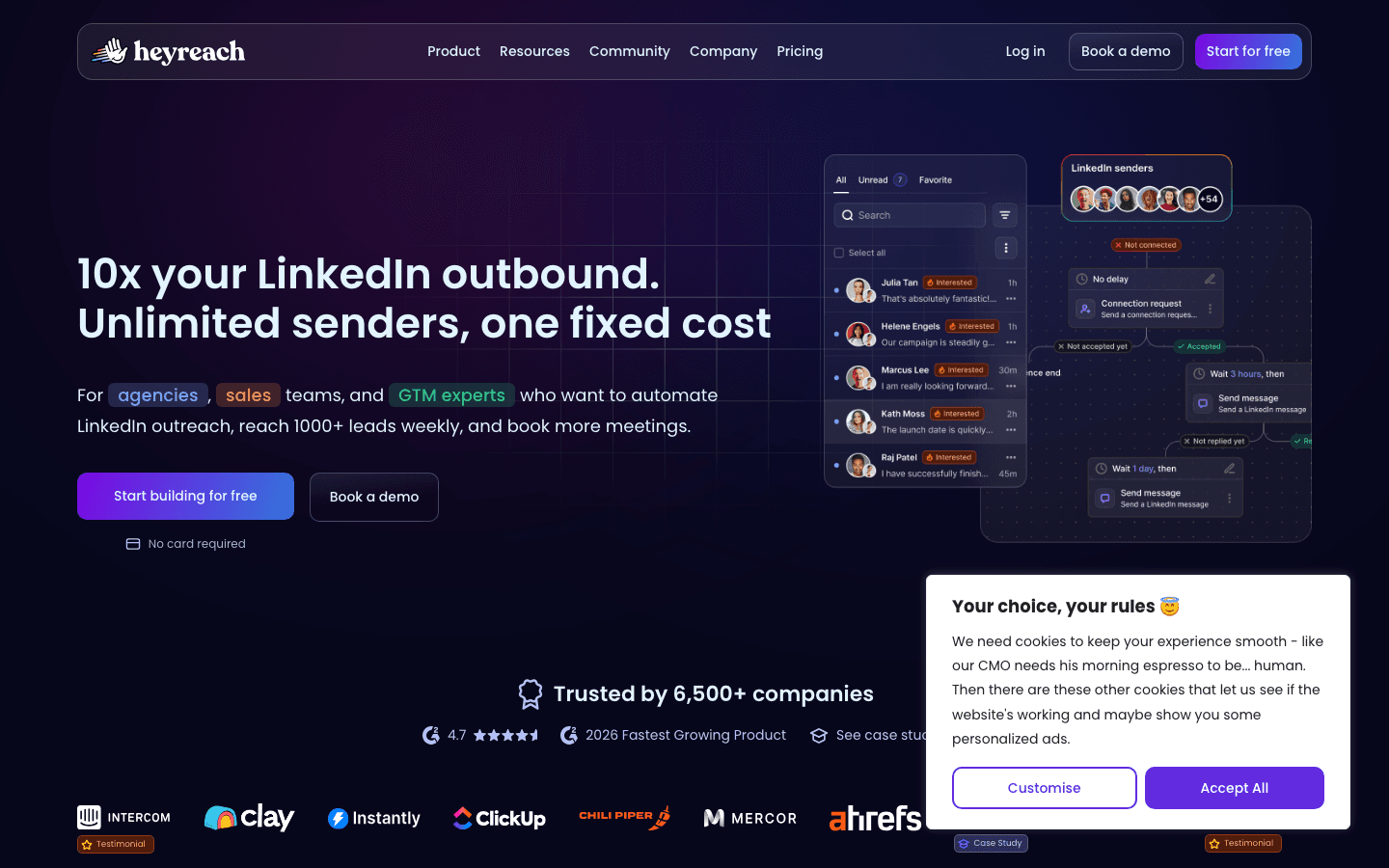
It is. heyreach.io still opens on "10x your LinkedIn outbound. Unlimited senders, one fixed cost," aimed at teams who want to "reach 1,000+ leads weekly." The ban cost them their LinkedIn brand presence, not their pitch. Banned on LinkedIn, still selling the LinkedIn play, on the same day, is the whole risk in one screen.
3. Look at the volume lever LinkedIn actually wants you pulling instead.
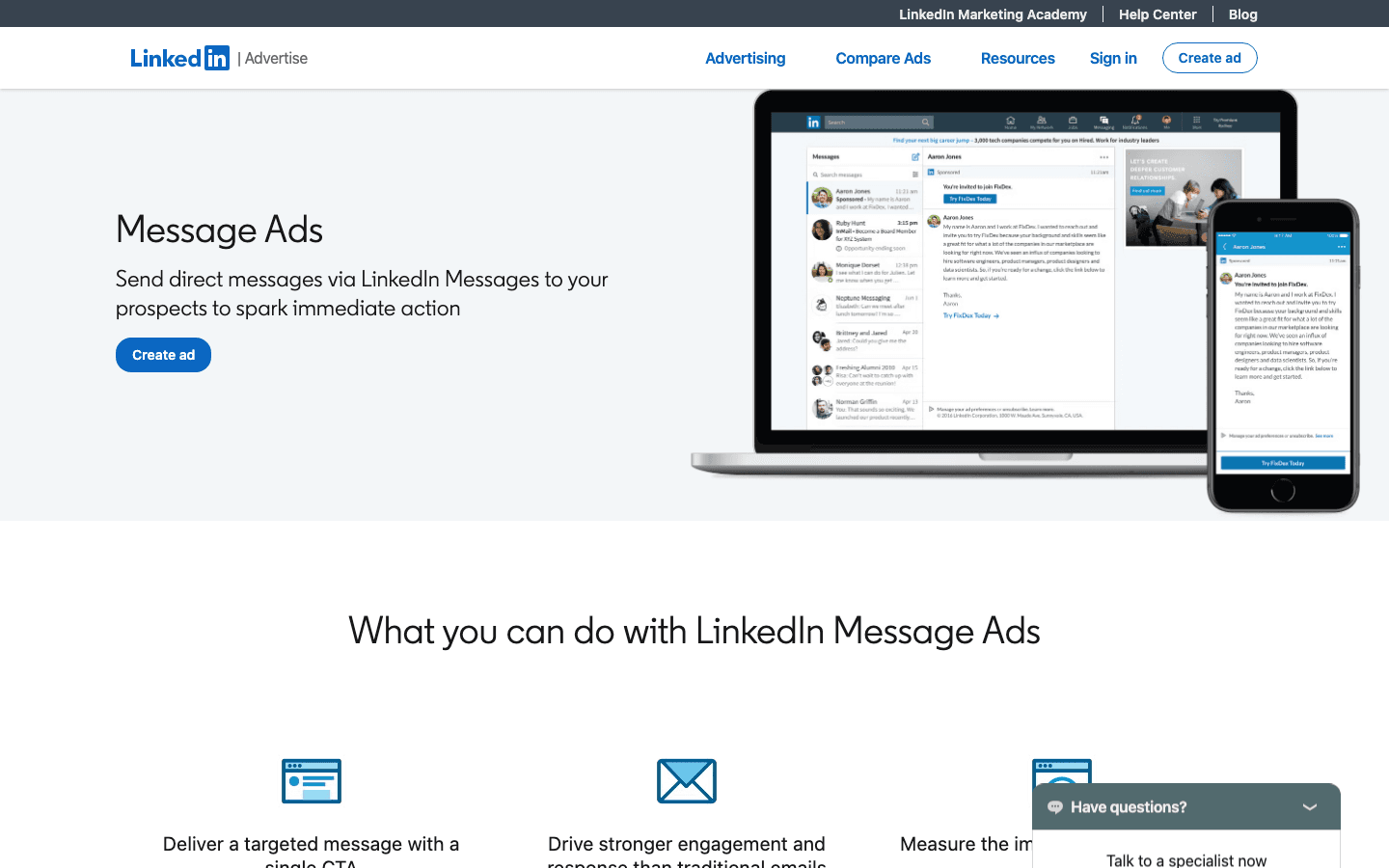
Message Ads, LinkedIn's current name for what it used to brand Sponsored InMail, is the same idea, a message landing directly in someone's inbox, except you're paying LinkedIn for the placement instead of routing a script around its rate limits. Same inbox, opposite risk profile.
The read
- The takedown hits the brand before it hits the buyer. LinkedIn erased HeyReach's public presence and left paying customers' automations running, at least for now. The message to vendors is louder than the message to users, but users are the ones whose accounts carry the actual exposure.
- Volume is the tell, not the strength. Detection works by spotting many accounts sending on identical timing from identical cloud ranges. Reporting on LinkedIn's Q1 2026 enforcement sweep puts the restriction rate at close to 40 percent of accounts running non-compliant automation tools. A slower, smaller, human-run sequence doesn't trip that pattern.
- Paid volume still works because LinkedIn is the one selling it. Message Ads get you the same inbox placement without a cloud session pretending to be a person, because you're buying the reach instead of routing around the rules to take it.
Steal it
Audit your own outbound stack before you audit anyone else's. Count how many sender accounts you're running through a third-party tool, check whether that tool routes sessions through its own cloud infrastructure instead of your device, and if it does, cut your sender count hard and put a real human back behind each one that's left. Rewrite the sequence so every message references something specific to that one account, their post, their hire, their launch, not a merge field. You'll send fewer messages. Send them expecting a reply, not a rate.
Where you still want scale, pay for it in the open. Move budget into Message Ads against a tightly defined list instead of a wide cold one, and let LinkedIn's own targeting do the volume work its terms of service actually allow. If you run an agency doing this for clients, treat every client account like it's the one that gets flagged next, because the platform is watching the pattern across all of them, not just the one that complains.
Gotchas
- A vendor ban is not an account ban. HeyReach's page disappeared and its customers kept sending. Don't assume a tool's takedown means your account is automatically safe, or that a tool staying online means it's automatically compliant. Check your own account's standing, not the vendor's headline.
- Personalization costs the time the tool used to save you. Fewer, denser touches means an actual person writing actual messages. Budget the hours before you cut the tool, or you'll just quietly stop sending.
- The line keeps moving. LinkedIn's enforcement tightened through Q1 2026, and nothing suggests it stops there. What reads as compliant volume today is the pattern that gets flagged next quarter. Recheck your own sending behavior against current enforcement news on a quarterly cadence, not once.