Measure your share of voice, then copy the winners
AI visibility is invisible in Analytics, so measure it directly.
What to do: Track how often you appear, for which buyer prompts, and against which competitors. Start with one engine and the 20 to 50 prompts that matter, then open the pages that get cited and study exactly what they did.
Why it works: AI visibility is invisible in Google Analytics, and the pages already being cited are a live answer key for what your category rewards.
Example: Tools like Profound, Peec AI, and Otterly track brand mentions and citations across engines, starting around $29 to $99 a month. This budget line is forming fast: Profound raised $96 million at a billion-dollar valuation in early 2026. Ramp used this loop to build targeted "accounts payable" pages and went from 3.2% to 22.2% visibility in that category in about a month, picking up 300-plus citations. Their visibility numbers are the point. Take any revenue claims with more salt.
Walk it through
I ran a real buyer query through Perplexity in July 2026, the exact kind of question a prospect types before they buy a tool like this. Here is exactly what came back.
1. Ask the question your buyer actually asks.
open "https://www.perplexity.ai/search?q=best+tools+to+track+brand+visibility+in+ChatGPT+and+AI+search"
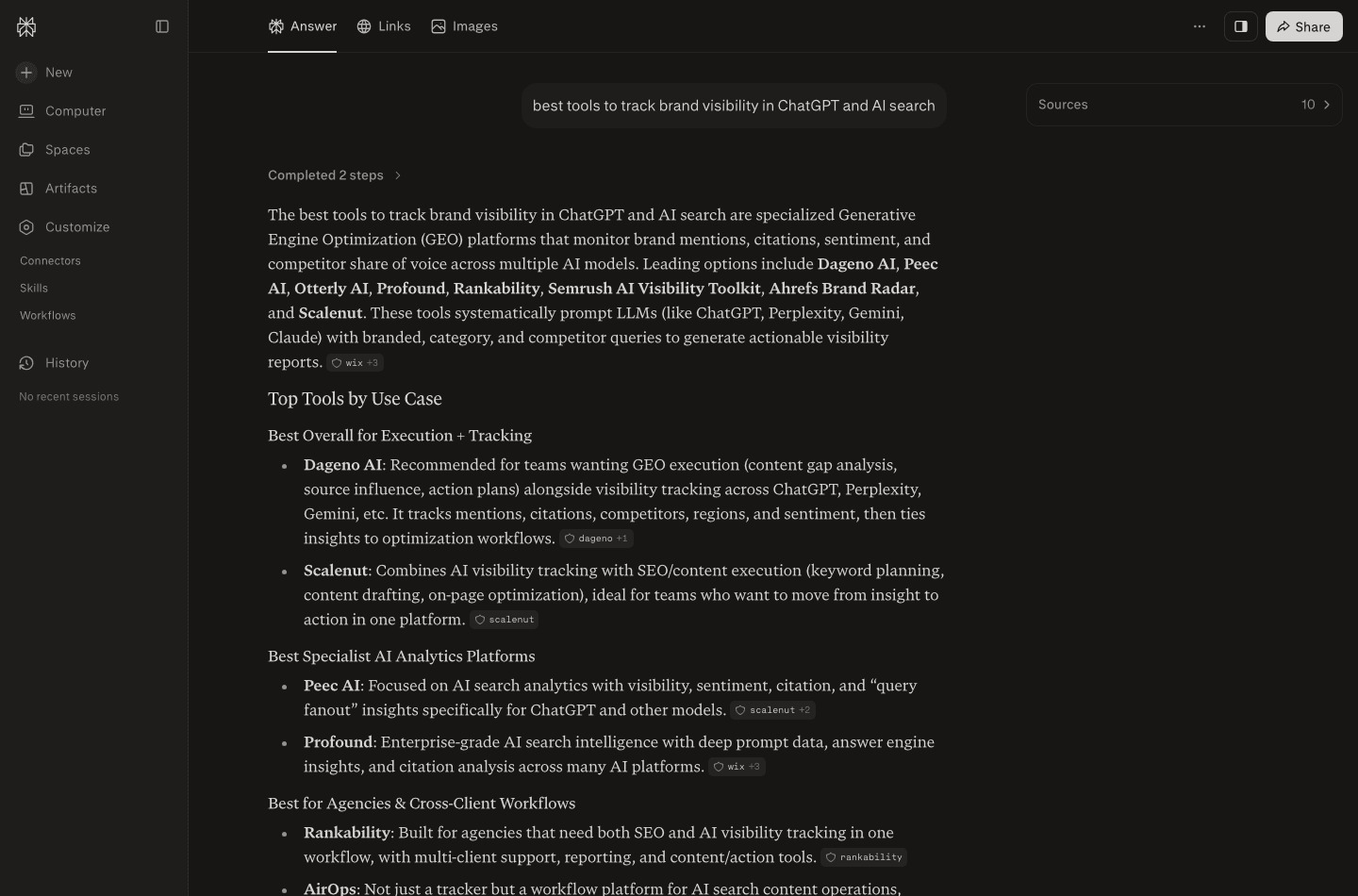
No login needed, no ambiguity about what "visibility" means here. Perplexity names eight tools by name in the first paragraph alone, groups them into use cases, and tags nearly every claim with a small citation chip. That chip is the whole game. It tells you exactly which page fed that sentence.
2. Pull the citation list the model actually used, not just what's on screen.
Open DevTools, go to Network, filter for the page's rest/thread request, and read the sources_payload in the response. It lists every source with a name and a URL, the same data driving those chips.
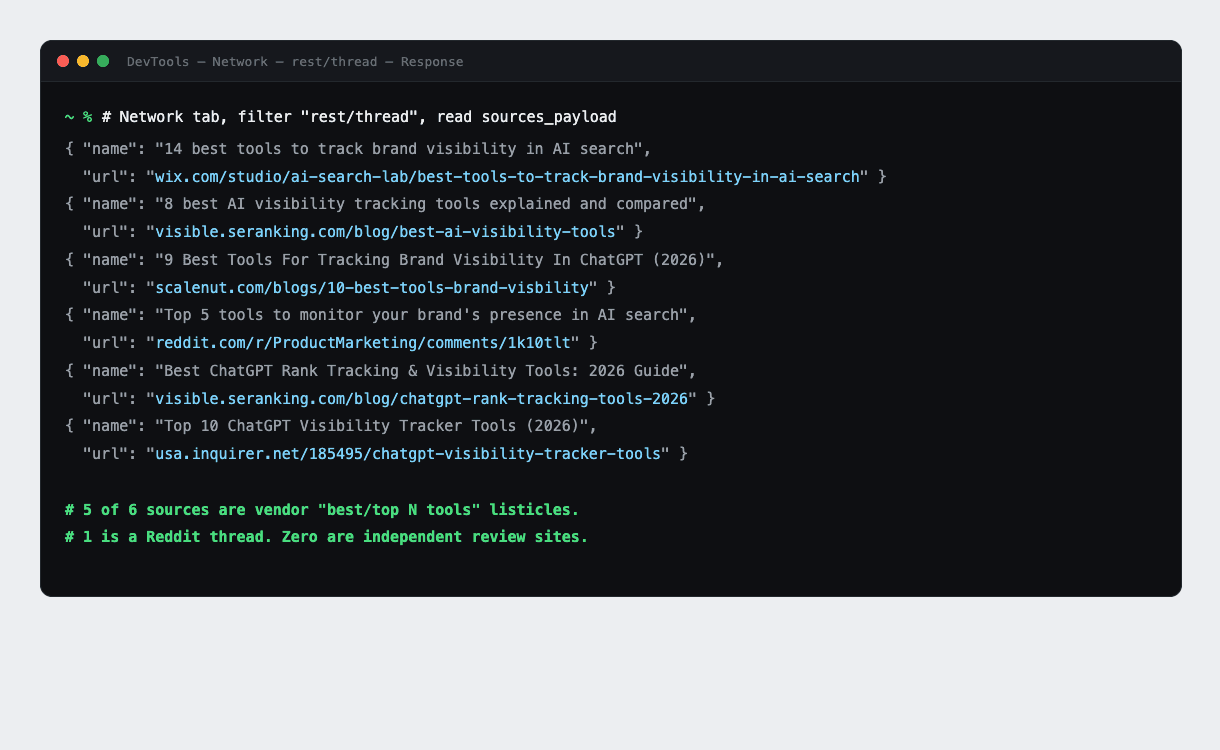
Five of the six sources are "best tools" listicles, three of them run by the vendors named in the list itself (Wix, SE Ranking, and Scalenut each publish their own ranking). The sixth is a Reddit thread. Zero are independent review sites. The model isn't discovering some neutral truth about which tool is best, it's summarizing whoever already published a ranked list.
3. See what a dedicated tracker shows once it's running.
A one-off query tells you today's answer. A tracker tells you the trend. Peec AI's own marketing page shows exactly what that looks like, running on a live account.
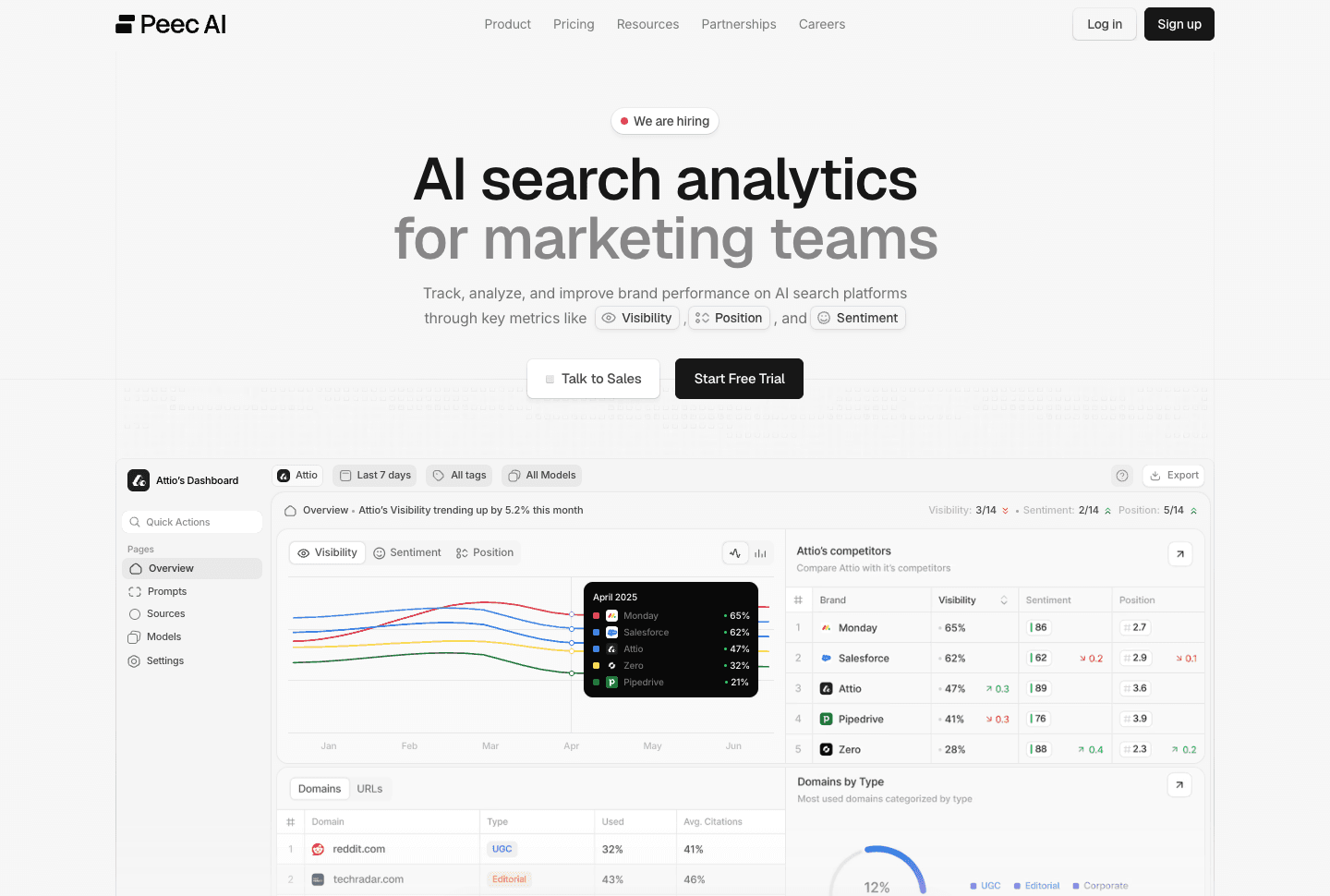
Same shape as what you just read by hand: visibility percentage, sentiment, position versus named competitors, and a breakdown of which domains keep getting cited, split by UGC, editorial, and corporate. That domain breakdown is the same lesson as step 2, just automated and run weekly instead of once.
4. Confirm the category is real money, not a side project.
open "https://www.tryprofound.com"
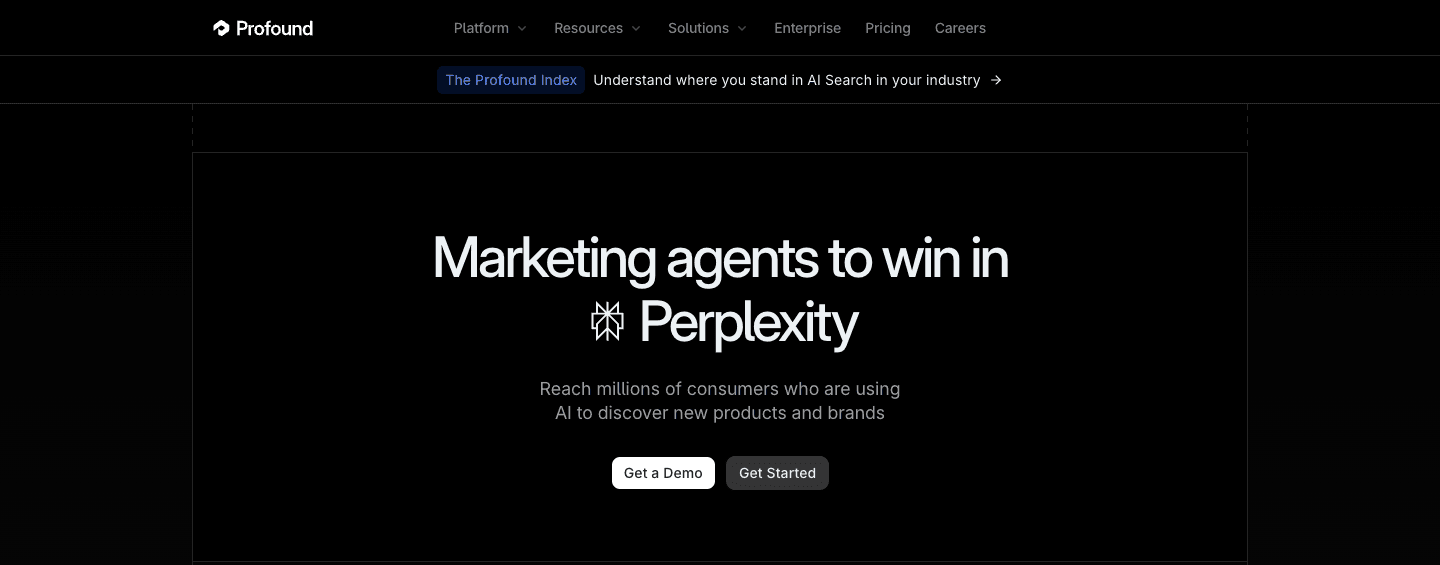
Profound isn't selling a dashboard as an afterthought, the entire homepage is built around one promise: win inside Perplexity specifically. That's the same $96 million, billion-dollar-valuation company from the card above, and the pitch on their front door matches the budget line forming under it.
The read
- The citation chip is the source, read it before you read anything else. Every claim an AI answer makes traces back to one page. Find that page and you've found the thing your category actually rewards.
- Listicles and forums dominate the source list, original research barely shows up. In this run, five of six citations were "best X tools" posts and one was Reddit. If you want in, that's the format to publish, not a neutral whitepaper.
- A tracker turns a snapshot into a trend. One query shows you today. Twenty to fifty prompts, checked weekly, show you whether your last content push actually moved the needle or whether a competitor's listicle just started outranking yours.
Steal it
Pick your own 20 to 50 buyer prompts, the ones a real prospect types right before they choose a vendor, not just your brand name. Run each one through Perplexity by hand first, it's free and public. Read the citation chips, pull the source list from DevTools the way I did above, and write down which pages keep showing up. That list is your target list: get on those pages, or publish the same format yourself.
To defend the position once you have it, watch your own citations the same way. If a competitor's listicle starts appearing where yours used to, that's an early warning an Analytics dashboard will never give you, because none of this traffic shows up as a referral. By the time you notice it in your numbers, they've had the citation for months.
Gotchas
- Perplexity's own UI throttles fresh, unauthenticated sessions. A brand-new query can sit on "Thinking" for a while before it streams. Give it time, or load a shared result link instead once one exists.
- A citation is not a customer. Ramp's visibility jump from 3.2% to 22.2% is a real, verifiable metric. What it did to revenue is not disclosed anywhere I could confirm, so don't repeat that part as a growth number.
- The source list you pull today will not be the source list next month. Models re-rank, listicles get updated, new posts enter the mix. Treat any single run as a sample, not a verdict, and re-check on a schedule.