Byline the Human, Not the Brand
A named person's voice earns pickup a faceless brand account never will.
Most companies publish under "the team," a logo for an avatar, and a voice scrubbed of any actual opinion. A journalist deciding who to quote, or an AI model deciding who to cite, has to weigh a source it can check against a source it cannot. Nobody checks a logo. Put a real name, a real title, and a real opinion on the piece instead, and you have just made yourself citable.
What to do: Stop publishing under "Team CompanyName." Every post, thread, and newsletter issue gets a named author with a real photo, an exact job title, and a one-line bio stating their actual credential. Write it in that person's real opinion, not a hedged brand statement, and give them a public author page listing everything they have written.
Why it works: A named, credentialed source is easier for a journalist to trust and easier for an AI answer engine to cite than an anonymous company account.
Example: Ramp runs its weekly Econ Lab newsletter under lead economist Ara Kharazian's own byline instead of Ramp's brand voice, and his analysis has been covered by the New York Times, the Wall Street Journal, Financial Times, Bloomberg, and NPR's Planet Money, among others.
Walk it through
I pulled up Ramp's own author page for Ara Kharazian in July 2026. Here is exactly what is on it, and why each part is doing a job.
1. The name and title do the trust-building, not the logo.
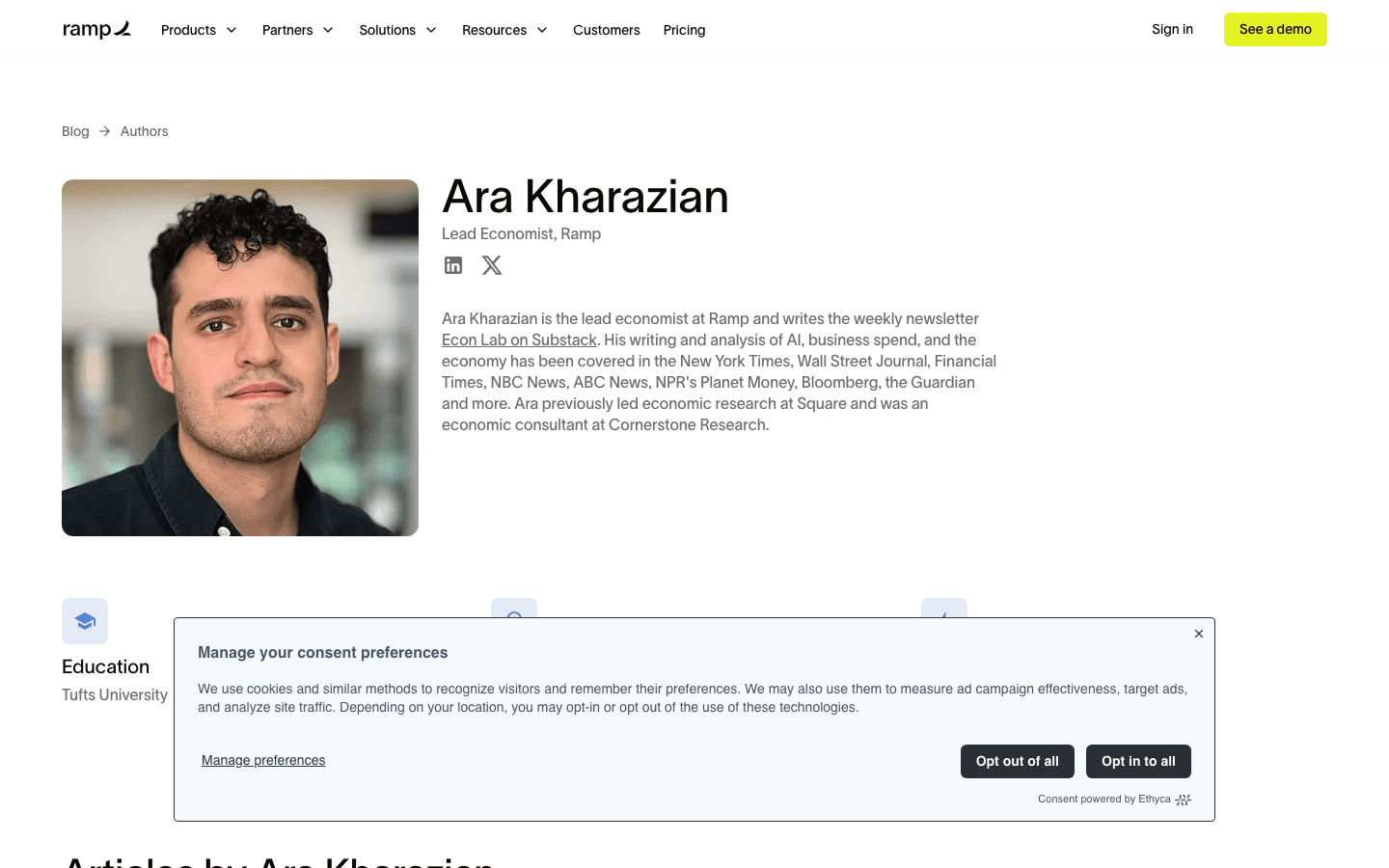
Above the fold: a real photo, the name "Ara Kharazian," and the title "Lead Economist, Ramp." No "Ramp Team." No stock illustration. A reporter deciding whether to quote an economic take can see in two seconds exactly whose take it is.
2. The bio carries the receipts.
One paragraph states that Ara previously led economic research at Square and worked as an economic consultant at Cornerstone Research. That sentence does the work a dozen "trusted by" logos cannot. It is a specific, checkable claim about why this particular human's opinion on business spending is worth quoting.
3. The byline lives off the company domain, on purpose, so build the same page for your own team.
Ramp does not stop at a bio page. The newsletter itself runs at econlab.substack.com, under Ara's name, not ramp.com. Ramp links out to it, Ara owns it. That is the opposite of the usual instinct to keep everything on the brand's domain, and it is exactly why the credibility sticks to the person instead of the corporate account. Do the same thing at your own scale: pick whoever on your team holds the sharpest opinion about the part of the business your content covers, give them a real photo and their exact title, and publish everything under their name on a page anyone can find from your nav or footer, the way ramp.com/authors does automatically.
The read
- The title is the credential. "Lead Economist, Ramp" tells a reporter in three words why this opinion on spending data is worth a quote, in a way "Marketing Team" never will.
- The bio is the receipt. One sentence about Square and Cornerstone Research lets a journalist skip the trust-building step and go straight to citing.
- The channel matters as much as the byline. A newsletter running under a person's own name, on a domain they control, makes the authority portable. It survives independent of which company badge that person happens to wear this year.
Steal it
You do not need an economist on staff to run this play. You need whoever on your team already has the sharpest, most specific opinion about the part of the business your content covers, a support lead, your first engineer, your head of sales. Put their real name and photo on the piece, write it in their actual words, and build one page listing everything they have published, so anyone checking credentials sees the full body of work in ten seconds instead of having to take your word for it.
Defend against the obvious failure mode before it happens. Ramp does not bet the whole program on one person. Its data hub also credits Ian Macomber and Ryan Stevens by name and title alongside Ara, so the newsletter survives any single person leaving. Name more than one voice inside your company, not only the founder, so your credibility does not walk out the door with one resignation letter.
Gotchas
- A named voice needs a real opinion behind it, not corporate talking points wearing a photo. Readers and reporters can tell the difference within a paragraph, and once they catch a ghostwritten byline the trust does not come back.
- The person becomes a dependency. If your whole content engine runs through one named voice and that person leaves, the audience built around their name leaves with them. That is the actual reason to name more than one person early, not just good ethics.
- Getting real participation is the hard part, and this is the honest caution. A byline only works if the named person gives you their actual opinion, their time for a quick interview, and their own edits before it ships. A busy executive who will not do that turns the byline into the same hollow brand voice with a headshot stapled on.