Sponsor the Newsletter, Not the Feed
Buy a niche audience's trust before you buy broad platform reach.
Every dollar you put into Meta or Google buys you a stranger's attention for a couple of seconds, and you are bidding against every other company chasing that same stranger. A niche newsletter already solved that problem for you. Someone subscribed on purpose, opens it on purpose, and trusts the person writing it enough to keep opening it months later. Rent that relationship before you go fight for cold attention on a feed nobody chose to open.
What to do: Book a placement in a niche newsletter through an ad marketplace like Beehiiv's Ad Network before you spend a cent on Meta or Google. Pick two or three newsletters your actual buyer already reads, not the ones with the biggest list, and pay per click or per thousand opens instead of negotiating a flat sponsorship blind.
Why it works: You are renting a writer's already-earned trust with their exact audience instead of competing with every other advertiser for cold attention on a crowded platform.
Example: Beehiiv's own Ad Network is proof the model works at scale. It pays out more than $1 million a month to the publishers running the ads, spans newsletters from 1,000 subscribers to more than 1 million, and counts Notion, HubSpot, Deel, Netflix, and Google among the brands buying placements through it.
Walk it through
I opened Beehiiv's Ad Network in July 2026, the way an advertiser would. Here's exactly what showed up.
1. The pitch is the whole argument.
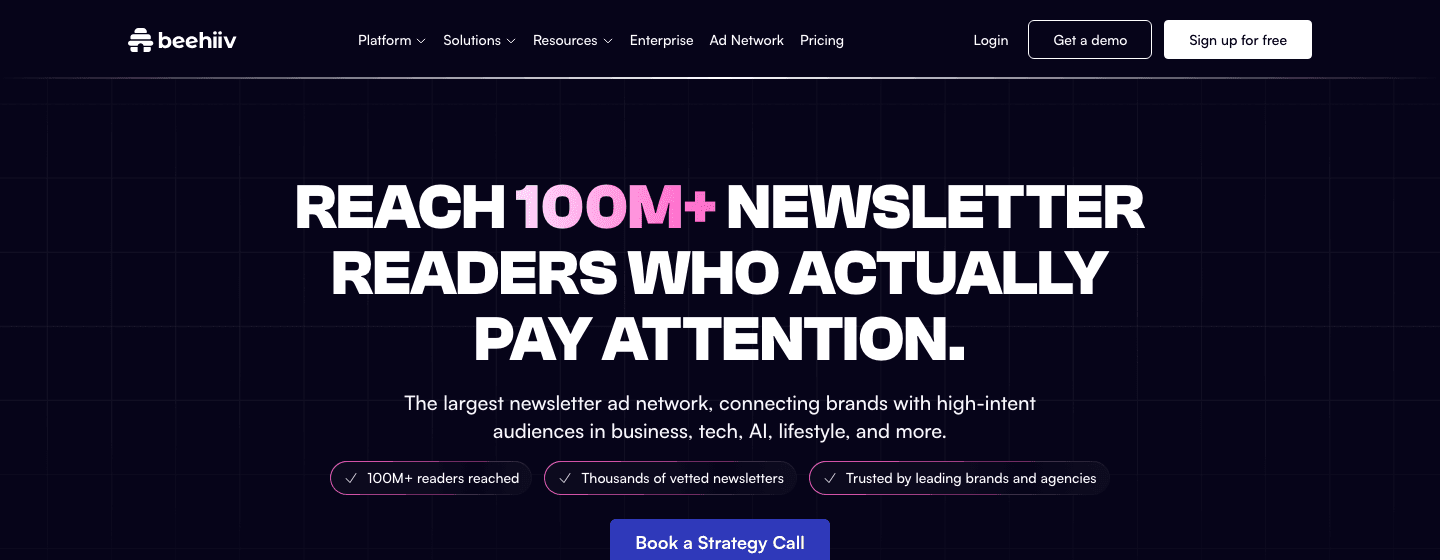
"Reach 100M+ newsletter readers who actually pay attention." That headline does the selling before you even scroll. It is arguing against Meta and Google in one line: attention that chose to be there, instead of attention an algorithm forced in front of someone.
2. Inventory is sorted by audience, not by newsletter name.
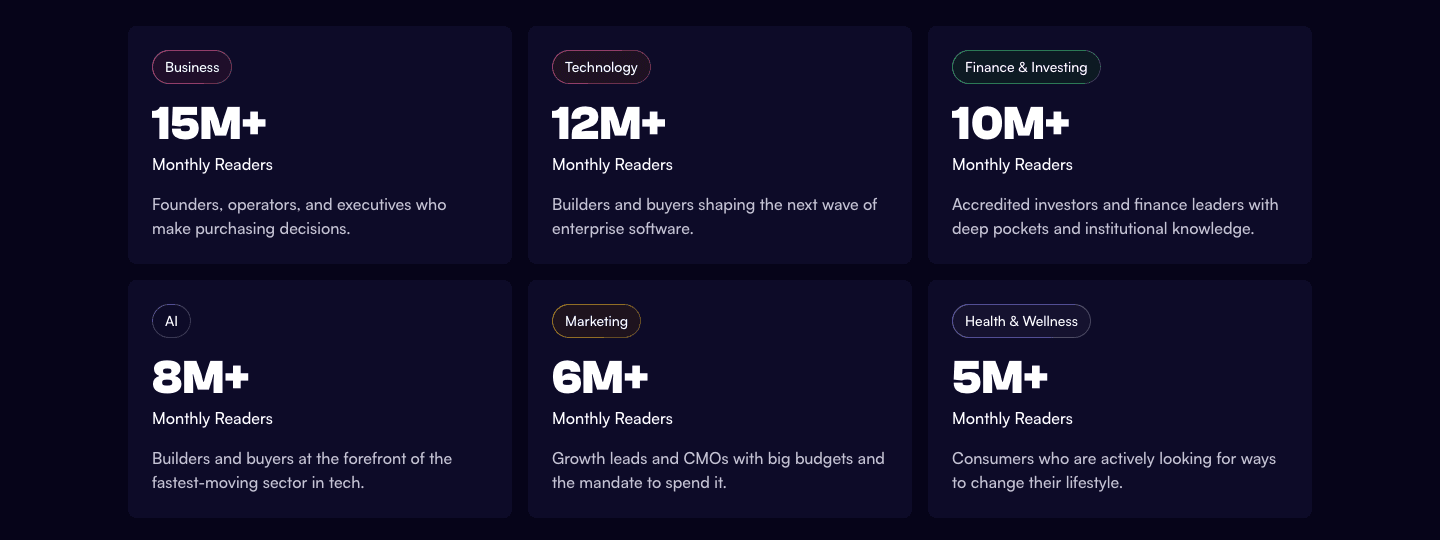
You do not pick a single newsletter off a shelf. You pick a category, Business, Technology, Finance & Investing, AI, Marketing, Health & Wellness, and the network slots your campaign into whichever newsletters in that category fit. Reach is printed right on the card. No call needed just to find out if the audience is big enough to bother with.
3. The buying flow is four steps, and step three is the whole pitch of this chapter.

Step three's copy says it outright: "Stand out by fitting in." A sponsorship that reads like a display ad has already failed. It has to read like something the writer would put in front of their own list on a normal Tuesday.
4. Budget is real too. Beehiiv answers the minimum-spend question on the same page, no call required: "Campaigns start at $15k. Most high performing first buys run $15k - $30k and run between 4-6 weeks." That is the marketplace-negotiated version of this play. You can run the same idea for a few hundred dollars by emailing one newsletter writer directly and asking for their rate card, no marketplace required.
The read
- The name on the list matters more than the size of the list. A writer with 8,000 engaged subscribers who covers exactly your category beats a 200,000-subscriber list about something adjacent to your product.
- Liquidity is the tell that this is a real market, not a favor. Beehiiv moving more than $1 million a month through its network means advertisers are re-buying, which means the format converts often enough to be worth repeating.
- Range means you can test cheap before you buy expensive. A market spanning 1,000-subscriber lists to 1M-plus ones lets you run a small placement first and confirm your offer converts before you commit five figures to the newsletter with the biggest list.
Steal it
Do not start with the marketplace. Start with a list of the five newsletters your actual buyer already reads, built from what your best customers mention, what shows up in their inbox, what they forward to each other. Email the writer directly and ask for their rate card and their open rate. Most writers under 50,000 subscribers will sell you a placement with no marketplace taking a cut, and you get to write the copy with them instead of through an algorithm's rules. Run the same offer in two or three of these before you ever open a broad platform.
If you run a newsletter with a real, engaged list, this play points back at you too. Your list is inventory the moment it is worth reading, and a marketplace like Beehiiv's Ad Network, or just a rate card and a form on your own site, turns a free newsletter into a second revenue line without you doing any of the selling yourself.
Gotchas
- A big audience number is not a buyer match. 15 million monthly readers in "Technology" is not 15 million people who would buy your dev tool. Ask what the newsletter is actually about before you ask how many people read it.
- Copy that reads like an ad gets skipped like an ad. The whole value of the channel disappears the moment your placement stops sounding like the writer and starts sounding like a press release.
- One placement rarely proves anything. A single run is a coin flip. The read only becomes real once you have run the same offer in the same newsletter, or the same category, more than once and can compare.