Land the Default Placement
Get certified so the platform recommends you before a buyer even searches.
Most apps on a marketplace are waiting to be found. They sit in a list, hoping the right search term surfaces them before a buyer gives up and picks whatever loaded first. A platform's own top-tier certification skips the search entirely. Qualify for it and the platform's algorithm, its homepage, and its own support tools start recommending you automatically, to every buyer, before they type a thing.
What to do: Read the platform's published certification checklist end to end, treat every metric on it as an engineering ticket, and apply the day you clear the bar. Shopify's version is "Built for Shopify," a badge that requires 50 net installs from paid-plan shops, five reviews, and hard performance numbers (admin Largest Contentful Paint under 2.5 seconds, Interaction to Next Paint under 200 milliseconds, both measured over 100+ sessions across 28 days).
Why it works: A plain listing waits to be searched. A certified listing gets pushed to the buyer by the platform itself, on the homepage, inside category pages, and through the platform's own AI assistant.
Example: Shopify reports an average 49% increase in new installs within 14 days of an app qualifying for Built for Shopify. Judge.me, a product-reviews app with over 41,000 reviews on its own listing, carries the badge today.
Walk it through
I checked the Shopify App Store in July 2026. Here is exactly what qualifying buys you.
1. Open a certified app's own listing page.
apps.shopify.com/judgeme renders a small blue "Built for Shopify" badge directly under the app name, above the pricing and rating.
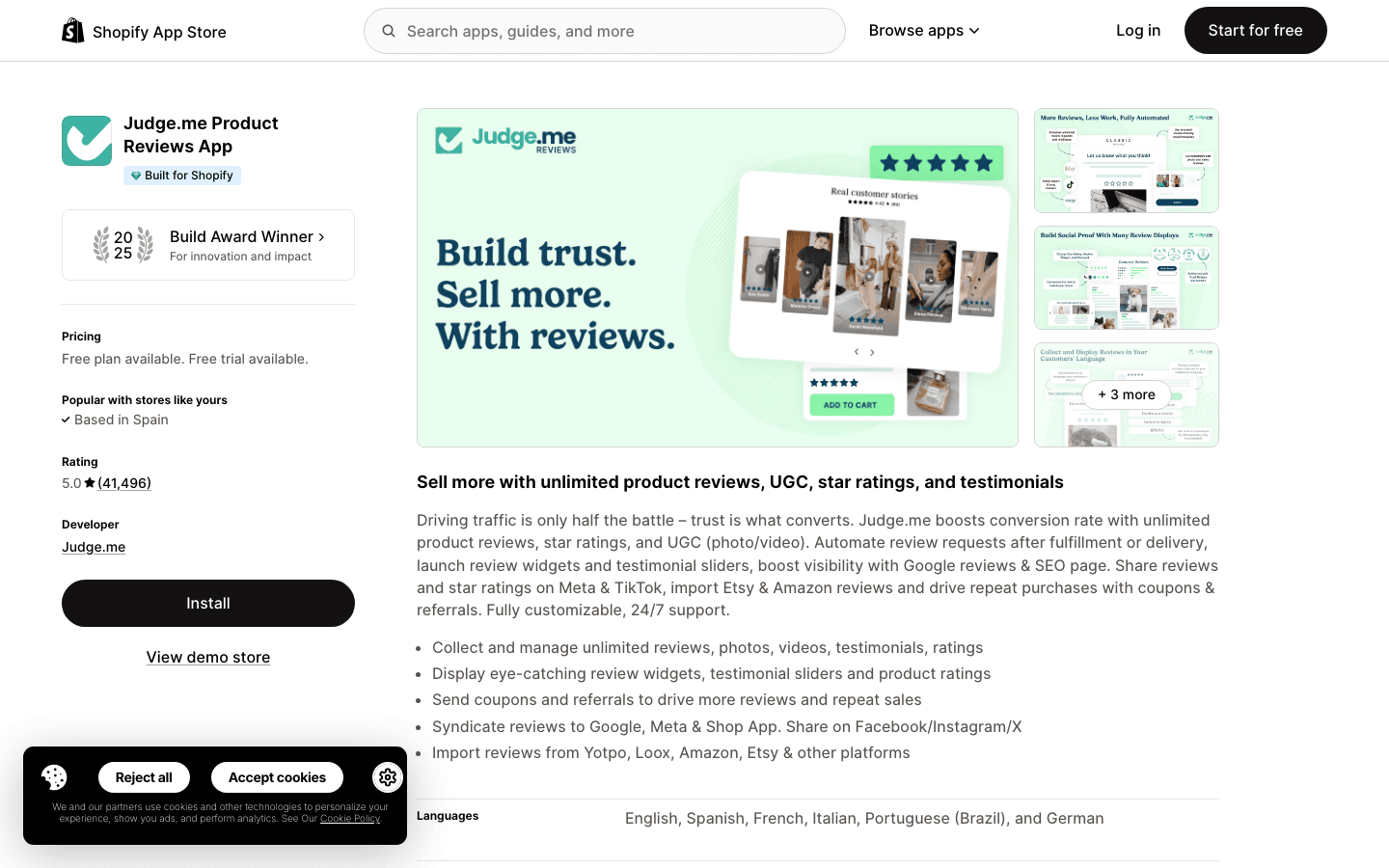
That badge is not a graphic the developer uploaded. Shopify attaches it to the listing only after the app clears every threshold on the requirements page, and it travels with the app everywhere the listing appears, on search cards, on category pages, and on the app's own page.
2. Open the dedicated hub page for certified apps.
apps.shopify.com/app-groups/highlights/built-for-shopify is a page that exists only because the badge exists. Shopify built a whole curated storefront around it.
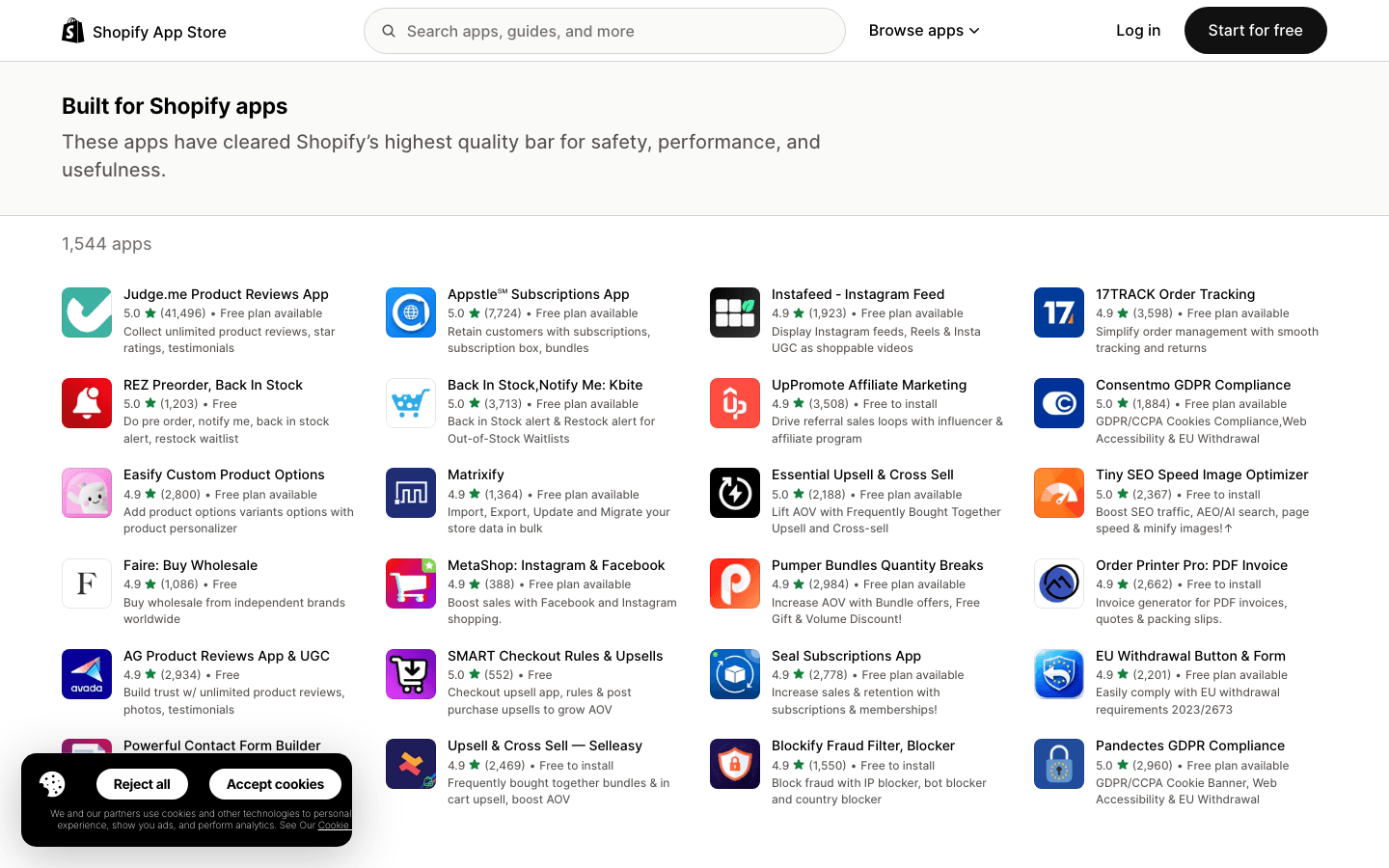
1,544 apps carried the badge the day I checked, out of many thousands on the store. That page is prime real estate Shopify built and hands out for free, but only to apps that met the bar.
3. Read the requirements page like a punch list, not a marketing pitch.
The full bar, as published: 50 net installs from active paid-plan shops, five reviews, a minimum recent rating, a storefront Lighthouse score that does not drop more than 10 points, checkout carrier-rate endpoints answering under 500ms at the 95th percentile over 1,000+ requests, and admin performance metrics (LCP, CLS, Interaction to Next Paint) held inside Google's own thresholds across 100+ measurements over 28 days. None of it is subjective. It is a list you either pass or you do not.
4. Qualify, and the recommending starts without you.
Once certified, Shopify's own reporting describes the app getting pulled into "Recommended for you" placements across category pages, into the App Store homepage header rotation, and into Sidekick, Shopify's in-admin AI assistant, when a merchant asks it for an app recommendation. You did not buy any of that placement. You earned the right to be the platform's default answer.
The read
The badge is not a vanity sticker. It is a distribution shortcut that most competitors cannot fake their way into.
- The bar is operational, not promotional. Performance thresholds and checkout latency numbers cannot be spun up with a bigger ad budget. You have to actually build the thing well.
- It compounds without new spend. Once qualified, every buyer the platform routes to you costs nothing incremental. The recommendation engine keeps working while you build the next feature.
- It is a moat, briefly. 1,544 out of thousands of apps had it when I checked. Most competitors on the same store have not cleared the bar, so qualifying puts real distance between you and them for as long as they stay uncertified.
Steal it
Every horizontal platform with a marketplace is building some version of this now. Check whether Atlassian, HubSpot, Salesforce, Slack, or Zoom publishes an equivalent tier for your category, not just a paid "featured" slot but a metrics-gated certification. If one exists, pull the actual requirements document and run it as an engineering sprint. Fix the performance numbers first, since those take the longest and are the easiest to defer. Get your first five reviews from your best existing customers before you apply, so the qualifying bar is already cleared the day you submit.
Once you have it, defend it. These programs revoke the badge if your metrics regress, so put the same telemetry the platform checks (load time, error rate, review score) on your own dashboard and treat a drop as a fire, not a footnote. Losing the badge is not neutral. You go from being the default recommendation back to being one listing among thousands, and buyers notice the badge disappearing more than they ever noticed it appearing.
Gotchas
- Not every "featured" program is this program. Some marketplaces sell placement outright. Confirm the tier is metrics-gated and free to qualify for before you sink engineering time into it, chasing a paid upsell dressed up as a quality bar wastes the effort.
- Gaming the minimums does not fix the product. Fifty installs and five reviews is a low bar to clear on its own. The badge amplifies whatever you already are, and a mediocre app that qualifies gets found faster and churns faster too.
- Requirements move. Shopify updated its own criteria and perks in 2025. Recheck the current bar every cycle instead of assuming the checklist you cleared once stays valid forever.