Refresh, Don't Reprint
An old post updated outperforms a new post drafted, on average by double.
Most editorial calendars only run in one direction: write the next post, ship it, move on. The archive behind that calendar quietly fills up with pages that used to rank, used to convert, and used to pull real traffic before the world moved past them. Nobody schedules time to go fix those, because going backward doesn't feel like output. It should. A tired post already carries the backlinks, the index history, and the trust a brand-new draft has to earn from zero.
What to do: Run a standing pass over your own archive: pull organic traffic by post for the last 12 to 24 months, find the ones that once ranked well and have since slid, then rewrite each in place with new stats, new examples, sections the current top results have that yours doesn't, and republish under the same URL with a fresh date.
Why it works: The post keeps every backlink, every indexed signal, and every bit of trust it already earned. You're only fixing the one thing that actually went stale, which is the content sitting on top of all that accumulated value.
Example: HubSpot runs this as a standing, named program, 2 to 3 post updates a week, and reports that the posts it updates and republishes gain an average of 106% more monthly organic search views, with leads from those same posts more than doubling.
Walk it through
You don't need HubSpot's traffic to run HubSpot's process. Here's the pass, and here's the company that put a name on it still running it on the very post that describes it.
1. Sort by trend, not by age.
Pull organic sessions per post for the trailing 12 to 24 months. Look for posts that once landed in the top few results for their target keyword and have since dropped. That's a different pile from posts that never worked in the first place. Those get pruned. These get refreshed.
2. Read the gap against what outranks you now.
Open whatever sits above your post for that same query today. If it has a data table, a comparison section, current screenshots, or a section you skipped, that gap is most of the reason you slipped.
3. Rewrite in place. Keep the URL.
Update the stats, cut the dead links, swap the outdated screenshots, tighten the intro, and match every call-to-action to what someone searching that term actually wants next. Nothing about the address changes. Only what's on the page does.
4. Change the timestamp and re-promote.
Republish with a real, visible update date, then push it back out through email and social the way you would a brand-new post. The date is not decoration. It's the signal that tells both Google and a human reader that someone came back.
That last step is exactly what HubSpot's own post on this tactic still does, more than a decade after it first went up.
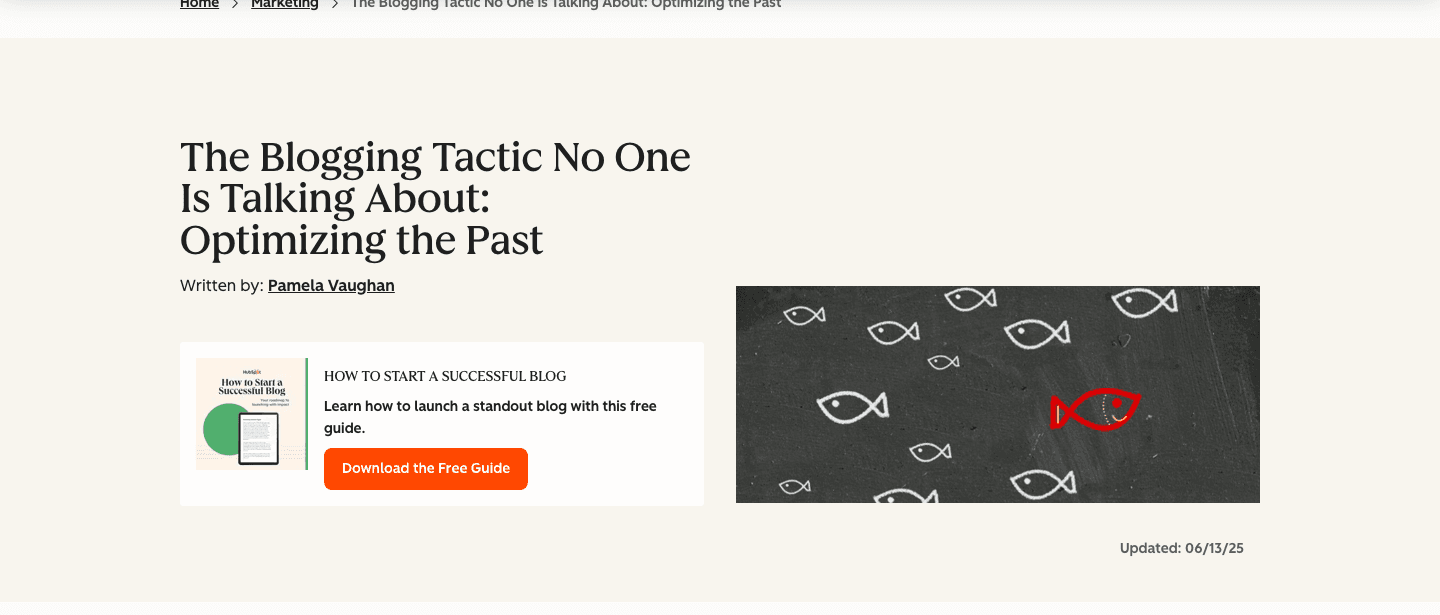
No "Published 2015" fossil date sitting untouched. Just "Updated: 06/13/25," on the exact post that taught the internet the term "historical optimization." The company that coined the tactic is still running it on the page that explains the tactic.
The read
- The multiplier is real and repeatable. 106% more monthly organic search views on the posts HubSpot updates and republishes, and leads from those same posts more than doubled. That's a standing program measured over years, not one lucky post.
- The archive is already carrying the business. HubSpot has reported that 76% of its monthly blog views and 92% of its monthly blog leads come from posts published before that month. The next post you write is worth less than the last hundred you already have sitting there.
- A visible date does two jobs at once. It reads as a freshness signal to Google, and it reads as proof to a human that the page isn't abandoned. Both audiences are checking the same field.
Steal it
You don't need HubSpot's scale to run HubSpot's move. Pull your own analytics, sort every post by trend instead of age, and build a short list of pages that once worked and have since slipped. Set a cadence, even one update a week beats zero, and work that list before you draft anything new. The posts sitting in positions six through fifteen are the highest-leverage items in your entire content plan, close enough to rank, ignored long enough to fall behind.
Defend the same way. Run the reverse audit on yourself before a competitor does. A sitemap full of 2019 publish dates and no edit history (see The Sitemap Heist) reads as a program on autopilot, and it's an invitation for someone else to outrank you with a fresher page on the same query. Only change the date when you actually changed the content. A timestamp bump with nothing behind it is a signal both Google and a sharp competitor learn to discount.
Gotchas
- A refresh only works on a post that already earned something. If a page never ranked and never converted, updating it just polishes a page nobody was going to find anyway. That pile gets pruned, not refreshed, a different move entirely.
- A new date without new substance gets discounted. Google has gotten better at spotting a cosmetic timestamp bump. If you're not changing the stats, the examples, or the structure, don't touch the date.
- The keyword the post was written for may have moved on. Search intent shifts under a page even when the page doesn't change. Check what the query means today before you edit for what it meant when you first wrote the post.