Card-Gate The Free Trial
A mandatory credit card at signup filters tire-kickers and can multiply paid conversion overnight.
Every growth blog tells you to strip friction out of signup. Fyxer AI put a piece back in and it worked better than almost anything else they tried that year. Requiring a card before the trial starts is not a hack, it is a filter. It trades a chunk of your signup count for a much larger jump in the percentage who actually pay, and if your product delivers value fast, that trade is usually a win.
What to do: Put a required credit-card field on your trial signup form, before the user gets access, not after. Keep the trial length honest, tell people exactly when they will be charged, and send reminder emails before the card is billed.
Why it works: A card on file is a real commitment, not a throwaway email address, so only people who actually intend to evaluate the product make it through. That raises intent per signup, which raises the share who convert.
Example: Fyxer AI, an AI email assistant, ran a classic no-card 7-day free trial with free-to-paid conversion around 5%. Its growth team added a required credit-card gate before the trial start. Free-to-paid conversion jumped to 35%, and even though raw trial signups dropped, total paying customers doubled, according to GrowthBook's case study of Fyxer's climb from $1M to $35M ARR, corroborated by Kyle Poyar's Growth Unhinged newsletter.
Walk it through
Fyxer's own pricing page today still shows the shape of the play. Every paid tier lists a 7-day free trial, right under the price, not buried in the fine print.
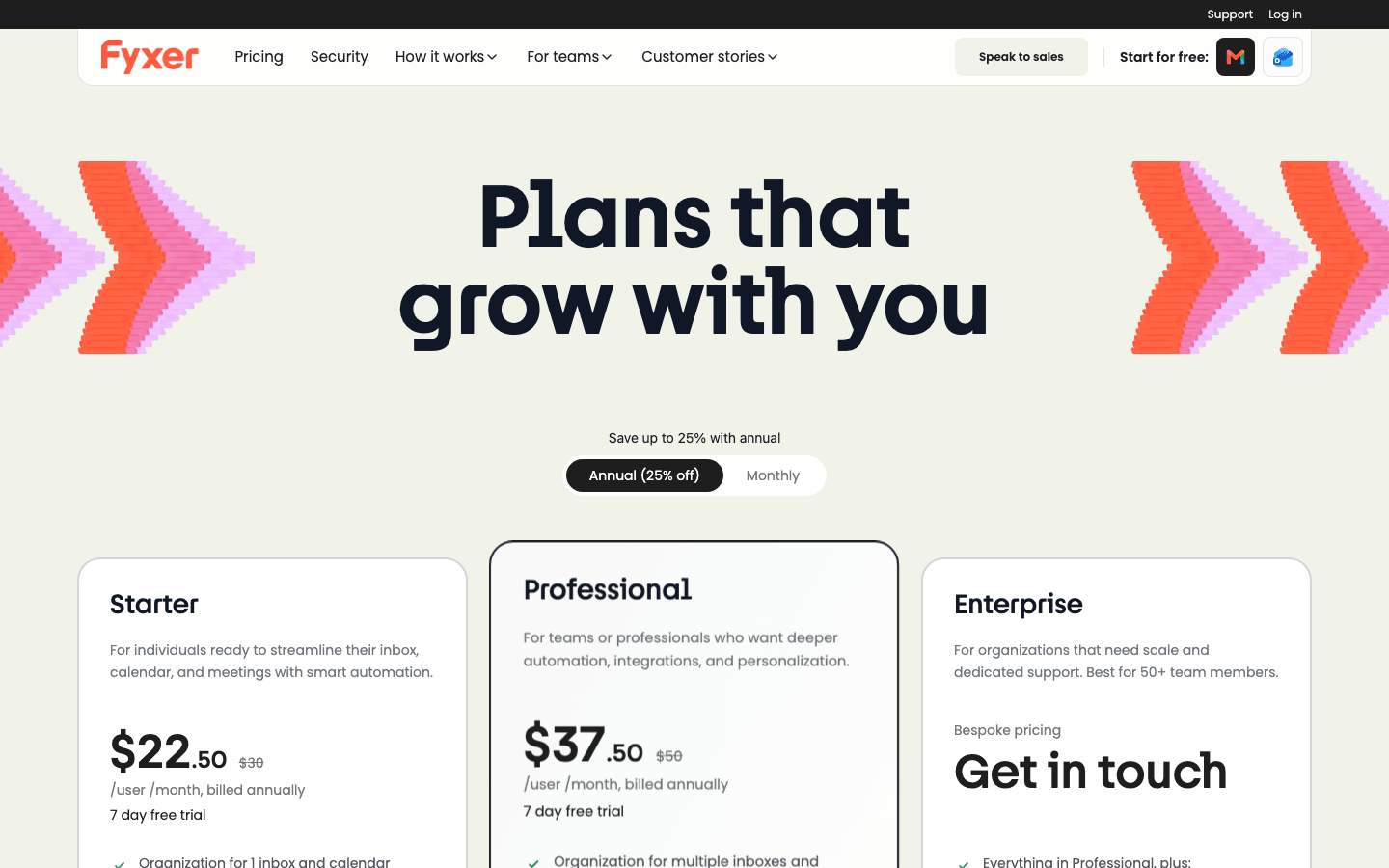
Here is the sequence GrowthBook describes them running, and the sequence you can copy:
1. Start from a normal trial. Fyxer's baseline was the industry-default 7-day free trial with no card required. Conversion sat around 5%, in line with what Poyar's 2026 ChartMogul and ProductLed benchmark calls "good" for plain freemium: 3-5%.
2. Add the card requirement, but keep the charge soft. Fyxer's team, led by a grower named Kameron, made the paywall itself optional during the test. The card was mandatory to start the trial, but the actual charge stayed adjustable while they watched the data. They borrowed the countdown pattern from Canva's checkout flow: show the user plainly what happens today, what happens on day 5, and what happens on day 7 when the card gets charged.
3. Let intent select itself. People who were only curious dropped off at the card field instead of dropping off silently after using the product for free. The ones who stayed were already halfway to paying.
4. Call the result fast. Fyxer's team called this test a winner after 8 days of data. Conversion went from 5% to 35%. Signups fell because the form got harder, but total paying customers doubled, because the new conversion rate more than made up for the smaller pool.
The read
- Friction is not always the enemy. The growth industry's default advice is to remove every field between a visitor and a signup. This is the counter-case: one field, positioned correctly, made the whole funnel more profitable.
- A card is an intent signal, not just a payment method. The value of the card field is not the ability to bill faster. It is that only people with real intent will type in sixteen digits for a product they have not used yet.
- The math runs on the whole funnel, not the top of it. Judging this by signup count alone looks like a loss. Judging it by paying customers, the actual number that pays your bills, it is a clear win.
Steal it
Run the comparison on your own trial before you flip the switch. Take your current no-card conversion rate and multiply it by your monthly signups to get today's paying-customer count. Then estimate a realistic post-gate signup drop, most teams see signups fall by somewhere between a third and half, and a realistic conversion lift. If a smaller pool at a much higher conversion rate still nets you more paying customers, the gate is worth testing. This works best when your product needs a real connection or setup step to show value, like Fyxer connecting to your inbox, because that setup already filters for intent before the card even comes up.
Defend the trade before you ship it. Card upfront only works if the trial genuinely delivers value inside its window, otherwise you are just collecting cards from people who churn the moment they get billed and file chargebacks on you. Be explicit about the charge date in the UI and in a reminder email, the way Fyxer borrowed from Canva, because a surprise charge turns a filter into a trust problem.
Gotchas
- This is not free money. If your product's time-to-value is longer than your trial, gating the card just moves the churn from "declined to sign up" to "disputed the charge." Fix time-to-value first.
- Support cost goes up before it goes down. Expect more "I forgot I had a trial running" tickets and chargeback requests in the first few billing cycles after you flip this on. Budget for it.
- B2C and low-intent categories react differently. Fyxer's users were connecting their email, a high-commitment action already. A casual consumer app asking for a card before anyone has tried anything can tank signups without the conversion lift to match. Test on your own funnel, do not assume Fyxer's numbers transfer.