Seed the Waitlist With Creators
A few dozen trusted voices beat a mass press blast every time.
Most founders picture a launch as one big swing. Line up an embargo, land one big publication, watch a spike of traffic die by the next afternoon. Mint ran the opposite play in 2007. Long before the product could sign anyone up, the team was writing for and sponsoring the personal-finance bloggers its future users already read every week. By the time Mint actually opened its doors, an audience had been quietly compounding for months, on sites its buyers already trusted, not on sites Mint owned.
What to do: List 20 to 40 creators and newsletter writers your actual buyer follows in your specific niche, not the biggest names in your broader category. Pitch each one individually with early product access in exchange for their honest take, and let each post go out on its own schedule instead of coordinating one embargo date. Do this for weeks before you open signup to anyone else.
Why it works: A reader trusts the writer already in their inbox more than a headline from a publication they have never opened.
Example: Mint spent close to nine months before its September 2007 launch working the personal-finance blogger circuit directly. Noah Kagan, who joined as Mint's Director of Marketing in December 2006, has said publicly that the team wrote guest posts for finance blogs, sponsored smaller blogs with modest but engaged readerships, and ran Mint's own blog until it became one of the most-read personal finance blogs on the web, before the product even existed. That effort built a waiting list of more than 20,000 email addresses ahead of launch, gathered almost entirely through those blogger relationships, not a single mass press hit.
Walk it through
Here's what Mint actually put in front of the readers all that outreach sent over. This is the real page, archived by the Wayback Machine on August 10, 2007, five weeks before Mint launched at TechCrunch40.
1. Find the small blogs before you find the big ones.
Patzer's team skipped the outlets with the biggest audiences and went looking for personal-finance bloggers with smaller but genuinely engaged readerships instead, the kind of writer whose readers actually reply to their emails. Some of those blogs were paid to run sponsored posts. Others were simply pitched for a guest post or an early look at the product.
2. Pay in access, not cash, and make it visible.
Mint built a referral system and handed out "I Want Mint" badges that bloggers could post on their own sites. Post the badge, get earlier access. That gave Mint two things at once: a visible signal of demand sitting on someone else's blog, and a backlink that helped Mint's own blog climb search rankings while the product was still in alpha.
3. Here's the page all of that traffic actually landed on.
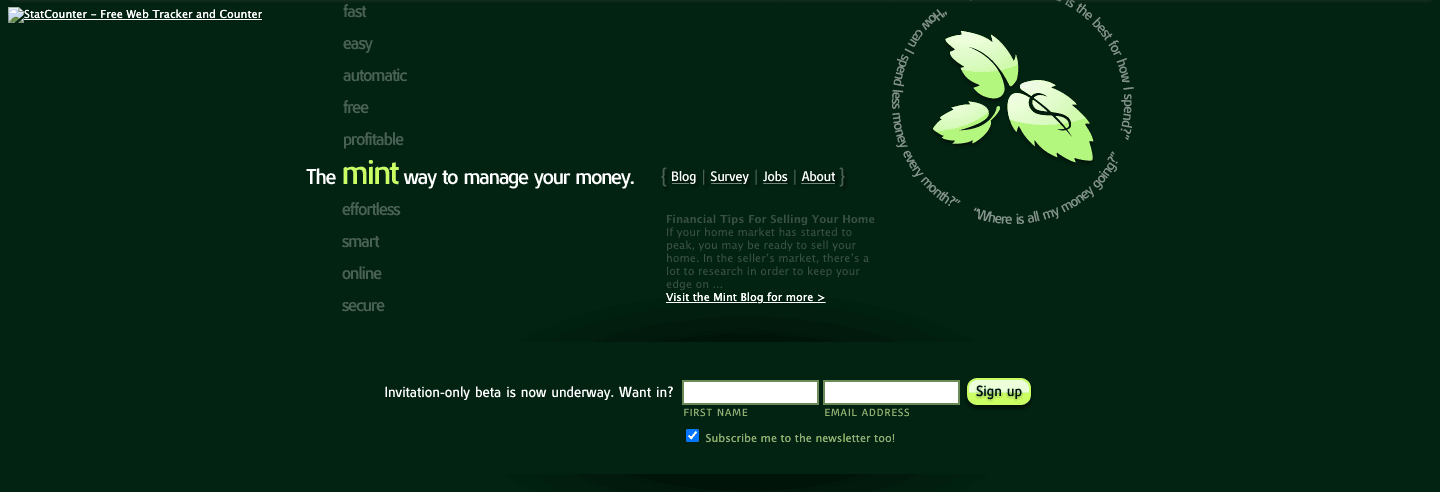
No product screenshots, no feature list above the fold, just "Invitation-only beta is now underway. Want in?" and a two-field form. Scarcity was the entire pitch. Every blogger post and every badge pointed here, and this is the only thing it ever asked a visitor to do.
The read
- The press hit amplifies, it doesn't create. Mint's TechCrunch40 win landed on top of an audience the blogger outreach had already built over nine months, not instead of one.
- Reciprocity beats broadcast. A badge and real early access gave bloggers something to actually post about. A generic pitch email asking for coverage gives them nothing to show their readers.
- A warm list is a moat, a cold one is a number. Twenty thousand people who found Mint through a writer they already trusted convert and stick around differently than twenty thousand people who clicked a banner ad.
Steal it
Build the list before you touch outreach. Twenty to forty newsletter writers, podcasters, or bloggers your buyer already follows in your actual niche, not tech press in general. Pitch them one at a time with something real to offer, whether that's early access, a revenue share, or simply being first with a genuinely useful product. Give each relationship weeks to breathe instead of compressing it into one coordinated launch day.
Then defend the channel from your own instincts. The temptation is to grade each pitch by same-day clicks, and that number will lie to you. Judge it instead by whether a post is still getting reshared or cited a month later. That's the post that found a real audience instead of a curious one. And if you pay anyone for coverage, disclose it. The trust you're borrowing from that creator's audience is the entire point of the play, and undisclosed paid placement is the fastest way to spend it.
Gotchas
- Most creators won't answer. Budget for a low reply rate and pitch more people than you think you need.
- Disclosure is not optional. A sponsored post that doesn't say so reads as an ad the moment anyone notices, and niche audiences notice fast.
- This is slow on purpose. Mint ran this for the better part of a year before launch. If you need signups by Friday, this isn't the tactic, and forcing it into a week will just look like a mass press blast with extra steps.