Chase Only Rich Results That Survive
Audit which schema still wins a visible SERP box before writing more of it.
Structured data used to be a free lever. Mark up the page, get a shinier result, collect the extra click. That lever has been getting shorter every year, and most teams never went back to check which parts of it are still attached to anything. FAQ rich results went fully dark on May 7, 2026. HowTo lost desktop back in September 2023. Google quietly retired seven more schema types in June 2025. None of that has stopped teams from still writing FAQ blocks into every new page template in 2026. Before you write one more line of schema, go check which types still buy you a visible box in the results, and stop billing engineering time to the ones that don't.
What to do: Pull every schema type your site currently ships, from view-source or Search Console's Enhancements report, and check each one against Google's current structured-data gallery and the Rich Results Test, not a blog post from last year. Keep the ones still tied to a live rich result: mainly Product, Review, AggregateRating, Article, Breadcrumb, Video. Stop adding FAQPage or HowTo markup to new templates.
Why it works: Google spends SERP real estate on a short, moving list of schema types it still renders. Anything you ship outside that list is dev time spent decorating a page nobody in Google's UI will ever show.
Example: Gymshark's product pages ship Product plus AggregateRating plus Review schema, live, real numbers, 4.3 stars off 1,075 reviews on its Arrival 5" Shorts page as of this July. Google's own documentation still lists that combination as eligible for review-snippet stars. FAQ markup on that same page would render nothing at all, because that door closed in May.
Walk it through
I checked Google's own current list, then pulled live schema off a real product page in July 2026. Here is exactly what came back.
1. Check Google's own current list of what still renders. Not a listicle.
Open developers.google.com/search/docs/appearance/structured-data/search-gallery directly.
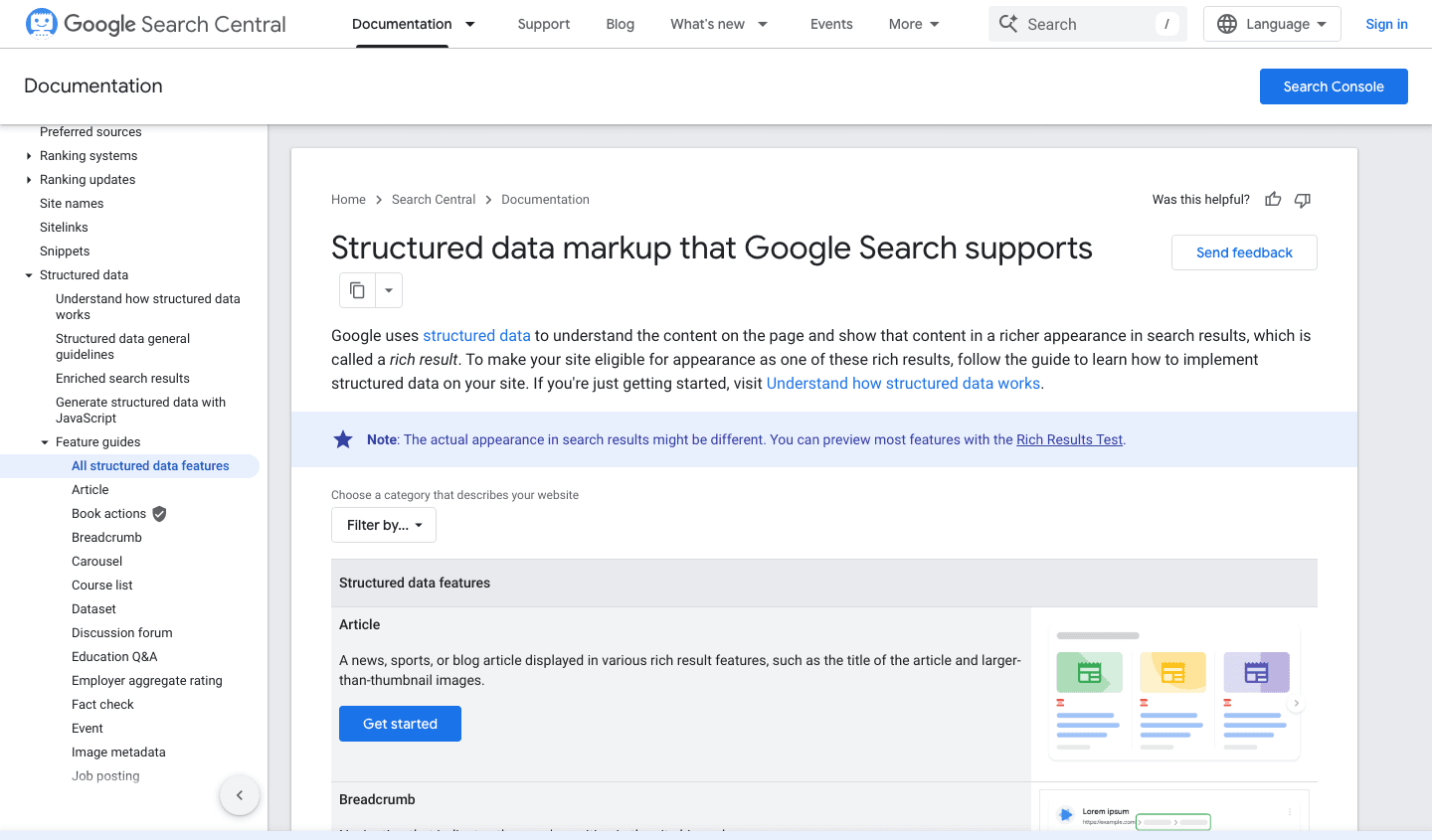
FAQ and HowTo used to have their own entries on this exact page. They don't anymore. Review snippet, Product, Article, and Breadcrumb are still there, each with its own "Get started" button, which means Google is still actively inviting you to build them. Notice "Book actions" sitting in that list too. Multiple outlets reported it as one of seven schema types Google retired in June 2025, alongside Course Info, Claim Review, Estimated Salary, Learning Video, Special Announcement, and Vehicle Listing. Then in November 2025 Google quietly removed the deprecation from Book actions specifically, because a live Search feature still uses that markup. The graveyard moved after the obituary ran. That is the whole argument for checking this page yourself instead of trusting a 2025 recap.
2. Pull the actual JSON-LD off a live product page.
curl -s -A "Mozilla/5.0 ..." https://www.gymshark.com/products/gymshark-arrival-5-shorts-black-ss22
Gymshark's routing sent that request to its Spanish storefront based on where the request originated, which is normal and not the point. The point is what came back in the <script type="application/ld+json"> block on the page that loaded:
{
  "@type": "ProductGroup",
  "name": "Arrival 5\" Shorts",
  "url": "https://eu.gymshark.com/es-ES/products/gymshark-arrival-5-shorts-black-ss22",
  "aggregateRating": {
    "@type": "AggregateRating",
    "ratingValue": 4.3,
    "reviewCount": 1075,
    "bestRating": 5,
    "worstRating": 1
  },
  "review": [
    {
      "author": { "name": "Snoop" },
      "datePublished": "2026-07-13T02:26:22.000+00:00",
      "reviewRating": { "ratingValue": 3 }
    },
    {
      "author": { "name": "Jord25" },
      "datePublished": "2026-07-11T18:26:32.000+00:00",
      "reviewRating": { "ratingValue": 5 }
    }
  ]
}
That is a ProductGroup, Google's variant-aware flavor of Product schema, carrying a real aggregateRating and individual review entries with dates from two and three days before I ran this. Not sample data left over from a template. Live customer reviews, tied to a rating, sitting in the schema type Google still turns into stars.
3. Confirm it is not just sitting in the source. Confirm it renders.
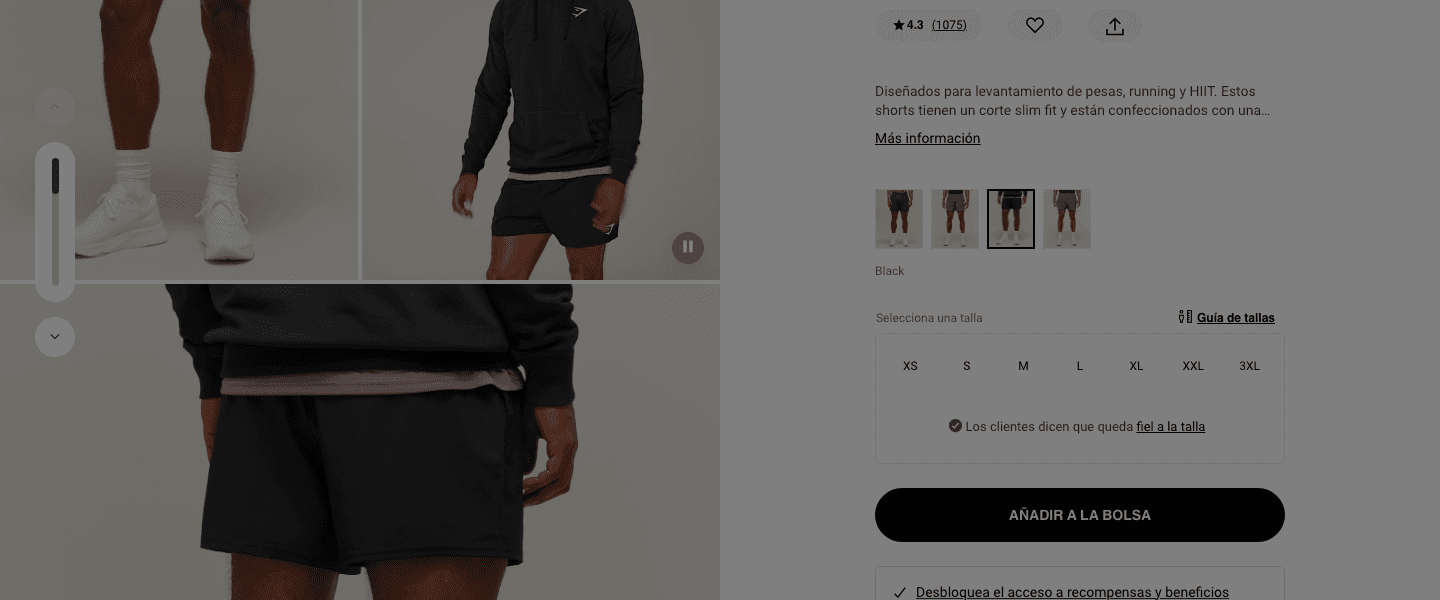
★ 4.3 (1075). Same rating, same review count, sitting right on the page a shopper actually sees, matching the JSON-LD exactly. That match is the whole test. Schema that agrees with what's on the page, on a type Google still supports, is schema doing its job.
The read
- The graveyard keeps moving, and it isn't even one-directional. FAQ took three years to fully die, restricted in 2023, killed outright in May 2026. Book Actions was declared dead in June 2025 and un-declared in November. Whatever list you memorized six months ago is already out of date.
- A short list still buys real estate. For most sites that aren't government or health, Product, Review, AggregateRating, Article, Breadcrumb, and Video are the reliable survivors right now. Everything else is a candidate for the cut list until Google's own gallery says otherwise.
- Matching source to render is the actual audit. Checking that a schema type is on Google's current list is step one. Checking that the numbers in your JSON-LD match what a visitor sees on the page is step two, and it's the step that catches stale or fake-looking markup before Google does.
Steal it
Run the same two checks on your own site. Export every schema type you ship, from Search Console's Enhancements report or a crawl of your own JSON-LD, and cross-reference it against the current search gallery and the Rich Results Test, not whatever a plugin's changelog told you two years ago. Anything still tagged FAQPage or HowTo on a new template is a page getting engineering attention for a result that cannot appear. You don't need to rip out what's already live, Google's own guidance is that unused structured data doesn't hurt you, but stop adding more of it starting now.
Then defend the ground that's actually paying you. If you sell a product with real reviews, Product plus Review plus AggregateRating is the one schema family still visibly beating competitors who skip it, star ratings sitting right in the blue links. One restriction to build around: Google stopped showing review stars for a company reviewing itself, LocalBusiness or Organization schema carrying your own testimonials, back in 2019. That loophole is closed and has been for years. The stars only show up for genuine product reviews or independent third-party review sites, so route customer feedback into Product schema on the actual product page, not into a testimonials block wrapped in Organization markup.
Gotchas
- Self-serving reviews still don't count. A business marking up glowing quotes about itself under Organization or LocalBusiness schema has been ineligible for review stars since 2019. If your stars aren't showing, check whether you're reviewing yourself instead of your product.
- Don't treat any deprecation list as final. Book Actions is proof Google reverses these calls. Recheck the gallery before you rip a schema type out of your codebase on principle, not just before you add a new one.
- Honest caution: leftover dead schema isn't the crime, still writing new dead schema is. Google says plainly that markup with no visible effect causes no harm. The waste isn't the FAQPage block still sitting in an old template. It's an engineer opening a new template in 2026 and copying it in anyway.