Become the Invisible Engine
Power ten brands from underneath instead of out-competing one of them.
Every founder wants their logo on the thing the customer holds. That instinct puts a ceiling on you, because you can only win one brand relationship at a time. The other move is to disappear on purpose. Build the hard, regulated, expensive-to-get-right capability once, let ten other companies wrap their own brand around it, and get paid every time any of their customers use it. You give up the mention. You keep the margin, and you keep it at a scale no single-brand product reaches on its own.
What to do: Take the piece of your product that is hardest to build correctly, the part that is regulated, compliance-heavy, or just brutal to get to production quality, and package it as an API or embedded component that another company's brand sits on top of. Price it on usage, per transaction or per active user, not as a flat license fee, and let your partner's marketing team do the customer acquisition you would otherwise have to fund yourself.
Why it works: Most companies don't want to become a card issuer, a compliance shop, or a fraud team. They want to ship the feature and keep the brand, so they pay you to run the unglamorous core underneath it.
Example: Marqeta issues the cards behind Cash App and DoorDash's Red Card, the physical card Dashers use to pay restaurants directly. It has powered Klarna's cards since 2018 and became the processor behind Affirm's own card in 2024. In 2024 alone, $291 billion moved across Marqeta's rails, up 31% year over year, and almost none of the people swiping those cards have ever heard the name Marqeta.
Walk it through
1. Read how the infrastructure company markets itself, not the brands wearing it.
I pulled up marqeta.com in July 2026. The homepage does not pitch a card. It pitches a blank.
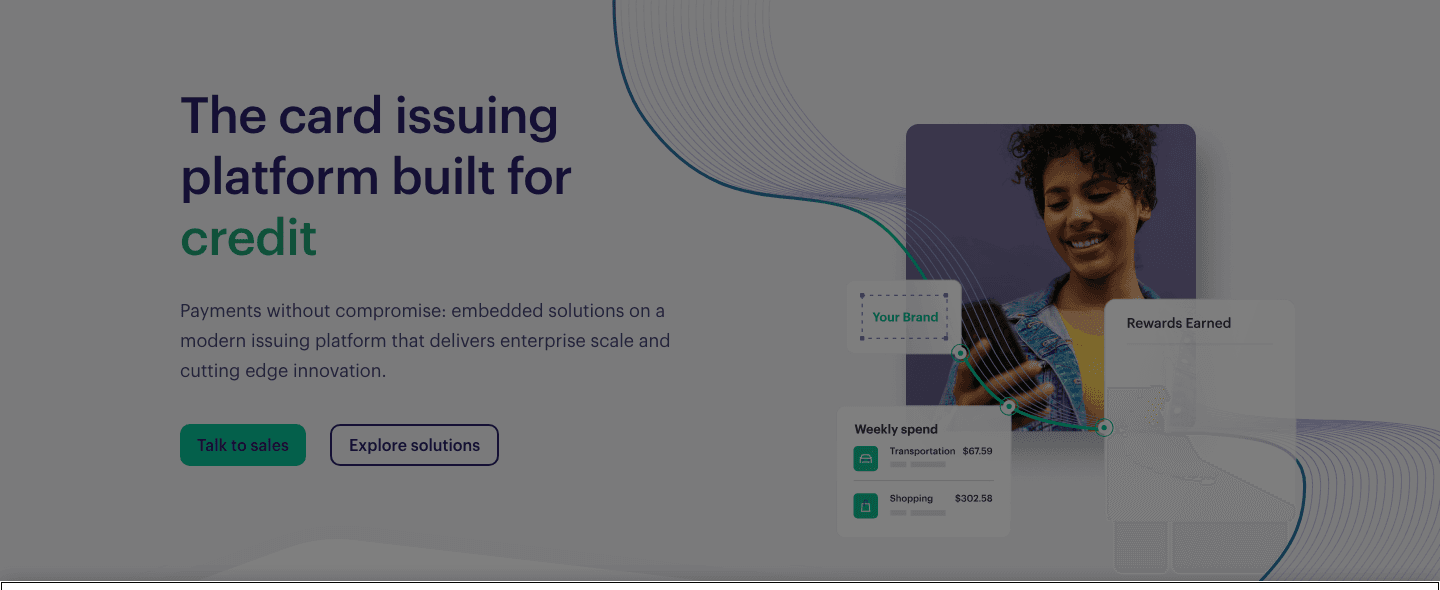
The mock phone in the hero image is labeled "Your Brand," not Marqeta. That is the entire pitch, rendered as a picture. Hand us the regulated core, put your name on the glass, and we vanish. Check any white-label infrastructure company's own marketing for this tell. The placeholder logo tells you exactly what they expect you to keep and exactly what they expect to take off your hands.
2. Trace how one hidden vertical turns into four.
Marqeta didn't start as everyone's payments backbone. It went deep on card issuing for one use case first, on-demand delivery, and DoorDash's Dashers still pay restaurants directly today with the Marqeta-issued Red Card. Square's Cash App put its own Visa debit card on the same rails. Marqeta then spent years extending the same core capability: it has powered Klarna's cards since 2018, and in mid-2024 became the first issuer processor certified for Visa's Flexible Credential, the technology that lets one physical card pay with debit, credit, or buy-now-pay-later depending on the moment, which is now what runs underneath the Affirm Card. In October 2024, at Money20/20, Marqeta launched Marqeta Flex, built with Klarna, Affirm, and Branch, so that a third-party app could offer either lender's loans inside its own product without becoming a lender itself. Four different consumer brands, four different pitches to shoppers, one issuing engine underneath all of them.
3. Notice how it's priced.
None of those deals are a subscription. Marqeta earns on processing volume, a cut of every transaction, which is why the number that matters isn't logos signed, it's the $291 billion that moved through its platform in 2024. Revenue tracks how well Cash App, DoorDash, Klarna, and Affirm each grow their own businesses, not how many deals Marqeta's own sales team closes in a quarter.
The read
- The placeholder in their marketing is the whole strategy. A company that pitches "your brand, our infrastructure" is telling you exactly which layer it wants to own and exactly how invisible it is willing to stay.
- One deep capability beats ten shallow ones. Marqeta didn't build card issuing, expense management, and BNPL as separate side businesses. It built issuing once, trusted enough to move real money, and every new logo is that same core wearing a different partner's name.
- The revenue line moves with your partners' growth, not your sales cycle. $291 billion in 2024 came from Cash App, DoorDash, Klarna, and Affirm all growing their own consumer businesses at once. Marqeta never had to win a single one of those end customers itself.
Steal it
Find the piece of your product that is expensive, regulated, or just slow to build correctly, the part a competitor would rather license than rebuild in-house, then strip your own branding out of it and offer it as an embeddable capability. Price it on usage the way Marqeta prices per transaction, not as a flat seat license, so your revenue scales with your partner's success instead of capping at whatever your own sales team can close this quarter.
Defend it by staying one layer removed from whatever your partners actually compete on. Marqeta issues the cards behind both Affirm and Klarna even though the two fight each other hard for BNPL market share, because card issuing isn't the battleground. The loan terms and the app experience are. Pick the layer beneath the fight instead of a side in it, and you can serve rivals at the same time without either one blinking.
Gotchas
- You own none of the end-customer relationship. If a partner loses cardholders, your volume drops with them and you don't get a vote in how they run their product. Concentration in a handful of partners is the tradeoff for skipping your own customer acquisition.
- Invisible also means replaceable if you go shallow. Nobody outside the contract sees your name, so nobody outside the contract fights to keep you either. Keep the technical depth, compliance, fraud tooling, uptime, hard enough to copy that switching processors stays expensive for your partner.
- Regulated infrastructure means regulated liability at every partner's scale, not just yours. If your core capability touches money, data, or safety, every new logo you add multiplies your compliance surface. Budget for that before you sign the fifth deal, not after an audit forces the question.