Certify a Partner Channel
Pay agencies a real cut and let them sell and implement you.
Every SaaS company says it wants partners. Most pay one 10% for a single year and call it a program. That is not a program. That is a tip. The companies that build a real channel treat implementation agencies as a second sales force, pay them like one, and hand them a ladder to climb. Do that and consultants stop referring you when it is convenient and start building their whole business on top of yours.
What to do: Build a tiered certification program, Gold through Elite works fine as tier names, that pays agencies a real revenue share, 15 to 20% of net revenue, for a real span of time, a year at minimum, three years is better, on every qualified deal they bring or run. Gate entry behind a certification exam and gate the top tiers behind revenue actually sourced and managed, not tenure in the program.
Why it works: A percentage paid over years turns a one-time referral into an annuity, so the agency's own P&L now depends on your product staying alive and growing, which makes them sell it harder than most of your own reps will.
Example: HubSpot's Solutions Partner Program pays Partner-level agencies 20% of net revenue for up to 36 months on every qualified deal, tiers them from Gold through Elite based on revenue sourced and managed, and requires a certification that gets renewed on a fixed schedule to stay listed. IDC projects the resulting partner opportunity will reach $42 billion by 2030, against HubSpot's own $3.13 billion in total 2025 revenue.
Walk it through
1. Read what the market leader actually promises, in public.
HubSpot's own partner page does not open with a pitch. It opens with the number.
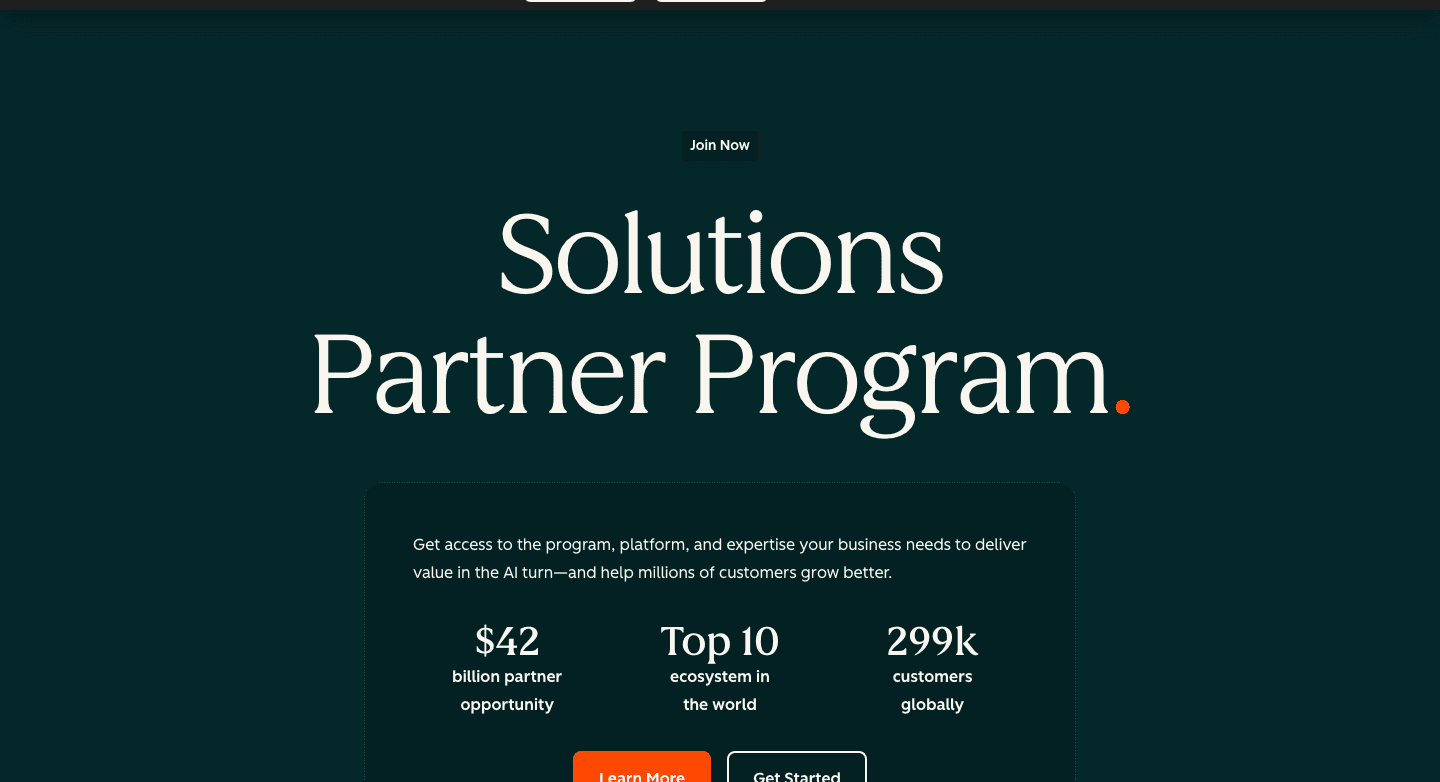
That is the entire recruiting pitch for the channel, distilled into a hero section. Agencies do not sign up because HubSpot's product is good. They sign up because the number tells them there is more revenue in reselling HubSpot than in most things they could build on their own.
2. Read the actual math behind the number.
The policy page spells out the terms with no marketing gloss on them at all.
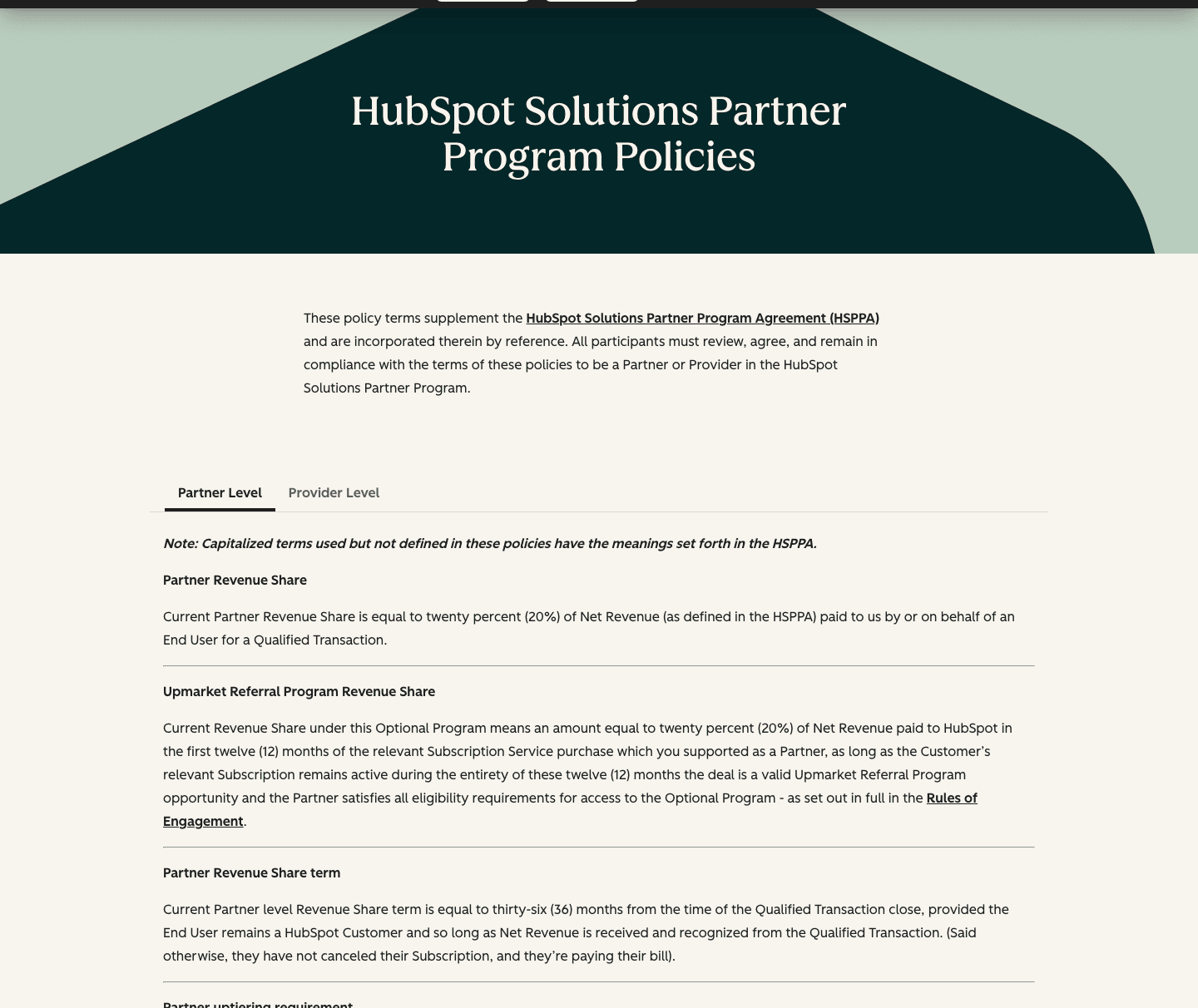
Twenty percent, for three years, on every qualified deal, for as long as the customer keeps paying. That is the whole mechanism. No trick to it, just a real percentage over a real span of time, written down in a legal policy page instead of buried in a slide deck.
3. Size your own version before you announce anything.
Take your gross margin and your average customer lifetime. If a customer is worth $10,000 in net revenue over three years and you can afford to give up 20% of it, $2,000 is what you are handing a partner for bringing and running that account. Run that math against your own numbers before you pick a percentage. If it does not work at 15 to 20%, do not launch at that rate. Launch lower, or run a plain affiliate link instead and come back to certification once margins allow it.
4. Build the ladder, not just the rate.
Set three or four tiers, HubSpot uses Gold, Platinum, Diamond, Elite, gated by revenue a partner has actually sourced or is actively managing, not by how long they have been signed up. Put a real exam behind entry, and make it expire on a fixed schedule so a partner who stops delivering actually falls out of the directory. List certified partners publicly. The directory becomes a lead source for you the moment a buyer searches for a certified partner in your category.
The read
- The revenue share is the recruiting pitch. No agency reorganizes its business around a vendor for 5% and twelve months. A real cut paid over years is what turns a services shop's roadmap into your roadmap.
- Certification is a trust signal, not a training exercise. The exam gates who can publicly call themselves certified, so agencies compete to earn it and then work to keep it, which does a chunk of your quality control for you.
- Tiering by revenue, not tenure, aligns incentives. Gating the ladder by what a partner has sourced and manages, instead of how long they have been enrolled, rewards agencies that are actually selling and supporting you, not the ones who signed up early and stopped showing up.
Steal it
Run the math before you draw the tier chart. Take your gross margin and your average customer lifetime, then work out what you can pay a partner over what period and still keep the deal profitable in year one. If you cannot afford at least a year of a real double-digit percentage, do not launch a certification program yet. Launch a simple affiliate link, get the mechanics working, and build the tiers once your margins can carry a bigger commitment.
Defend it by tying the payout to net revenue actually collected, not to bookings, and by making the term conditional on the customer staying active, the way HubSpot's policy does. That protects you from paying an agency for a customer who churned in month four, and it keeps the partner's incentive pointed at keeping the account healthy, not just getting the signature.
Gotchas
- A certification without teeth is just a badge. If you never revoke it from an agency that stops delivering, your directory fills with partners who cannot actually do the work, and your own customers pay for it in bad implementations.
- Uptiering rules can cost you good partners. HubSpot requires partners to hit Gold within 24 months or drop back down, a mechanic worth copying, but if your bar is unreachable for a small agency doing solid work, you will lose exactly the partner you most wanted to keep.
- Revenue share is a real liability. Budget it like one. Model the payout against your own margin before you announce a percentage in public. Clawing back a public commitment to agencies damages trust far more than never having promised it.