Build the Always-On Affiliate Network
Rent a marketplace's whole roster of ready-to-refer partners at once.
Every affiliate program starts the same way. You DM a dozen people you already know, beg them to post your link, and the channel goes quiet the week after launch because recruiting was a one-time favor, not a system. A B2B SaaS partner marketplace flips who does the finding. List your program once with a real commission attached, and partners who are already hunting for something new to promote find you, apply, and start posting the same day. You stop running a launch-week favor and start running a channel that recruits itself.
What to do: List your recurring-commission program on a dedicated B2B SaaS partner marketplace like PartnerStack instead of only linking it from your own footer. Split the offer into a deal-closing partner tier and a lighter cost-per-lead tier for online affiliates who just drive sign-ups, publish both rates on the listing itself, and let the marketplace's existing partner base browse, apply, and self-serve into promoting you.
Why it works: Partners on the marketplace are already shopping for a program to add to their rotation, so you are competing for their attention against other listings, not introducing them to the idea of an affiliate deal in the first place.
Example: monday.com runs its partner program through PartnerStack. The public listing offers partners up to 20% commission on each closed deal and a cost-per-lead track for online affiliates, and PartnerStack's own case study credits the always-on marketplace program with a 200% year-over-year jump in partner-driven sales.
Walk it through
I looked at two live listings on PartnerStack's public marketplace in July 2026.
1. Open the directory, not one company's page.
market.partnerstack.com is the front door, and it does not require a login to browse. Every card states its own commission before you click through.
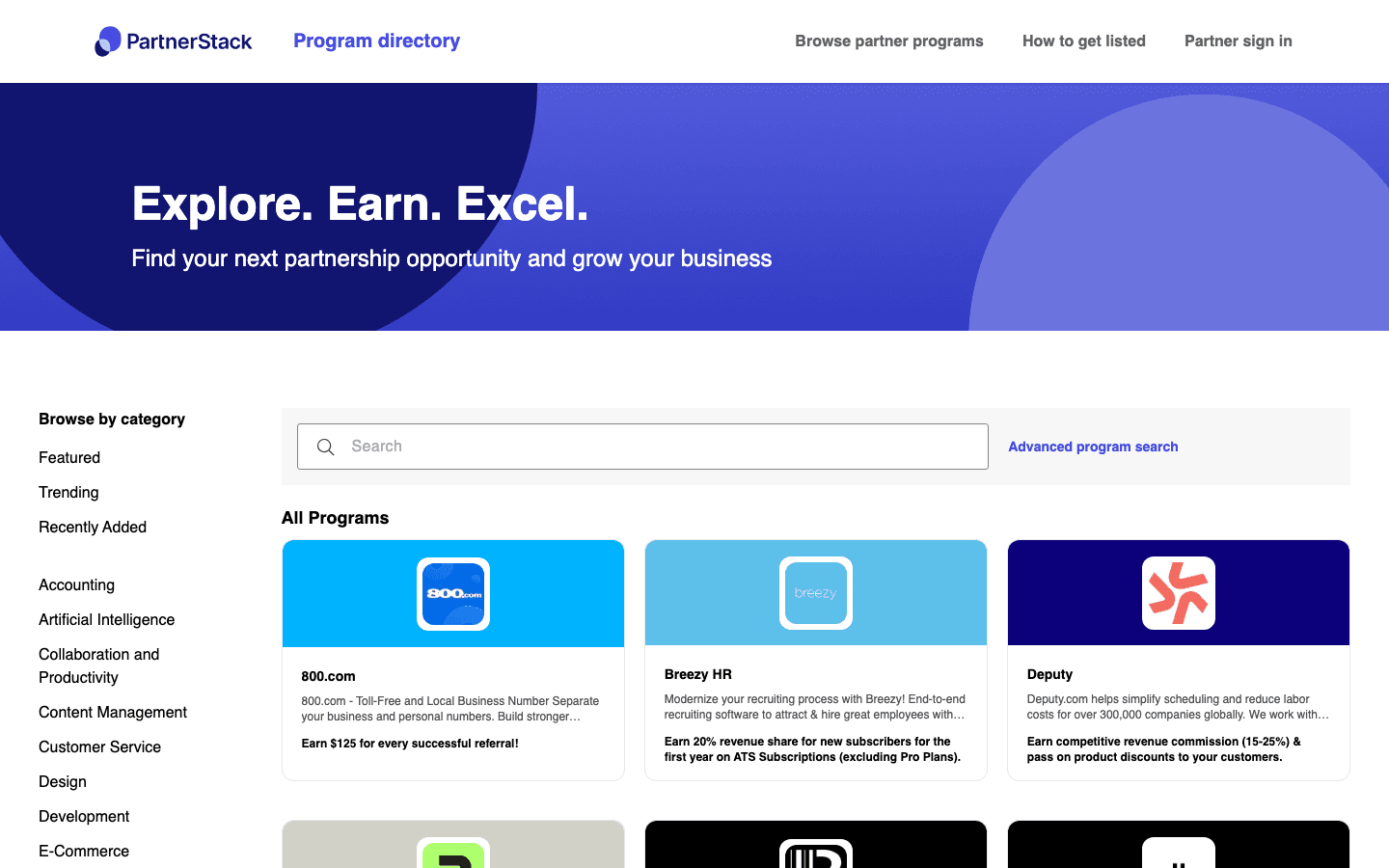
That is the "whole roster" from this chapter's title. Dozens of B2B SaaS programs on one searchable page, each already telling a partner exactly what they would earn before they apply anywhere.
2. Open one listing and read it the way a partner would.
market.partnerstack.com/program/mondaycom lays out the offer structure, the sign-up steps, and an apply button, in that order.
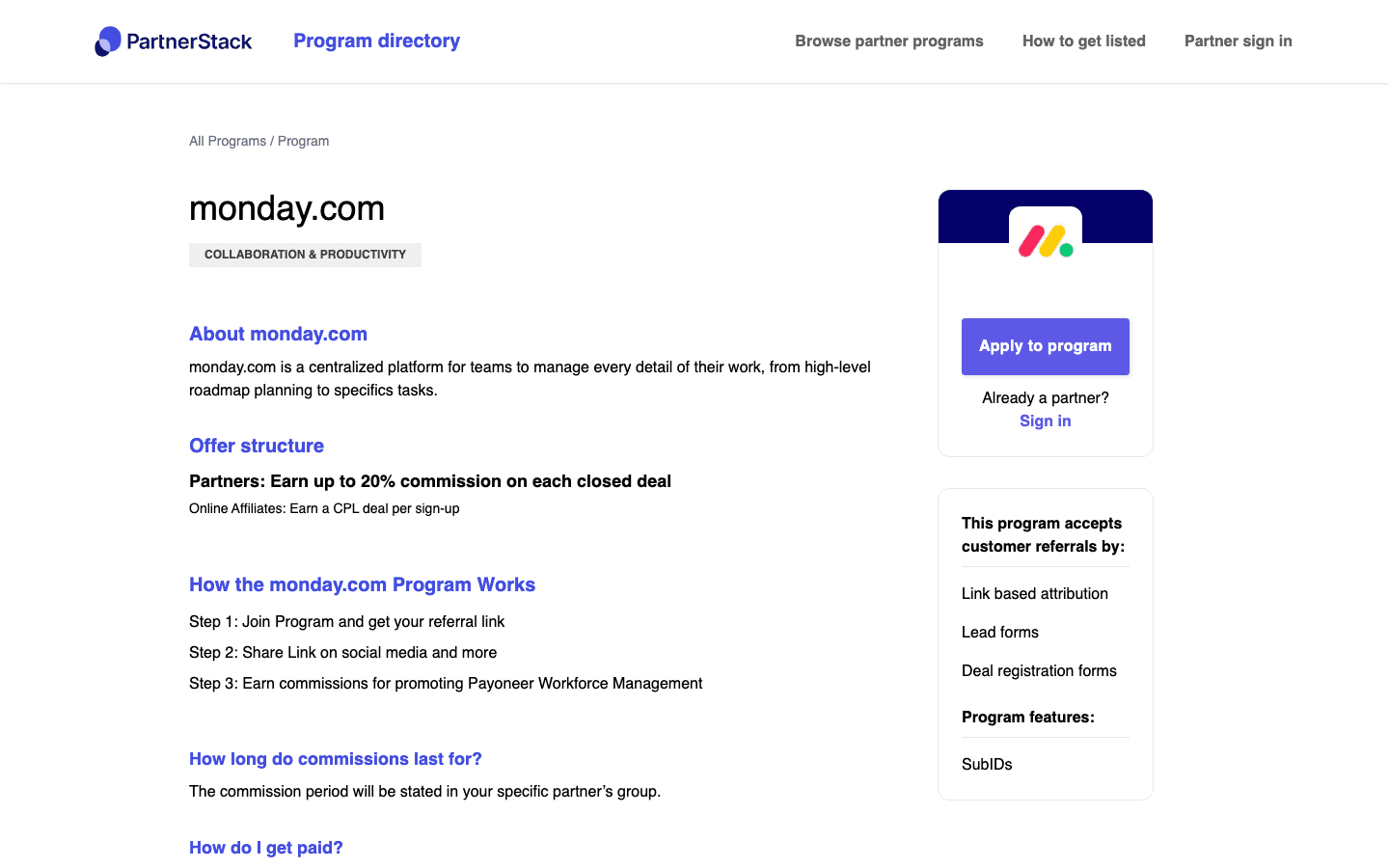
Nobody at monday.com messaged this partner. The partner found the listing, read the terms, and clicked apply on their own.
3. Check a second company on the same marketplace.
Webflow lists its own program on the identical directory, at market.partnerstack.com/program/webflow, offering 50% commission on a new customer's first 12 months. Different rate, different structure than monday.com's, same self-serve mechanic. Two competitors in adjacent categories, same shelf, same recruiting motion running for both of them at once, right now, without either company lifting a finger today.
The read
- The listing does the selling for you. Offer structure, sign-up steps, and an apply button sit on the page before a partner ever talks to a human at your company.
- The marketplace is the recruiting channel, not just a payout processor. monday.com and Webflow both use PartnerStack to run the payments, but the browsable directory is what turns "we have an affiliate program" into partners actually finding it.
- Different products, different terms, same shelf. monday.com's per-deal commission and Webflow's first-year percentage both sit on the same directory format, so the marketplace is the constant and your commission structure is the only variable you control.
Steal it
List on a marketplace that fits your motion, PartnerStack if you want a self-serve affiliate track alongside a referral-partner track, or a comparable B2B SaaS-focused directory, and treat the listing itself as a landing page. State the commission in the first line, split it into a deal-closing tier and a lighter sign-up-only tier the way monday.com does, and make "Apply to program" the only action above the fold. Then leave it running. The entire point of the always-on version is that you stop re-recruiting from scratch every quarter.
Before you publish a public rate, decide what you will not tolerate from a partner you have never met, because self-serve means you are approving people you have not vetted. Ban brand-bidding on your own name in your terms before the first affiliate joins, watch for self-referrals from an affiliate closing their own account, and hold new-affiliate payouts for a couple of weeks before releasing them so a fake sign-up does not clear before you catch it. A public commission rate is also public to your competitors, so expect them to read exactly what you are paying to acquire a customer through this channel, the same way you just read monday.com's and Webflow's.
Gotchas
- Self-serve means unvetted. Anyone can read the listing and apply, so your terms and an approval step have to do the filtering your DMs used to do by hand.
- A published commission is a published CAC. Once your rate sits on a public directory, any competitor running this same play can read it as easily as you just did.
- Most partners who apply will never send you a customer. A marketplace listing gets you volume of applicants, not volume of revenue. A small share of partners will carry most of the channel, so budget your time and support around your active partners, not your total headcount.