The In-Product Template Gallery
Let users publish free templates that market the product for you.
A template gallery flips the acquisition math. Instead of buying attention to pull people into your product, you let your own users build the content that pulls the next person in, and every piece of that content is also a working copy of the product sitting out in public. Figma built the cleanest version of this loop with Figma Community: publish a free file, plugin, or widget, and anyone who finds it can hit one button and land inside their own Figma account holding a working duplicate. No download, no export, no separate onboarding flow, just an account event that happens to be triggered by someone else's free work. Canva runs the identical loop through its own template marketplace. Neither company had to write the content that sells the product. Their users did, because getting published and getting used is the reward.
What to do: Add a Publish action anywhere inside your product where a user builds something reusable, a document, a dashboard, a workflow, a prompt chain. Route every published item to one public, search-indexable gallery page, and make the path from a stranger finding that page to holding a working copy in their own account exactly one click, no exported file, no re-upload on the other end. Show the creator's name and a rising use count next to their work, since that credit is what makes people publish in the first place.
Why it works: A duplicate is not a page view. It is a signup or an activation event, fired by someone else's free content, landing directly inside your own account system.
Example: Figma Community lets any user publish a free file, and one visible Duplicate button clones it straight into the viewer's own Figma account, no export and no separate download page. SALY, a free 3D illustration pack made by one freelance designer, proves the loop compounds: a single re-shared copy of that file still carries a duplicate count in the thousands, visible on a public URL anyone can load right now.
Walk it through
I checked this against Figma Community in July 2026. Here is exactly what a visitor sees, nothing behind a login wall.
1. Open a public template page.
Search Figma Community for a popular file and open it. No account needed to view it or read its numbers.
2. Read the two counters next to the creator's name.
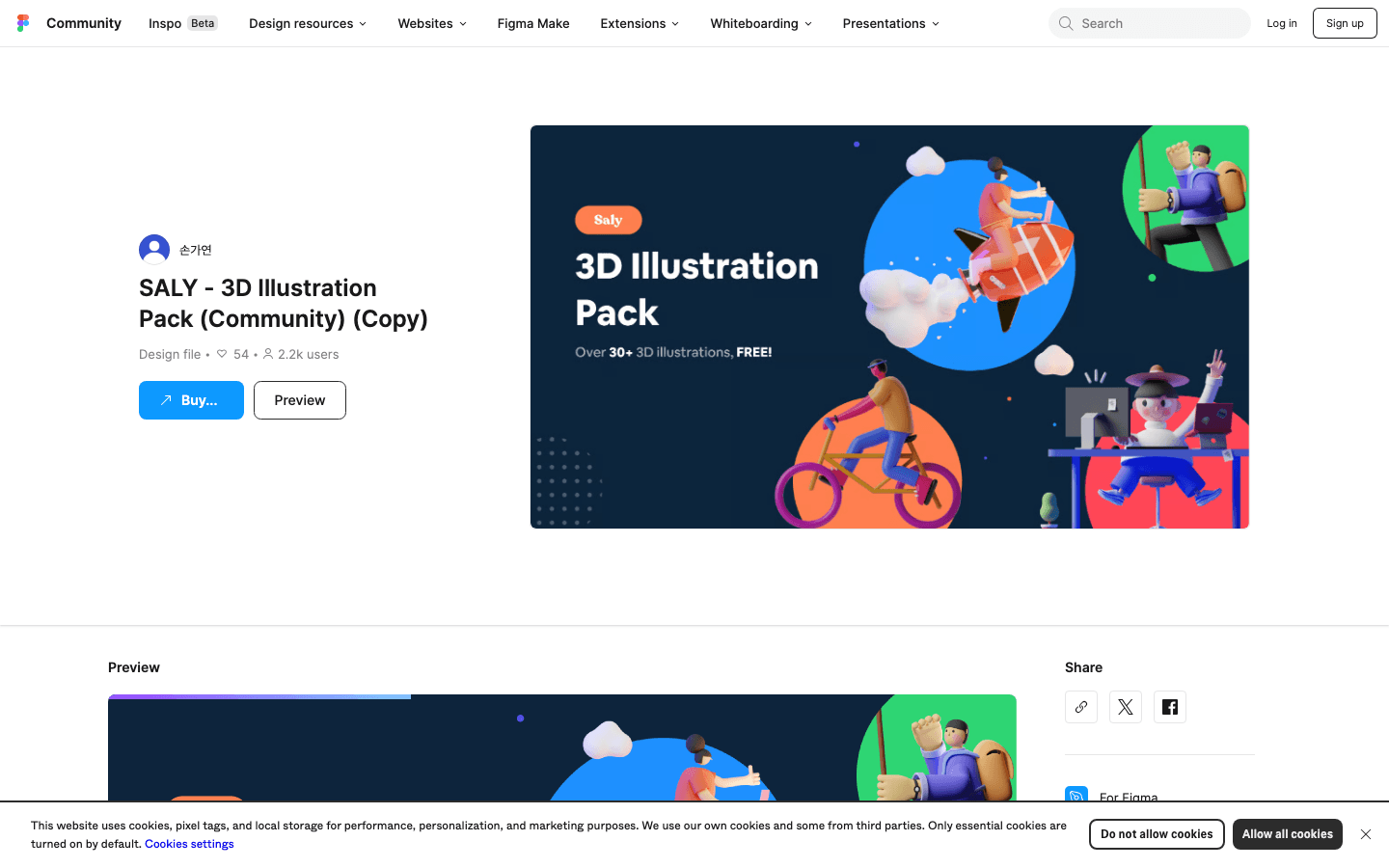
The heart icon counts likes. The number next to the person icon is Figma's own definition of engagement for a design file: everyone who duplicated it. This particular page is not even the original SALY file, it is a copy of it, republished by a different user, and that copy alone shows 2.2k users next to 54 likes. The ratio is the tell. A file with far more duplicates than likes is doing real acquisition work, not just collecting applause.
3. Click Duplicate.
One click, and the visitor now owns a working copy of the file inside their own Figma account. No export format to pick, no separate onboarding screen. The account event that just fired, a new file inside a new or existing Figma account, is indistinguishable from any other activation Figma counts, except this one was sold to the visitor by another user, for free, in a gallery Figma never had to design a single template for.
The read
- The gallery is the channel. No referral code, no invite link required, a public page and a Duplicate button do the entire job of turning a stranger into an account.
- The duplicate count is a real, watchable growth metric. Figma prints it on every file page, so you, and any competitor, can see exactly which templates are compounding and which have gone flat.
- Credit is the fee, not cash. The creator gets their name on a public page with a rising number attached to it. That is payment enough to keep people publishing for free, indefinitely.
Steal it
Run it for your own product by finding whatever your users already build inside the tool that would help the next user, a dashboard layout, a workflow, a prompt chain, a report. Add one Publish action to that object, route every published item to a public, search-indexable gallery page, and keep Duplicate to exactly one click, no export format to choose, no signup wall before the copy lands in the visitor's account, only after. Rank the gallery by use count, not by upload date or staff pick, since use count is the only signal that predicts whether duplicating a given file actually helps anyone.
Defend it the same week you ship it. A public gallery is also a leak surface: someone will publish a client's real data inside what they call a template, a competitor will treat your top community files as a free readout of your roadmap, and low-quality noise will bury the good files if nothing ranks them. Ship a duplicate-safe template mode that strips personal data on publish, moderate every file before it gets indexed, and let usage, not submission date, decide what surfaces first.
Gotchas
- Not every product has a template to give away. If what your users build inside the tool is private by nature, a personal ledger, an internal doc, forcing a Publish button produces an empty gallery, not a growth loop.
- Moderation is a standing cost, not a launch task. An open gallery attracts spam, stolen assets, and someone else's file republished under a new name. Budget real review time before launch, not after the first complaint lands.
- The mechanic itself is not a moat. Canva runs the identical publish-and-duplicate loop on its own marketplace. A gallery and a one-click duplicate button are copyable in a weekend. What is not copyable is the size of your gallery and the quality bar you have already enforced, and both take real time to build.