The AI Grunt Test
If a chatbot can't say what you sell in one sentence, neither can a stranger.
Building a StoryBrand built a whole method on one observation, a caveman should be able to grunt back what you sell after five seconds on your homepage. If he has to think, you lose him. The test was always right and always hard to run twice, because a genuinely fresh pair of human eyes with zero context on your business is a rare thing to find on demand. You now have an unlimited supply. A brand-new chat with a large language model has never seen your homepage, has no loyalty to your brand, and will tell you flatly what it thinks you sell. Hedge words in its answer are hedge words a stranger is thinking too.
What to do: Paste your entire homepage, headline through the first screen a visitor sees before scrolling, into a fresh ChatGPT or Claude session with no earlier messages in it. Ask the exact prompt "what does this company sell, who is it for, and what should I do next." Do not explain the business first, do not correct a bad answer, just read what comes back.
Why it works: The model has no relationship with your brand and nothing to gain by being generous, so it can only reflect what your words actually say, not what you meant them to say.
Example: Stripe's homepage headline reads "Financial infrastructure to grow your revenue," backed by one line about accepting payments, offering financial services, and running custom revenue models from your first transaction to your billionth. Paste that into a fresh session and a model names the business, the audience, and the next step correctly on the first try, no hedge, no guessing.
Walk it through
I ran this against stripe.com in July 2026. Here is exactly what came back.
1. Pull the actual copy, not your memory of it.
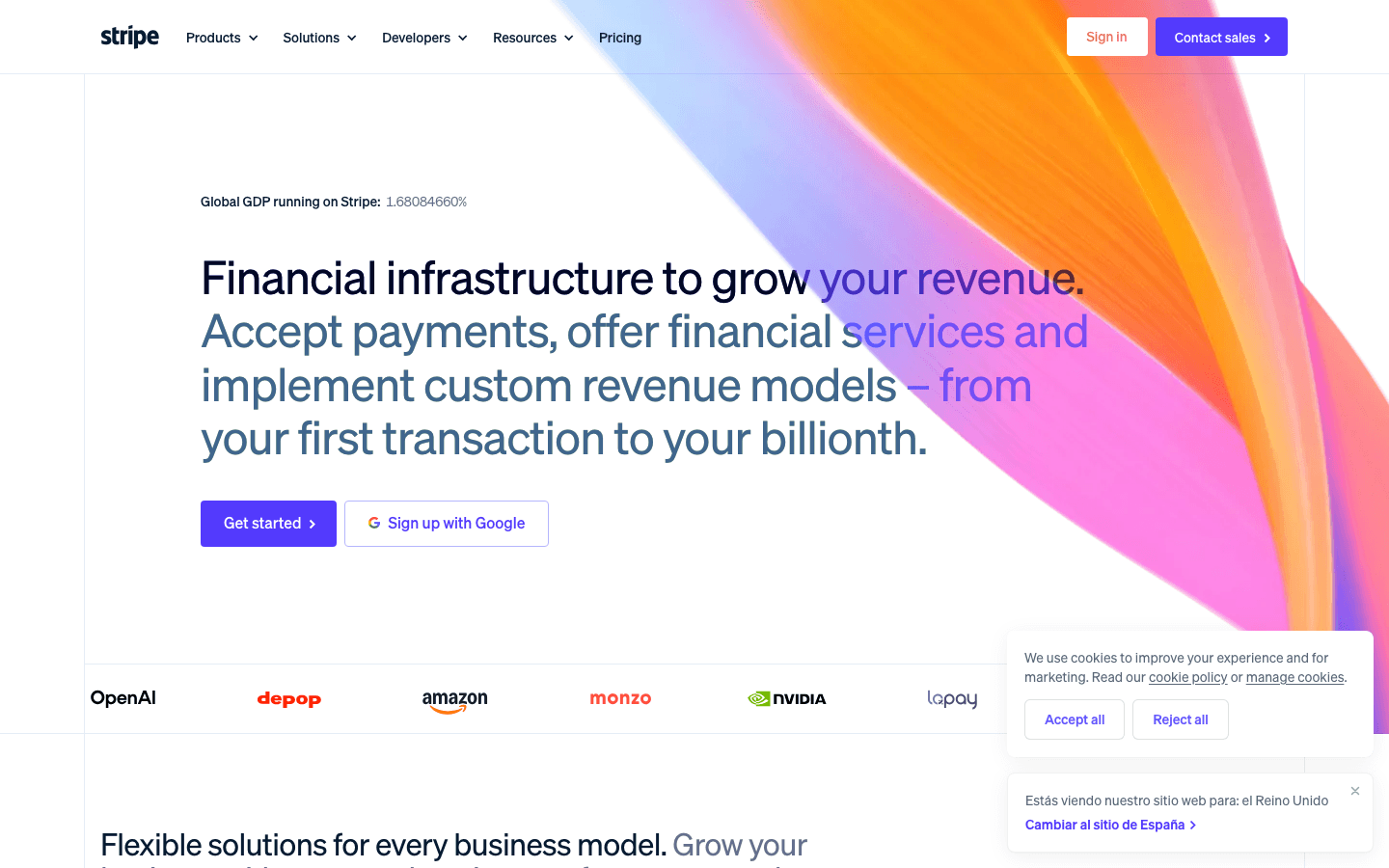
The hero reads "Financial infrastructure to grow your revenue." Under it, one line, "Accept payments, offer financial services and implement custom revenue models, from your first transaction to your billionth." Two buttons underneath, Get Started and Sign up with Google. Logos in the strip below the fold, OpenAI, Amazon, Monzo, Nvidia. That whole block is a company stating its business before it says anything else about itself.
2. Paste it into a brand-new session with the exact prompt.
No system prompt, no earlier chat history, just the raw hero text and the question, "what does this company sell, who is it for, and what should I do next."
3. Read the answer like a stranger would.
A model given that text comes back with something close to, this is Stripe, a payments and financial infrastructure platform, built for businesses of any size, from one processing its first transaction to one processing billions, that need to accept payments, offer financial products, or build custom revenue models like subscriptions or marketplaces. Next step, click Get Started to sign up and start integrating. No hedge, no "it looks like," no list of five possible interpretations. That is a pass.
The read
- The first sentence has to name the category. If a model opens with a hedge like "it looks like this might be a productivity tool," your homepage never said what business you're in, it only implied it and hoped the reader would fill in the gap.
- "Who is it for" separates focus from spray. A model that lists three unrelated audiences is reading a homepage written by committee, a line for the enterprise buyer, a line for the solo founder, and a clear answer for nobody.
- "What should I do next" grades your call to action, not just your headline. If the model can't find the next step, neither can a visitor who already has one hand on the back button.
Steal it
Run it on your own homepage right now, before you read another page of this book. Open a fresh session, paste the whole first screen, ask the exact prompt, and read the answer without defending it in your head. Then run the same prompt against your two closest competitors' homepages in their own fresh sessions, so you have something to compare your result against instead of judging a pass or fail in isolation.
Defend the practice where it matters. If your product genuinely serves two different buyers, say a tool that sells to individual creators and to enterprise teams, a hedge is not automatically a failure. The bar is not one audience, it is a model naming each audience distinctly. A homepage that makes the model say "this could be for freelancers or maybe teams, hard to tell" failed. One that makes it say "this serves freelancers on the free plan and sales teams on the enterprise plan" passed, because it named two real segments instead of blurring them into one vague promise.
Gotchas
- Famous brands get a curve. A model already knows what Stripe does from training data, so a clean answer on a household name proves less than the same test run on a competitor nobody has heard of. Add the line "based only on the text above, ignore anything you already know about this company" if you want an honest read on a well-known brand.
- Different models hedge at different rates. Run the same paste through more than one model before you decide your copy passed or failed. One model's confident answer is a data point, not a verdict.
- Honest caution, passing the model does not mean the claim is true. A model will happily repeat a confident, clear, and wrong statement right back at you. This test grades clarity, not accuracy, so check the underlying claim yourself, separately, before you trust it.