Give Away The Calculator
A free tool that does one painful bit of math will out-earn another ebook.
People will not subscribe for a PDF of formulas they already half-know. They will type their own numbers into a box that spits out a score, a ratio, or a "you can spend this much." That box is a lead, a backlink magnet, and a demo of how you think, in one URL. The classic version graded your website. The version for a company that sells to founders is LTV versus CAC. The shape is the same.
What to do: Pick the one calculation your buyer already does badly in a spreadsheet. Put it on a public page. Ask for an email only if the full report needs a send. Show a useful result on the first submit. Then tell the rest of your content to point at that URL instead of at "book a demo."
Why it works: The user arrives with their own data, so the output feels like theirs. Sharing the result advertises the tool.
Example: HubSpot launched Website Grader in February 2007 as its first free diagnostic. You pasted a URL, got a 0 to 100 inbound-marketing score, and the company used it for buzz, links, and sales conversations. HubSpot's own blog recorded 1 million URLs graded by 2009 and 2 million not long after. In 2011 they said they were replacing it with Marketing Grader after 4 million sites. The original tool is still on website.grader.com in September 2026, still asking for a URL and an email, still promising a score in seconds.
Walk it through
I opened HubSpot's 2009 milestone post and the live grader in the same sitting.
1. Take the history from the company that ran it.
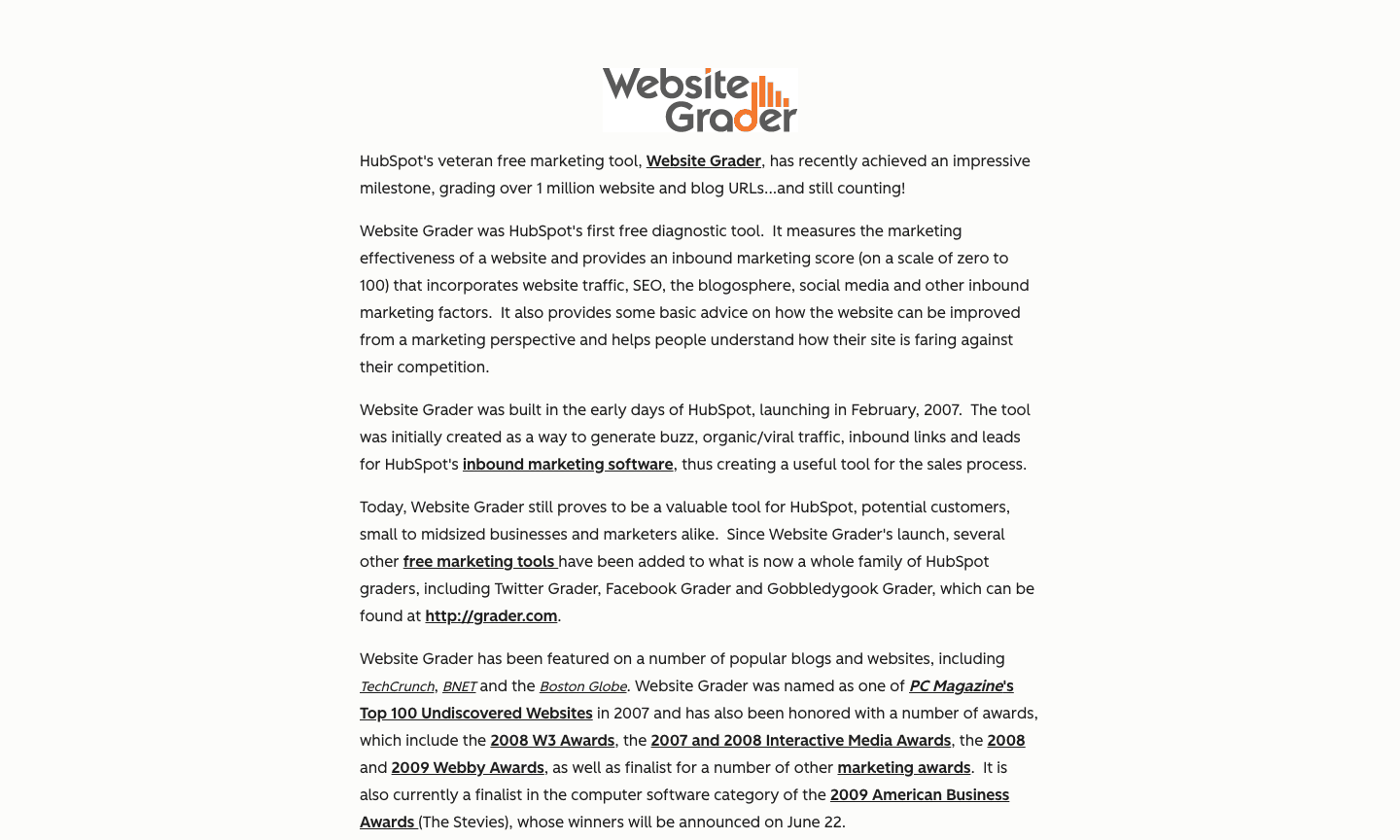
Pamela Vaughan's post is explicit about the job: generate buzz, organic traffic, inbound links, and leads, and give sales a useful artifact. The 1 million figure is theirs, on their blog, with an editor's note that the product later became Marketing Grader. I am not using secondary posts that inflate this into "millions of leads" without a primary source.
2. Confirm the shape still exists.
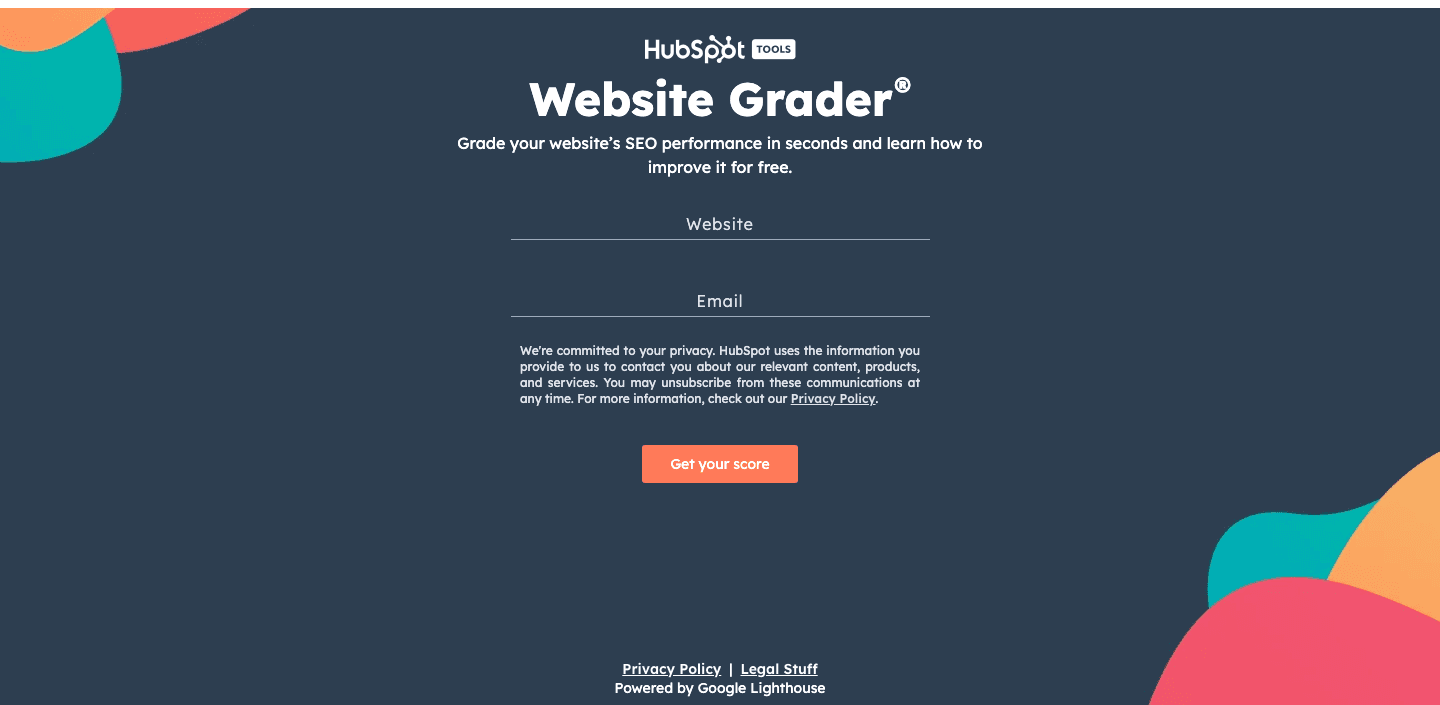
Two inputs. One button. A score. That is the whole product. Powered by Google Lighthouse now, which is fine. The growth mechanic did not need to stay 2007-clever. It needed to stay this small.
3. Pick the 2026 equivalent for your buyer.
If you sell to founders who buy ads, the calculator is LTV, CAC, and the ratio: daily churn to lifespan, CPM to cost per thousand opens, LTV has to clear CPA. If you sell SEO, it is a crawl of one painful thing, indexation, title collisions, not a full suite. If you sell onboarding, it is time-to-value given their current steps. One number they can argue with in a meeting.
Ship it as a page, not as a gated XLS, unless the download is the point. HubSpot asked for email because the report was the second beat. You can show the ratio immediately and offer the PDF breakdown after.
The read
- The tool is the content. It earns links because other people cite a utility, not an opinion.
- Smaller is more likely to ship. Website Grader was nine measures. Marketing Grader jumped to 30 and became a different product. Start at nine or fewer.
- The output has to be screenshotable. If they cannot paste the result into Slack, they will not advertise you.
Steal it
Hand the assistant the one number your buyer already argues about, and the two inputs that produce it. Have it write the formula and a public page with those two fields and one result. You check the math against a real account before it ships, including a case where the number comes out badly for you. Point your signature, Sign Every Send, at the URL. Do not wait for a design system. A clean number on a plain page beats a Figma file that never ships.
If the math already lives in a doc, paste that in. The assistant's job is the route. Yours is whether a stranger can use it without asking you.
Gotchas
- 4 million sites is 2006 to 2011. The play is current. The census is not. Say so if you cite it.
- A calculator that always says "you should spend more" will be recognized as a landing page. Give a number that can come out badly for you.
- Do not hide the result behind seven form fields. HubSpot asks for a URL and an email. That is already the ceiling.