Become The Intro Desk
Publish the kinds of introductions you will actually make, then keep the list.
Most "networking" is collecting follow-backs. The useful version is a switchboard with a written rule. People tell you they are hiring, they want a guest, they want a collaborator. You only connect two sides after both say yes. After a few months you are the person interesting people tell first, which is a distribution channel that does not look like marketing.
What to do: Put up a public form with the buckets you can really route. Say you will ask both people before you introduce them. Answer every submission within a week, even if the answer is no. Keep the list private.
Why it works: You stop asking the network for favors and start being the favor. People forward a switchboard. They do not forward a personal brand.
Example: Amanda Natividad, Chief Evangelist at SparkToro, runs a public Airtable called "Marketing & Tech Rolodex." Her about page points at it from a section titled My Rolodex. The form, still open in September 2026, lists the inventory she routes: managers hiring, people networking, podcast hosts interviewing, writers looking for feedback, indie makers looking for collaborators. Under the email field she writes the rule: double opt-in only. She will not connect you with someone without asking you first.
Walk it through
I opened the about page, then the form it links to.
1. The offer is a paragraph, not a vibe.
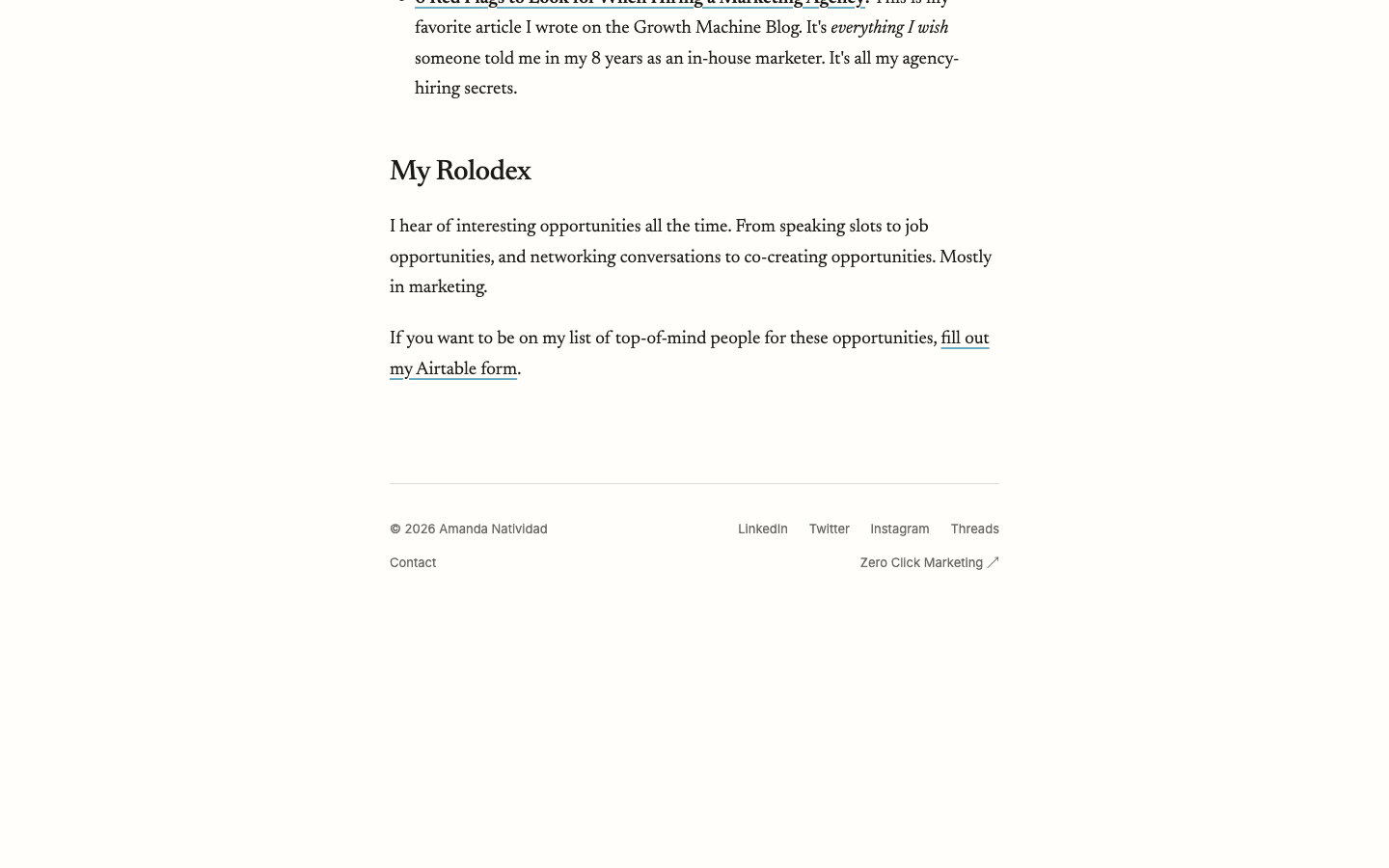
The same about page says she started SparkToro Office Hours, as many as 1,300 signups per show, and the Audience Research newsletter at over 50,000 readers. Those numbers explain why people send her inventory. They are not the tactic. The tactic is the sentence that says what she will do with it, plus a form.
2. Open the form and copy the buckets.
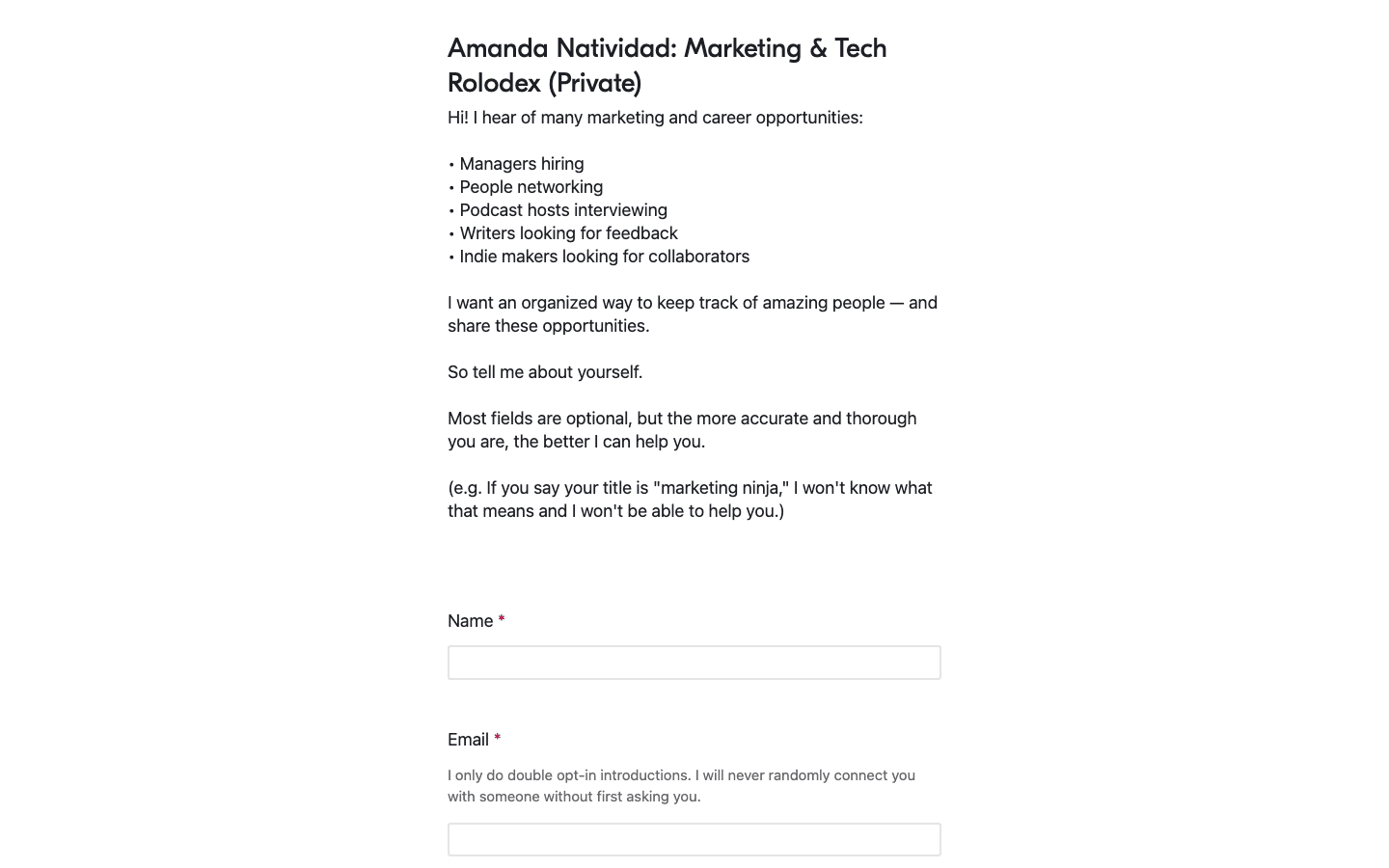
Five kinds of ask. Name and email required. Everything else optional, with a warning that "marketing ninja" is not a title she can route. The line under email is the whole operating policy: she asks before she introduces.
That is a different object from a lead magnet. Nobody is downloading a PDF. They are applying to be someone she thinks of when a job, a show, or a collaborator shows up.
3. Close the loop in public once a month.
A short post, "three jobs I can vouch for, two projects worth a look, one show that still needs a guest," trains people to keep sending you inventory. If you cannot name three things you would actually forward, do not publish the form yet. The desk is the follow-through.
The read
- The form is a routing list. If you use it to pitch your product, the desk closes.
- The buckets are a promise. Only list the kinds of intro you have already made for free.
- Double opt-in is the product. A surprise introduction burns both sides, and then the inventory stops.
Steal it
Have the assistant draft the form from intros you have already made: the buckets, the double opt-in line, the warning about useless titles. You publish it where people already read you, the way the rolodex sits at the bottom of her about page. Tell twenty people it exists. The first three routes are still yours. You ask both sides. The assistant can remind you. It does not introduce your friends.
You do not need 1,300 webinar signups to start. You need a rule you will keep when the fifth stranger asks for a warm intro to someone you like.
Gotchas
- A title you cannot decode is a bad record. Her parenthetical is right. If you cannot tell who they help, you cannot introduce them.
- Passing on jobs you have not read is how you lose both sides. Skim the listing. If you would not send a friend, do not send the list.
- Podcast invites are not always a gift. Bad shows waste your people's time. A no is part of running the desk.